An official proclamation from the Isle of Man Attorney-General concerning the duties of shipowners' agents and the legal framework governing salvage rights and wrecking. The document emphasizes the legal entitlement to salvage compensation for honest recovery of wrecked cargo, while warning against plunder and concealment. It illustrates post-Revestment governance and the Island's legal autonomy in maritime matters.
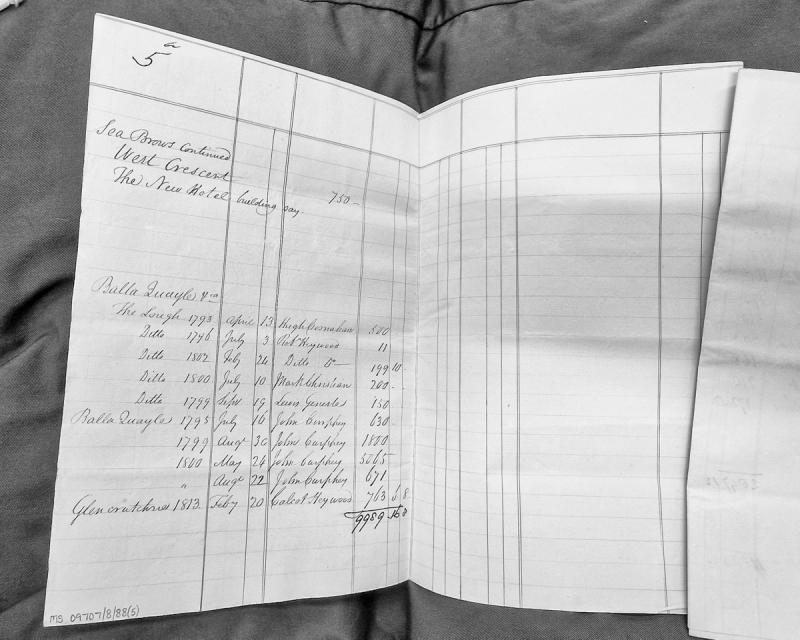
A financial abstract listing property valuations and payments for locations including Sea Brows (West Crescent), The Lough at Balla Quayle, and Glencrutchres. The document records multiple transactions dated between 1793 and 1813, with amounts in pounds, shillings and pence, and identifies various payers including Hugh Bernahan, Robert Heywood, Mark Christian, Lewis Geneste, and John Curphey.
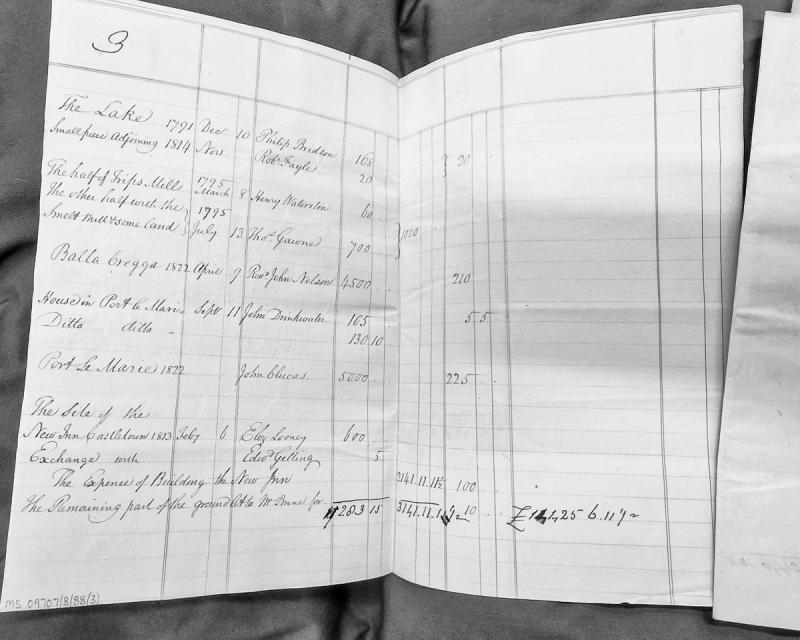
A revenue abstract or valuation roll listing various properties on the Isle of Man with associated dates of acquisition or transaction, owners' names, and monetary values. The document records land holdings including mills, houses, and ground plots across locations such as The Lake, Port le Marie, Castletown, and Balla Gregga, spanning the period 1791-1822.
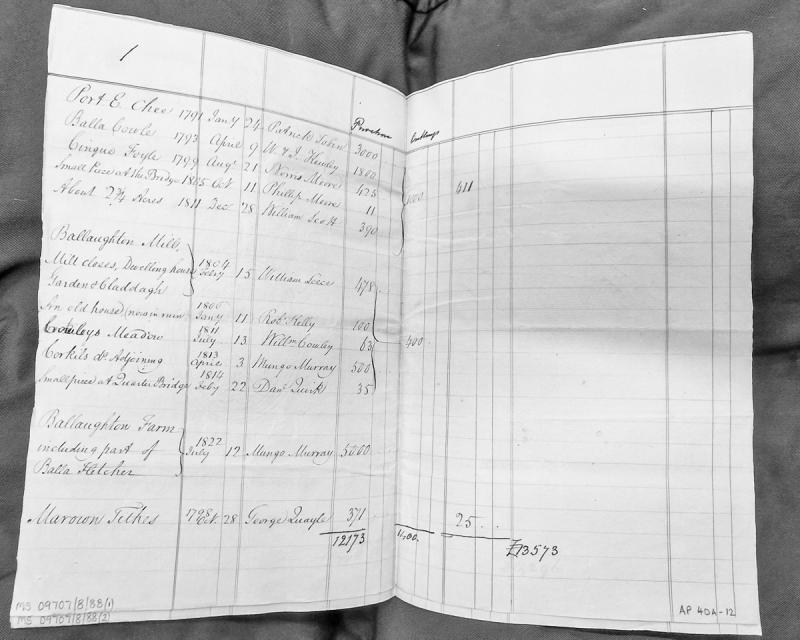
A revenue abstract listing various parcels of land and property with associated dates of valuation, owners/purchasers, and monetary values. The document records transactions spanning from 1791 to 1822, including mills, farms, meadows, and tithes primarily in the Marown and Ballaughton areas. Financial totals suggest this may be part of a property assessment or estate valuation record.
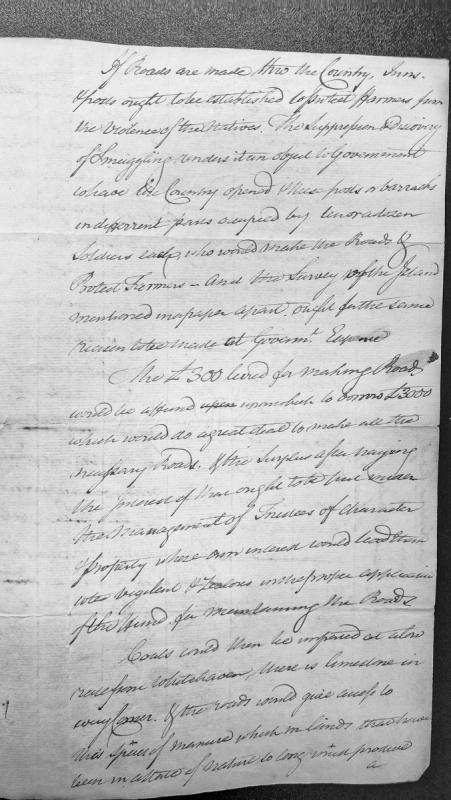
A policy proposal discussing the establishment of roads, inns, and military posts across the Isle of Man to protect farmers and suppress smuggling. The document outlines a financial scheme leveraging £300 in road levies to borrow £3000, with management by trustees, and discusses economic benefits including coal imports and limestone access for agricultural improvement.
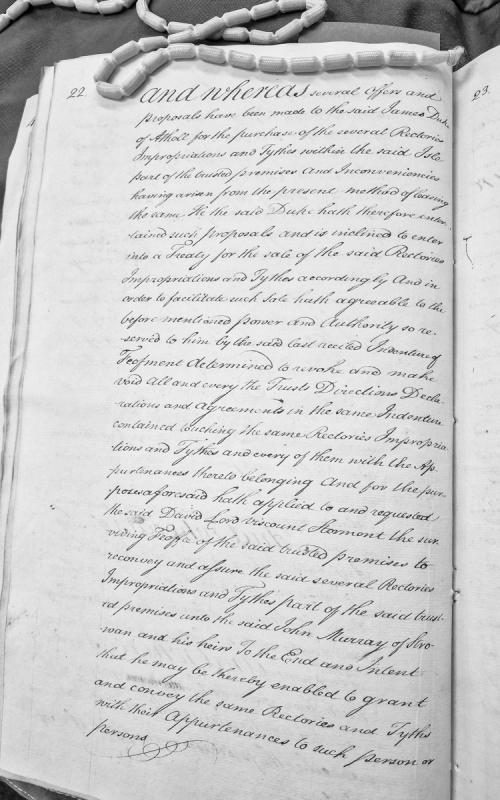
Legal document concerning the Duke of Athol's proposal to sell rectories, impropriationes and tythes within the Isle of Man. The document outlines the Duke's intention to revoke previous trust arrangements and reconvey these properties through John Murray of Strowan to facilitate their sale.
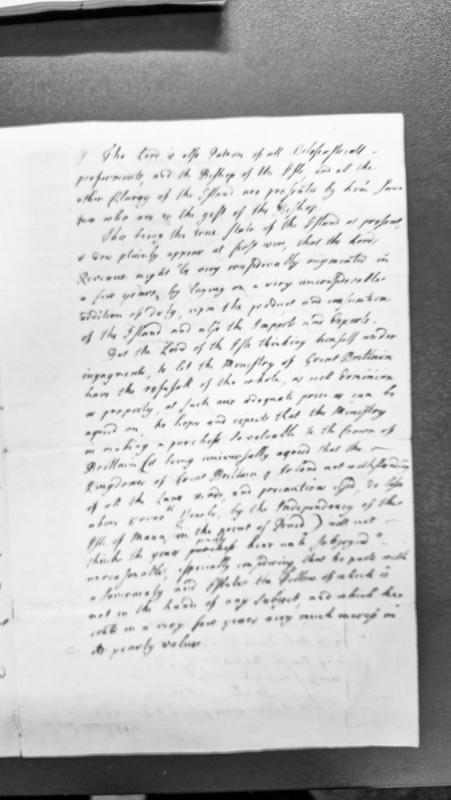
A document presenting the Lord of the Isle of Man's proposal to sell the island's dominion and property to the British Ministry. It details the Lord's ecclesiastical patronage rights, potential revenue augmentation through taxation, and argues for a fair price based on the sovereignty's value and the revenue losses suffered by Great Britain and Ireland due to the Isle of Man's independence.
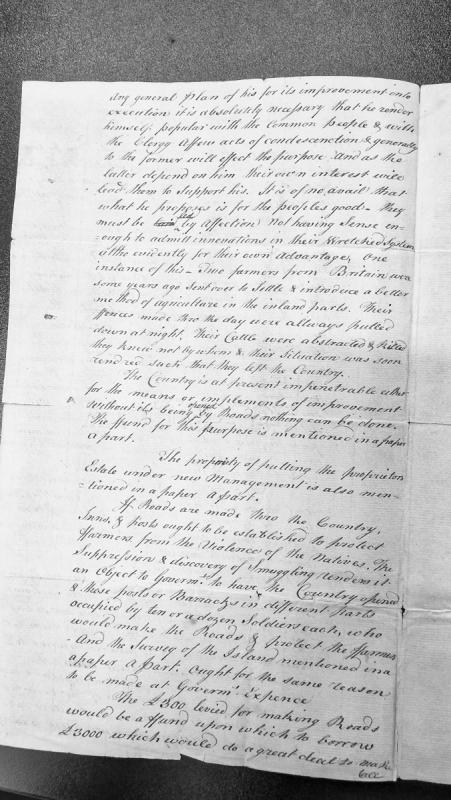
Fragment of a longer administrative document containing proposals for the improvement of the Isle of Man. The author discusses the necessity of gaining popular support for reforms, describes resistance to agricultural innovation, and outlines infrastructure and security measures including road-building, establishment of inns and posts, suppression of smuggling, and placement of soldiers for protection and road maintenance.
A detailed proposal by Charles Lutwidge, Receiver and Surveyor General of Isle of Man, submitted to the Lords of the Treasury describing illicit trade in Guernsey (similar to pre-Revestment Manx smuggling) and recommending regulatory measures. Highlights the continuation of smuggling networks post-Revestment, particularly the Danish rum trade through agents like Taubman and Parr, and its impact on North American colonial commerce and Irish provision prices.
Charles Lutwidge, Receiver and Surveyor General of the Isle of Man, submits proposals to the Lords of the Treasury regarding illicit trade in Guernsey and the Channel Islands. The document compares current smuggling in Guernsey to the pre-Revestment smuggling trade of the Isle of Man, detailing the importation of Danish rum via Guernsey and the activities of major smuggler Taubman. It argues for trade regulations to suppress foreign spirits smuggling.
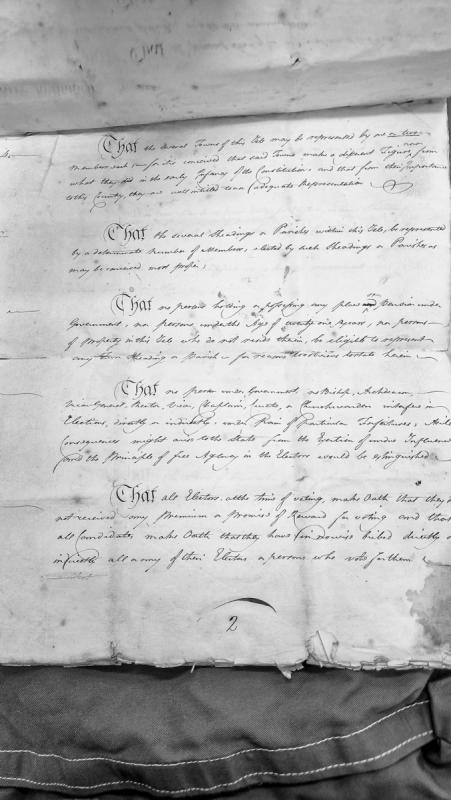
A set of proposals for reforming parliamentary representation in the Isle of Man, detailing eligibility requirements for representatives, restrictions on clerical interference in elections, and provisions for electoral oaths to prevent bribery and undue influence.
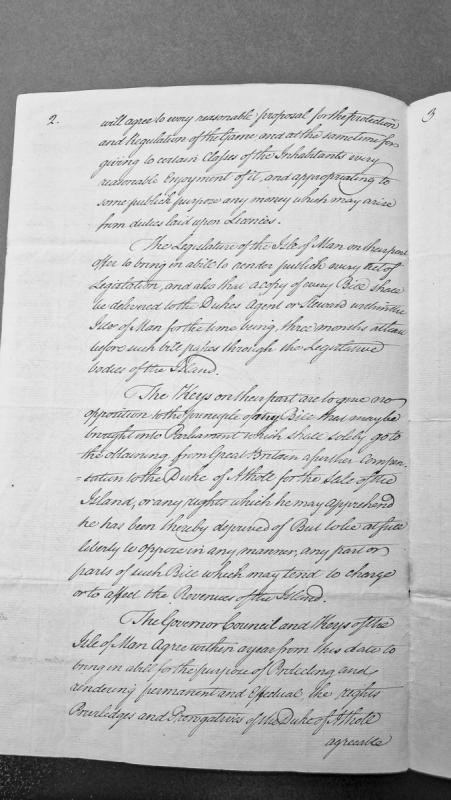
This document outlines proposed agreements between the Legislature, House of Keys, Governor, and Council of the Isle of Man regarding game protection, public access to legislation, and compensation to the Duke of Atholl for the sale of the island. It details mutual commitments to bring forward bills protecting the Duke's rights and privileges while regulating hunting and public enjoyment of game.
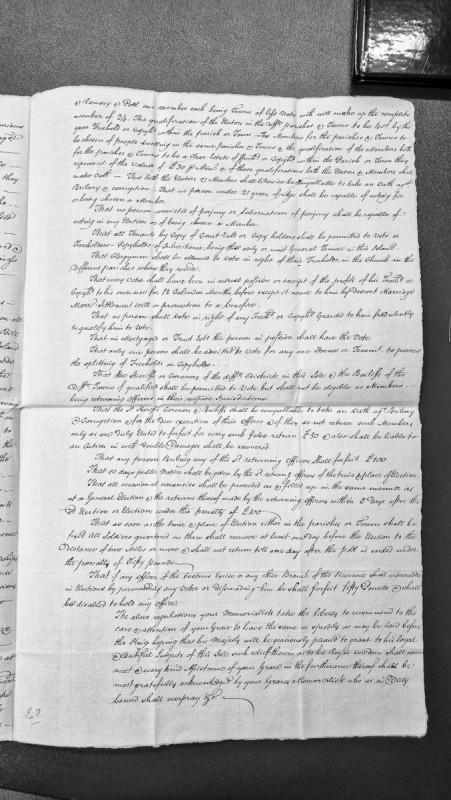
A petition presenting detailed proposals for electoral reform in the Isle of Man, including voter qualifications, candidate eligibility requirements, and procedures for elections in parishes and towns. The document outlines specific regulations regarding freehold and copyhold tenure, age requirements, oaths against bribery, and penalties for various electoral offenses.
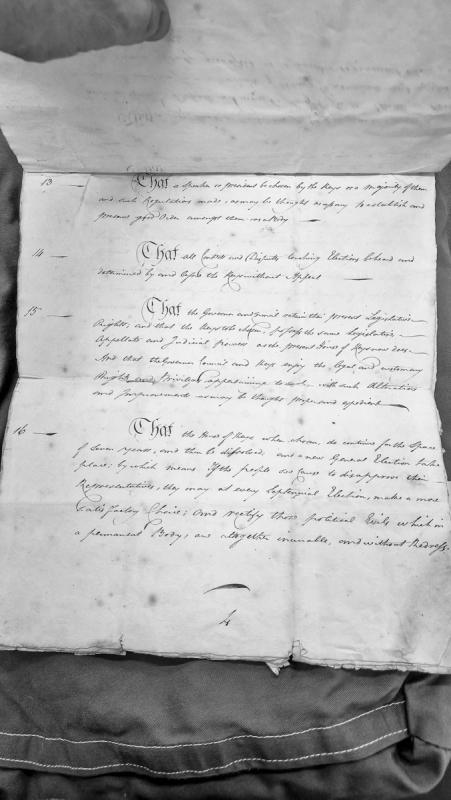
This document outlines proposed constitutional regulations for the House of Keys, including provisions for a Speaker, election dispute resolution, legislative powers, and a septennial election cycle. It addresses the governance structure and rights of the Keys in relation to the Governor and Council.
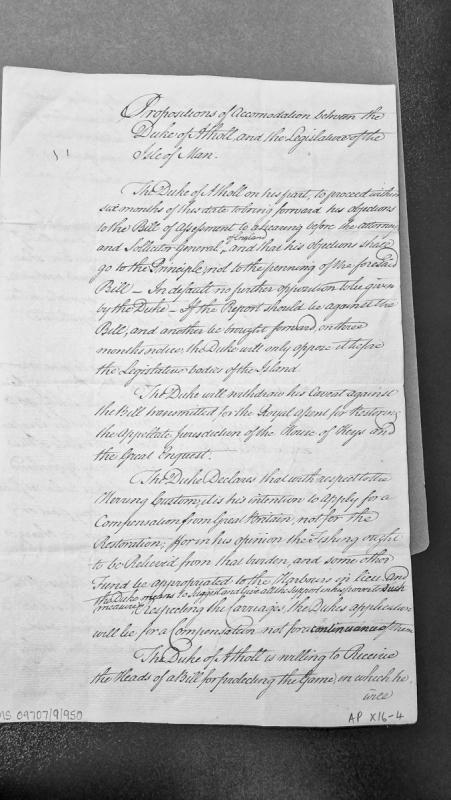
A memorandum of agreement setting out proposed terms of settlement between the Duke of Atholl and the Manx Legislature regarding disputes over the Bill of Assessment, appellate jurisdiction, herring customs, and game protection. The Duke agrees to submit objections to legal review and withdraw opposition to certain measures in exchange for consideration of compensation claims.
A medieval protection letter issued by the Marquis of Ireland to John, Bishop of Sodor, dated 24 October 1317, as the bishop prepared to travel to the Isle of Man in attendance upon the King and Marquis. The document is recorded in the Patent and Close Rolls of the Irish Chancery (10 Edward II). This source provides evidence of ecclesiastical authority and administrative structures in medieval Man.
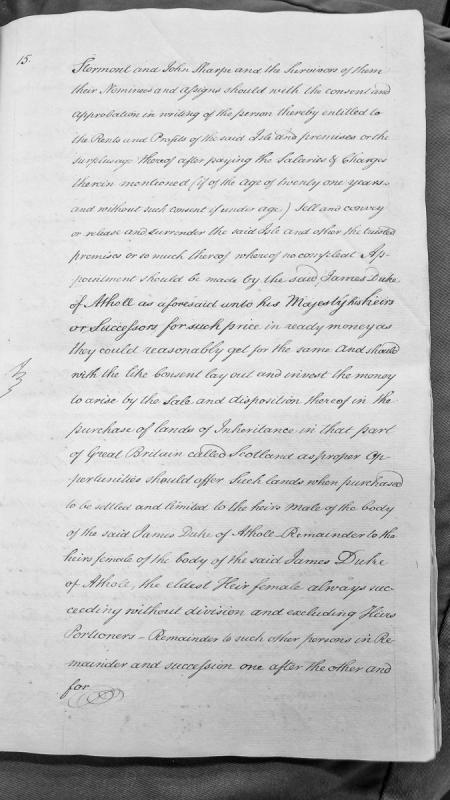
A legal document outlining the conditions under which Stormont and John Sharpe, as trustees and survivors, may sell the Isle of Man and other premises with appropriate consent. The proceeds are to be reinvested in Scottish lands settled on the heirs of James Duke of Atholl, with specific entail provisions favoring male heirs and excluding portioners.
This is a Python script designed to automatically download and archive web-based transcriptions from the Manx Notebook's Manx Society Volume 4 collection. It is not a historical document or source material, but rather a technical tool used to capture primary source transcriptions from the isle-of-man.com domain.
The first person met on a journey, or the first person to enter a house on New Year's Day. The qualtagh carried significance: a dark-haired man was lucky, a woman or a red-haired person less so. The custom shaped behaviour at the turning of the year and reflected the Manx understanding that thresholds and beginnings carried particular power. The qualtagh tradition connects to the wider Celtic belief in the significance of first encounters and first footings.
Manx garrison family who served in the Lord of Mann's military establishment. One of the families whose generations of service were swept aside when the Board of Ordnance took over after 1765.
Lady of Mann for sixty-four years — the longest-reigning Lord since the Stanleys. In 1847, the royal yacht anchored in Ramsey Bay. The weather had been too rough for Douglas. Victoria was seasick and could not leave the cabin. Prince Albert came ashore, was rowed to Ballure beach, and walked up the hill at Lhergy Frissel to admire the view. He chatted about the potato blight. He returned to the yacht. The chief bailiff of Douglas, who had rushed north in full municipal dress, arrived in time to watch the yacht sail away. Victoria — sixty-four years as Lady of Mann — never set foot on the Island. The Manx people built a forty-five-foot granite tower on the spot where Albert had stood.
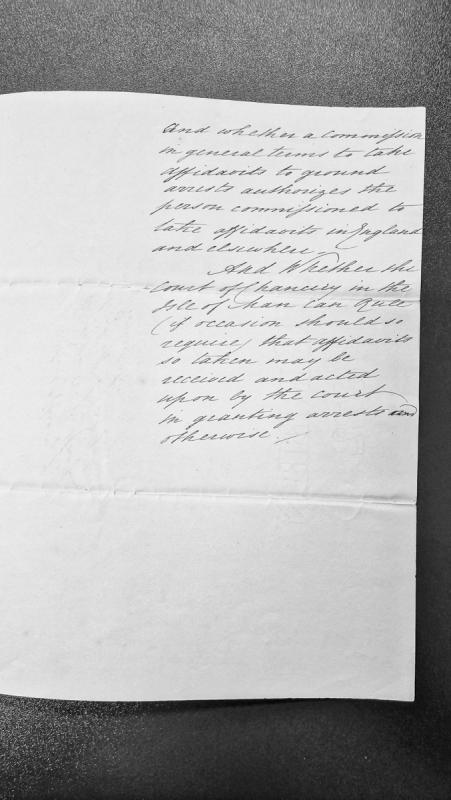
A legal document posing two questions about the scope of a general commission to take affidavits for arrest proceedings: whether such a commission authorizes taking affidavits in England and elsewhere, and whether the Court of Chancery in the Isle of Man can rule on the admissibility of such affidavits in arrest proceedings.
John Quilliam was born in Castletown — the old capital where Castle Rushen stood with its lead roof stripped and its barracks crumbling. He grew up in the post-Revestment economy of sixpence-a-day wages and collapsed commerce. He was pressed into the Royal Navy. He rose through the ranks until by 1805 he was First Lieutenant of HMS Victory, Nelson's flagship. When the wheel was shot away during the battle, Quilliam organised the tiller ropes that steered the ship through the engagement — skills learned on the Irish Sea saving Nelson's flagship at Trafalgar. He came home to Mann. He sat in the House of Keys. The pressed fisherman from a ruined harbour became one of the most distinguished naval officers of his age, and then returned to serve the island that had formed him.
A merchant of the city of Barcelona, resident in Douglas for some months past. In July 1759, went to the house of a soldier named John Erskine to demand some shirts belonging to a sailor in his employ. Erskine 'collered' and struck him. Later, while it was dark, Abello was seized in the street by two soldiers, held by the arms while Erskine struck him with a club, dragged to the fort and confined in its dungeon for nearly five hours. A Barcelona merchant, living in Douglas, employing Manx sailors, collecting laundry — and ending the day in a military dungeon. The Court fined Erskine and dismissed him from the service.