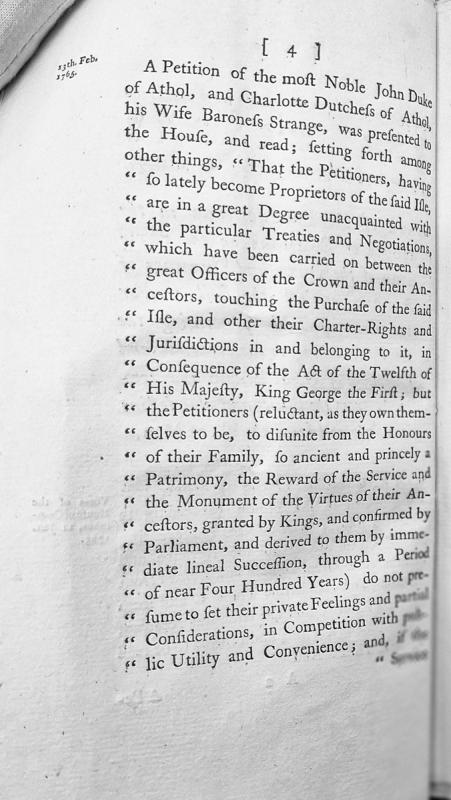
A petition presented to the House of Keys by John, Duke of Athol, and Charlotte, Duchess of Athol (Baroness Strange), concerning their recent acquisition of the Isle of Man. The petitioners acknowledge their unfamiliarity with historical treaties and charter rights related to the island's purchase and governance, while expressing reluctance to relinquish their ancestral rights but willingness to subordinate private considerations to public utility.
A petition from the Keys (Manx parliament) and merchants to King George III, dated February 1769, requesting relief from restrictive post-Revestment trade laws. Accompanied by a letter from Governor John Wood presenting the petition to the Lords of the Treasury. The petition details economic distress caused by trade restrictions, emigration, declining fisheries, and reduced military presence, while emphasizing Manx loyalty and requesting commercial privileges equal to other British dominions.
A formal petition from the Keys (Manx Parliament) and merchants to King George III, requesting relief from post-Revestment trade restrictions that have severely damaged the island's economy. The petition details economic distress, population emigration, declining fisheries, harbour decay, and loss of military garrison, arguing that the 1765 restrictive legislation was designed for the proprietary smuggling trade which no longer exists. Accompanied by a covering letter from Governor John Wood and supporting memorial.
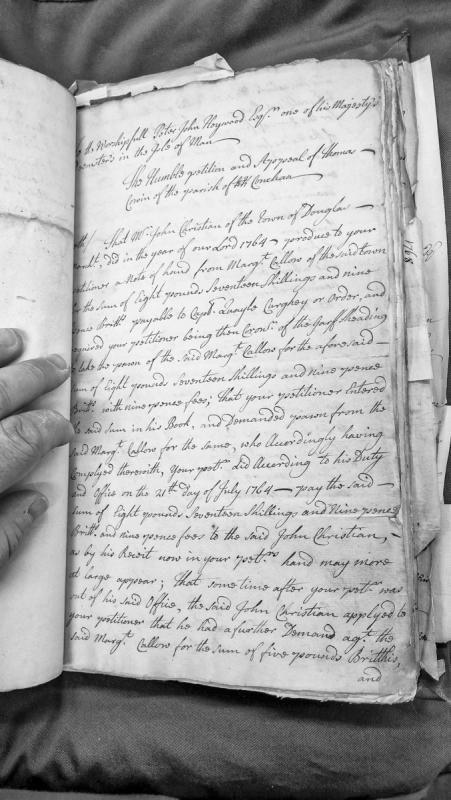
A humble petition and appeal to Peter John Heywood, a Deemster of the Isle of Man, from Thomas Corrin concerning a debt collection matter. Corrin describes collecting a sum of £8 17s 9d in 1764 from Margaret Callow at the instruction of John Christian, a merchant, and subsequently being approached for collection of a further £5 debt.
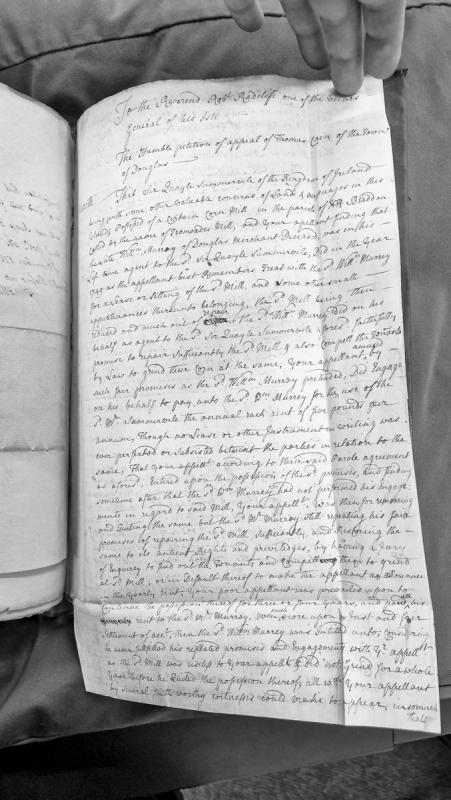
A humble petition of appeal by Thomas Crier of Douglas against Sir Quayle Summerville concerning a corn mill (Tromodde Mill) in the parish of Braddan. Crier claims he entered into a verbal agreement in 1749 to lease the mill at five pounds annual rent, with William Murray (Summerville's agent) promising repairs and enforcement of tenant grinding rights. Crier alleges Murray failed to fulfill these obligations and the mill became unusable.
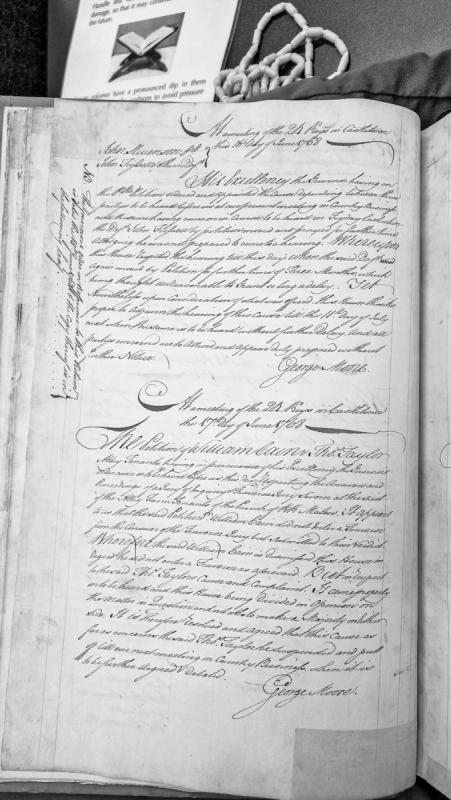
Record of a House of Keys meeting in Castletown where petitioners William Cain and Thomas Taylor sought review of jury proceedings related to May Farm Tenants of the Parish of Malew. The judgment dismissed Cain's petition as he failed to enter a traverse, but suspended Taylor's case for further debate at the next meeting.
A petition by William Christian to Charles II (dated 1660) protesting his imprisonment by the Earl of Derby on the Isle of Man and his trial for treason related to alleged 1651 opposition to the Countess Dowager of Derby. Christian claims the charges fall under the Act of Indemnity and requests trial under English law. The petition illustrates tensions between Manx and English legal jurisdiction and the precarious position of landowners with estates in both Lancashire and Man during the Restoration period.
A petition submitted by William Christian to King Charles II in 1660, appealing against his imprisonment and trial for treason by the Earl of Derby on the Isle of Man. Christian claims the proceedings violate English law and that any wartime actions are covered by the Act of Indemnity. The petition reveals tensions between Manx and English legal jurisdiction and post-Restoration political instability on the Island.
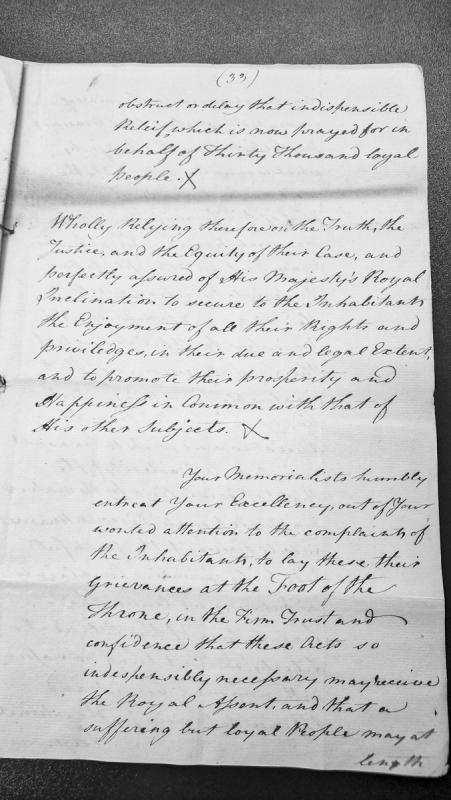
This is an excerpt from a petition addressing grievances of the inhabitants, likely of the Isle of Man. The petitioners appeal to the Crown through an official (likely a Governor or similar) to lay their grievances before the throne, seeking royal assent for necessary acts and relief for a suffering but loyal population.
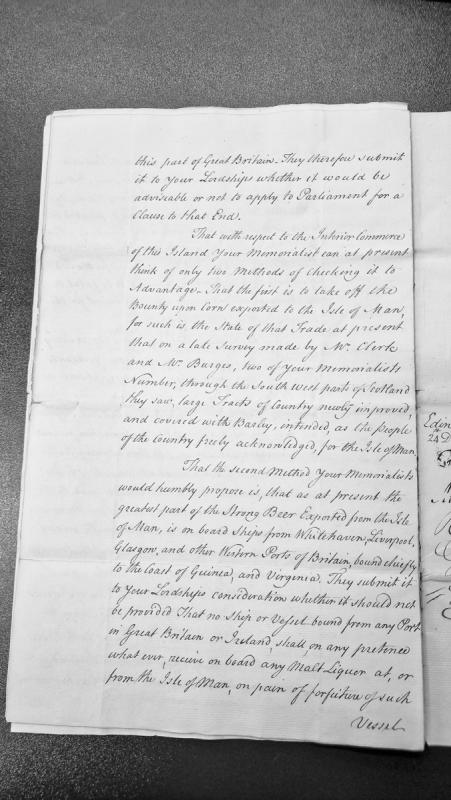
A petition submitted to the House of Lords addressing trade regulations affecting the Isle of Man. The memorialists propose two methods to regulate interior commerce: removing bounties on corn exports to the Isle of Man and restricting the export of strong beer from the island on British and Irish vessels bound to overseas ports.
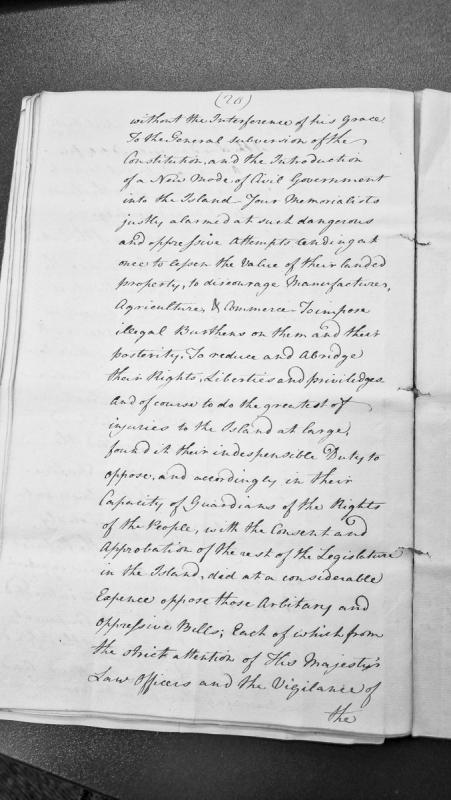
A formal petition from memorialists expressing alarm at what they characterize as dangerous and oppressive legislative attempts. The petitioners, acting as guardians of the people's rights with legislative consent, detail their concerns about threats to landed property values, commerce, agriculture, and the constitutional rights and liberties of islanders.
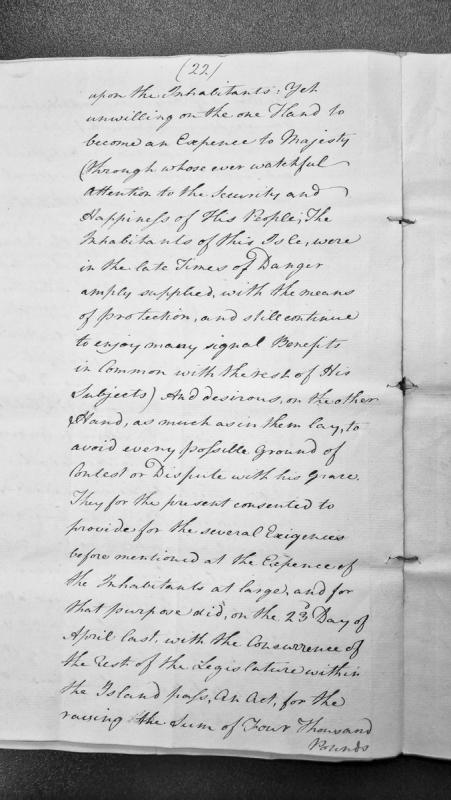
Fragment of a formal petition or administrative document discussing the inhabitants' willingness to fund public expenses while avoiding dispute with the Duke (his Grace). References an Act passed on 23 April for raising Four Thousand Pounds. The document expresses gratitude for royal protection during times of danger.
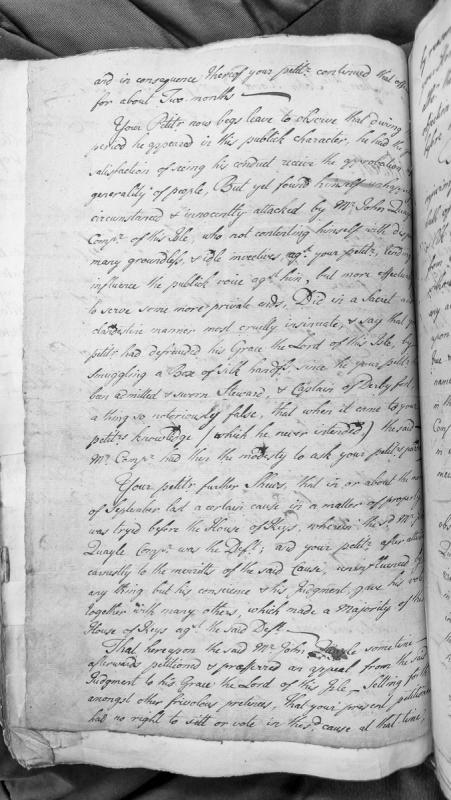
A petition submitted to authorities (likely the Lord of the Isle) by an individual who served as Steward and Castlain of Derby Fort. The petitioner complains of defamatory accusations by John Quayle (Comptroller) regarding alleged silk smuggling, and disputes Quayle's appeal of a House of Keys judgment in which the petitioner voted against him.
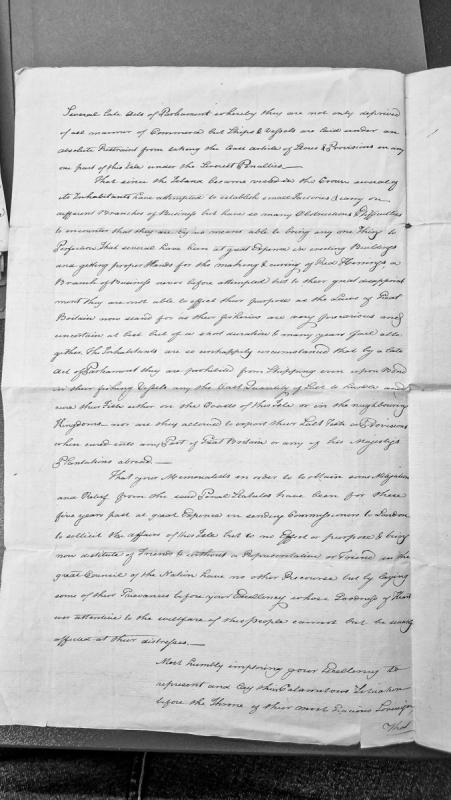
A petition from Isle of Man inhabitants detailing their grievances regarding parliamentary acts that restrict commerce, fishing, and the export of provisions. The petitioners describe their failed attempts to establish industries such as herring curing and salt fish production, and their unsuccessful efforts to obtain relief through commissioners sent to London over five years.
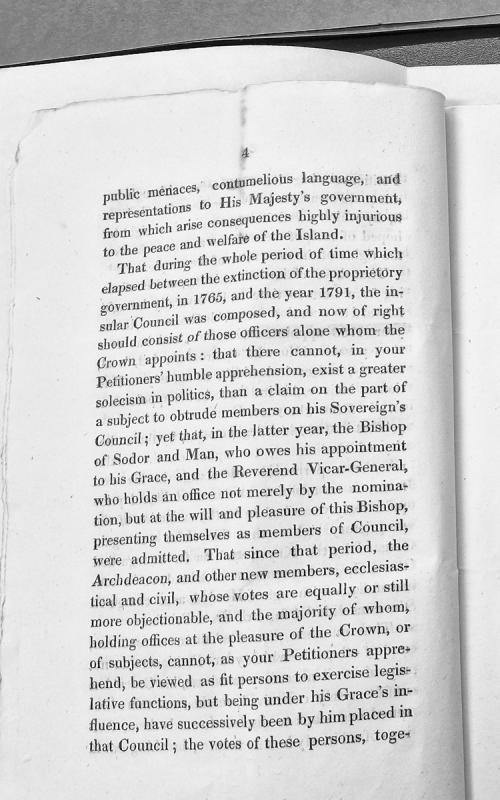
A petition addressing concerns about the composition of the insular Council, particularly objecting to the admission of ecclesiastical members (Bishop, Vicar-General, Archdeacon) appointed through the Duke of Atholl's influence rather than direct Crown appointment. The petitioners argue this constitutes a breach of proper governance principles established after 1765.
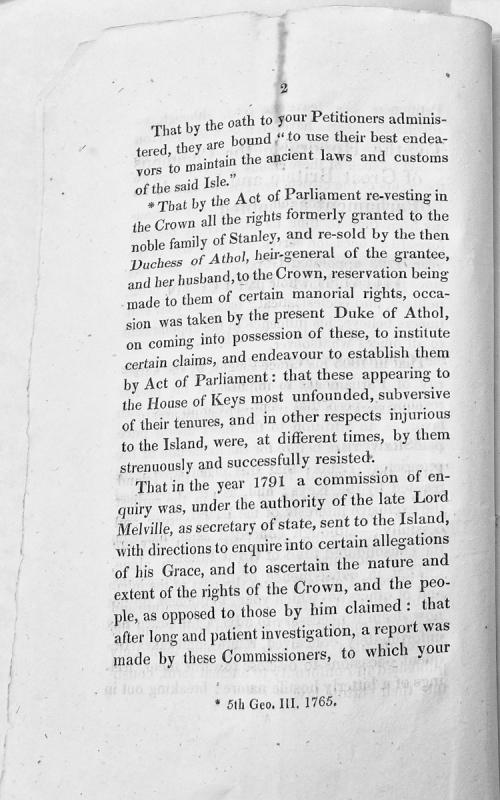
This is page 2 of a petition to authorities concerning disputes over manorial and Crown rights on the Isle of Man. It references oaths to maintain ancient laws, an Act of Parliament re-vesting rights to the Crown from the Stanley family (via the Duchess of Athol), and the Duke of Athol's subsequent claims that were resisted by the House of Keys. It mentions a commission of enquiry sent in 1791 under Lord Melville.
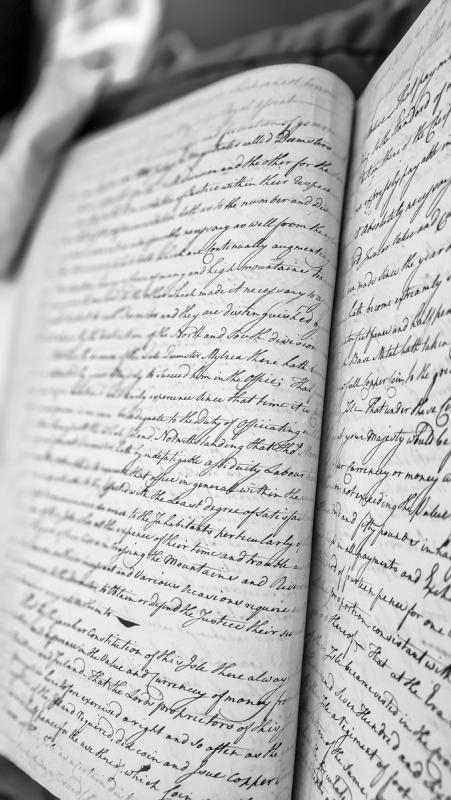
A petition addressing the Crown regarding the adequacy of the Deemster (judicial officer) system on the Isle of Man. The document discusses the division of administrative and judicial authority between North and South divisions, references the late Deemster Mylrea, and argues that a single Deemster is inadequate for serving the entire island, particularly given geographical challenges such as mountainous terrain. It also touches on currency and coinage rights of the Lords Proprietors.
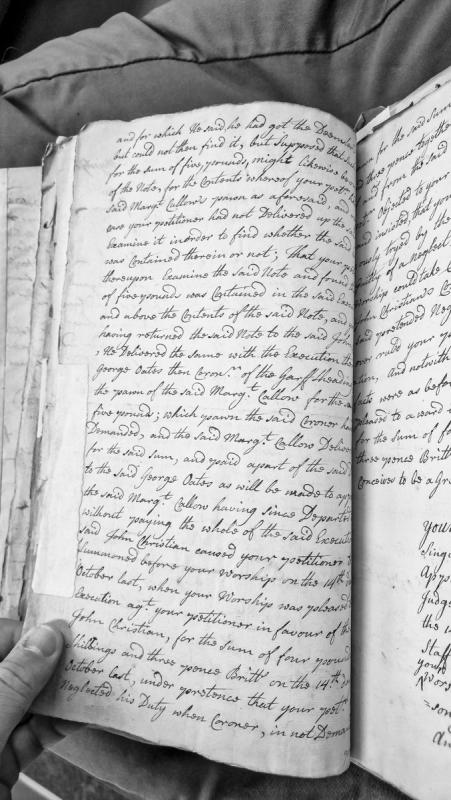
A petition concerning a dispute between the petitioner and John Christian over an execution, a pawn held by Margaret Callow, and allegations that the petitioner neglected his duty as Coroner of the Garff Sheading. The document details transactions involving a note for five pounds and disputes over payment of an execution.
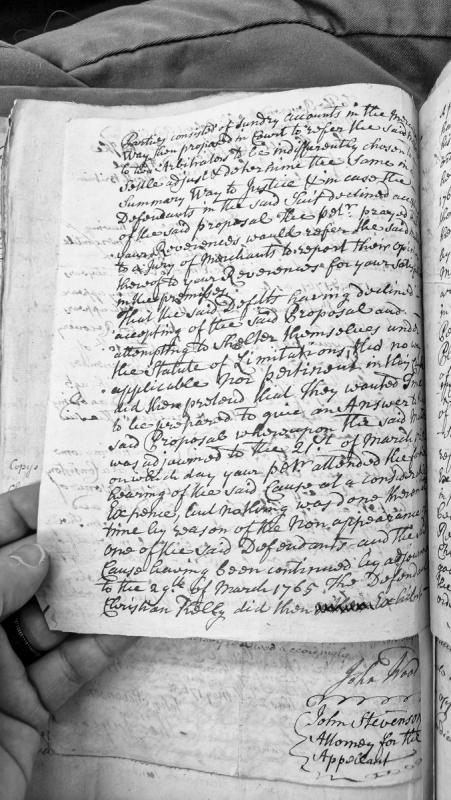
A petition describing a dispute involving sundry merchant accounts. The petitioner proposed referral to two arbitrators or, if defendants declined, to a jury of merchants. The defendants invoked the Statute of Limitations and sought delay, and the matter was adjourned multiple times, with the case continuing to 29 March 1765 when defendant Christian Kelly exhibited evidence.
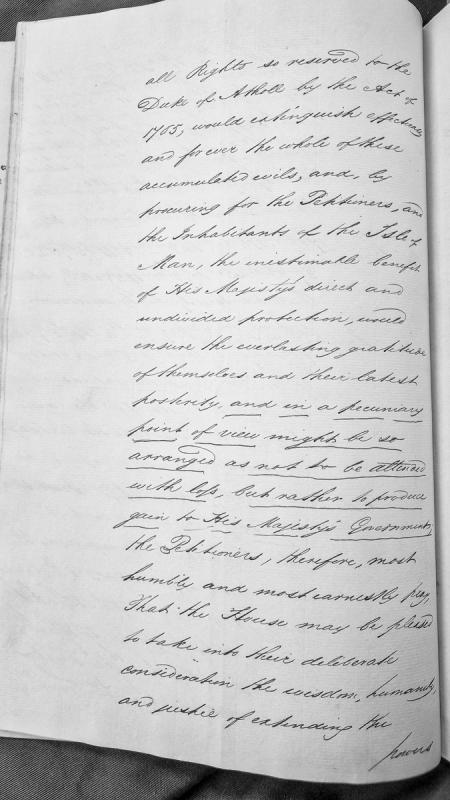
A petition addressing the House of Keys concerning the rights reserved to the Duke of Atholl by the Act of 1765 and requesting consideration of extending His Majesty's direct protection to the Isle of Man. The petition argues that such action would eliminate accumulated evils and benefit both the inhabitants and the Crown financially.
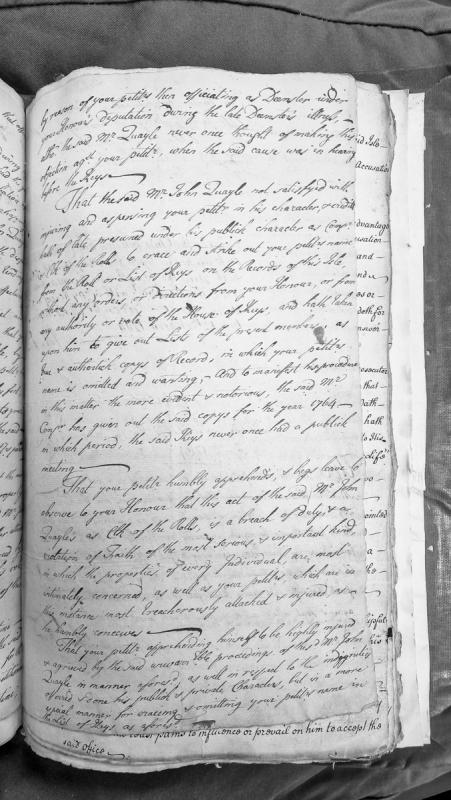
A petition complaining that John Quayle, acting as Comptroller and Clerk of the Rolls, has unlawfully erased the petitioner's name from the official roll or list of House of Keys members without proper authority. The petitioner claims this action violates official duty, damages his character and credit, and threatens the security of property rights.
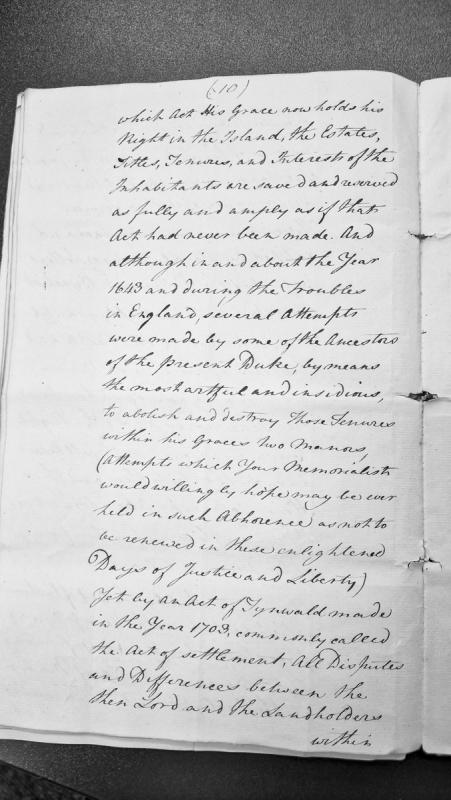
This is a fragment of a petition (page 10) addressing the preservation of estates, titles, tenures, and interests of inhabitants in the Isle of Man. It references historical disputes in 1643 during the English Civil War involving the Duke's ancestors' attempts to abolish tenures in his two Manors, and cites the 1703 Act of Settlement (Tynewald) as resolving disputes between the Lord and landholders.
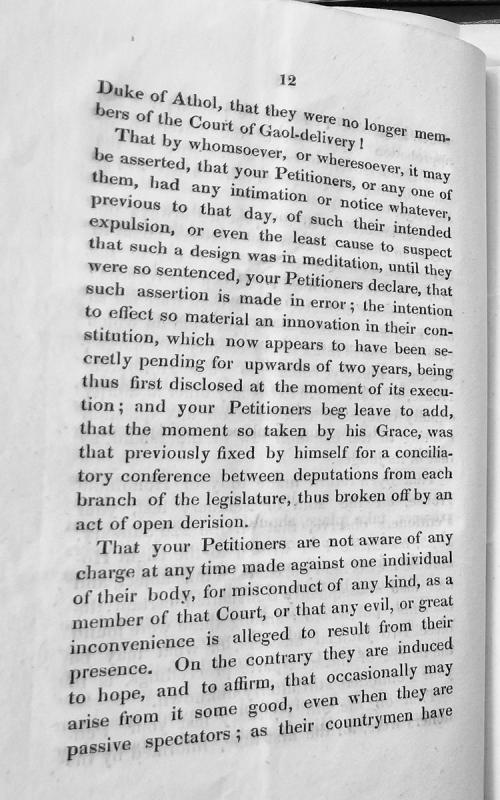
This is an excerpt from a petition protesting the expulsion of members from the Court of Gaol-delivery by the Duke of Athol. The petitioners claim they received no prior notice or warning of their intended removal, and argue that this constitutes a material innovation to their constitutional status. They also note that no charges of misconduct have been made against any member.
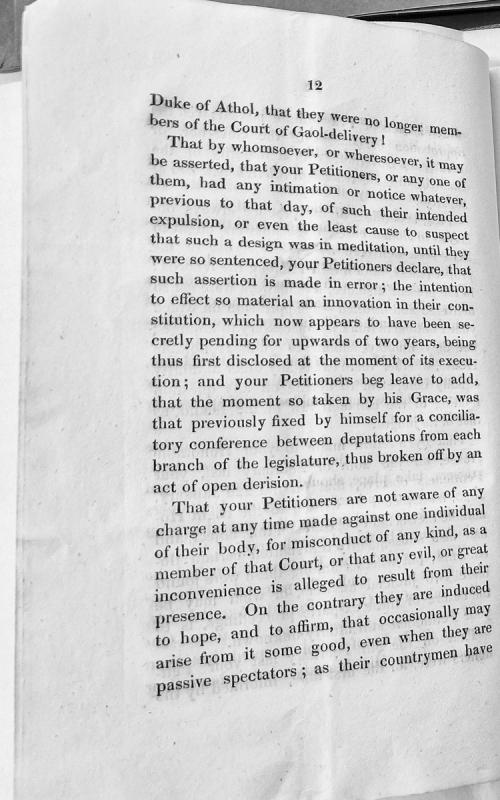
A petition protesting the expulsion of members from the Court of Gaol-delivery by the Duke of Athol. The petitioners assert they had no prior notice or cause to suspect such action, claim the decision was made secretly over two years, and deny any misconduct by their members.
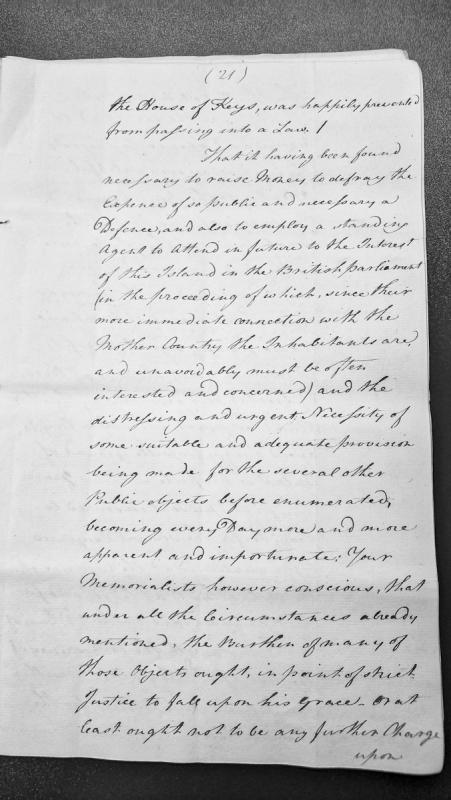
This is an excerpt from a petition to authorities (likely the Governor) addressing the financial burden of defending the Isle of Man and maintaining a standing agent in Parliament. The petitioners argue that certain public expenses should rightfully fall upon the Governor rather than further burdening the Island's inhabitants.