An undated but c.1764 analysis of smuggling trade through the Isle of Man, detailing imports (tea, silks, tobacco, wine, brandy), vessels employed, routes to Scotland, Ireland, Wales, and estimated annual revenue loss to the British Crown (£200,000). Provides specific duty rates and cargo weights from seized vessels. A key document for understanding the scale and organization of the running trade that prompted the Revestment.
Saxon king of Mercia. His silver coins are conspicuously absent from Manx archaeology — evidence that the Island's trading networks looked west and north, not towards Saxon England.
Letter from the Office of Ordnance to the Marquis of Granby reporting on Engineer Dawson's inspection of barracks at Castletown for housing His Majesty's troops. Discusses the cessation of beneficial trade with France and Spain following the 1765 Purchase, which removed the island's previous protection from privateers, and requests authorization for ordnance, ammunition, and stores to be sent to the island.
Official letter from the Office of Ordnance to the Marquis of Granby reporting on Engineer Dawson's survey and preparation of barracks at Castletown to accommodate His Majesty's troops following the 1765 Revestment. The document includes critical commentary on the loss of the Island's protective smuggling trade and requests authorization for ordnance, ammunition, and stores to be sent to the Island.
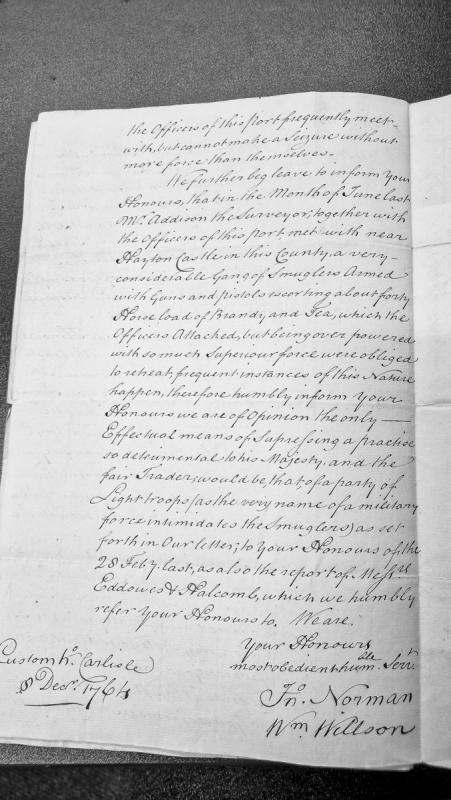
Letter from the officers of Carlisle Custom House to their superiors reporting on smuggling activities and requesting military assistance. The officers describe an armed encounter with smugglers in June near Hayton Castle and argue that deploying light troops is the only effective means of suppressing smuggling operations that threaten the Crown's revenue and legitimate traders.
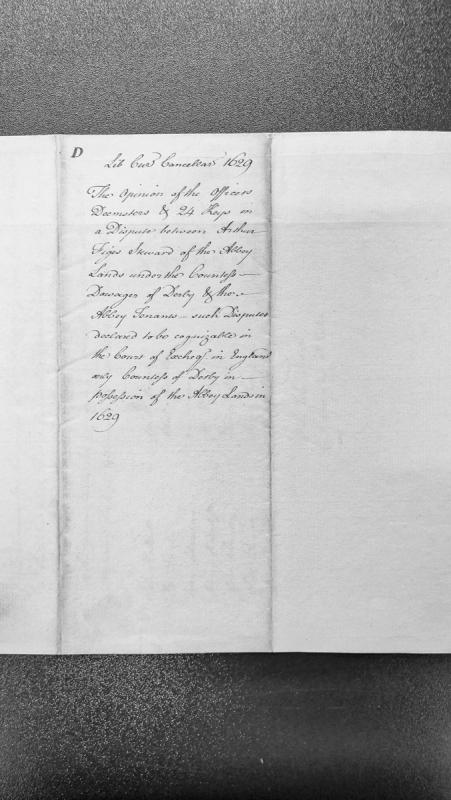
A legal opinion from the Deemsters and House of Keys regarding a dispute between Arthur Figes (Steward of Abbey Lands under the Countess-Dowager of Derby) and the Abbey Tenants. The opinion determines that such disputes are cognizable only in the Court of the Exchequer in England, and notes the Countess of Derby's possession of the Abbey Lands in 1629.
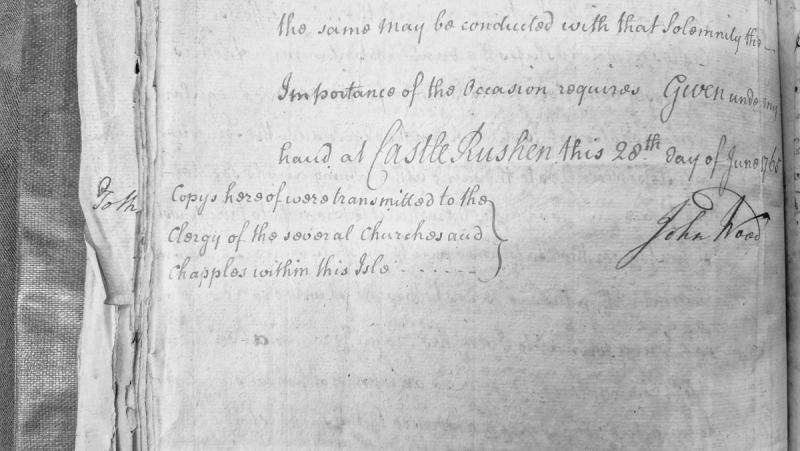
A fragment of an official document dated June 28th, 1765, issued from Castle Rushen. The text emphasizes the importance of conducting proceedings with appropriate solemnity. A marginal note indicates that copies were distributed to clergy of various churches and chapels throughout the Isle of Man.
Manx emigrants settled in Ohio in the 1820s-1840s, driven by the economic collapse that followed the Revestment. John Sayle wrote home from Ohio in Manx Gaelic. The language lived longer in Ohio than it did on the Island — one of the book's most powerful single sentences.
Mary's Feast, observed on the eve of Lady Day (24 March). One of the traditional Manx observances marking the transition points in the agricultural and spiritual year. Part of the network of quarter days and feast days that structured Manx life before and after the Revestment, requiring no institutional support to continue.
Lord Protector of the Commonwealth. His forces seized the Isle of Man from the Stanley lordship during the Civil War. James Chaloner served as his governor. The Parliamentarian period brought the first external military occupation of the Island.
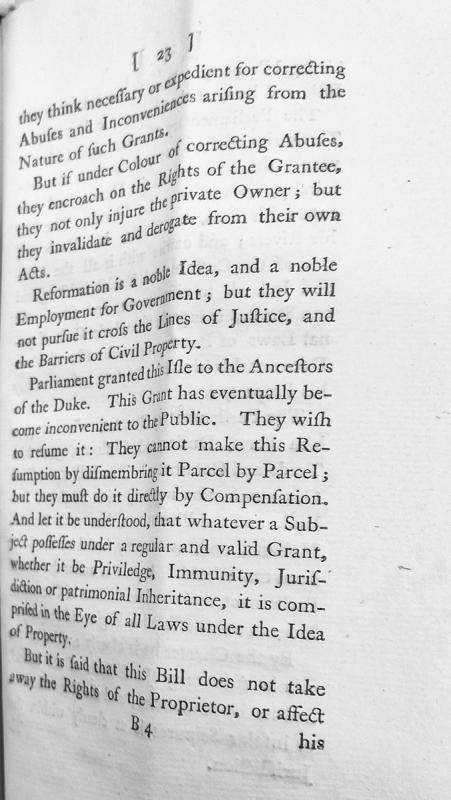
A legal opinion arguing that while Parliament may reform abuses arising from grants, it cannot encroach on the rights of grantees without compensation. The text discusses Parliament's grant of the Isle of Man to the Duke's ancestors and argues that any resumption of such grants must be done through direct compensation rather than piecemeal dismemberment, as property rights are protected under law.
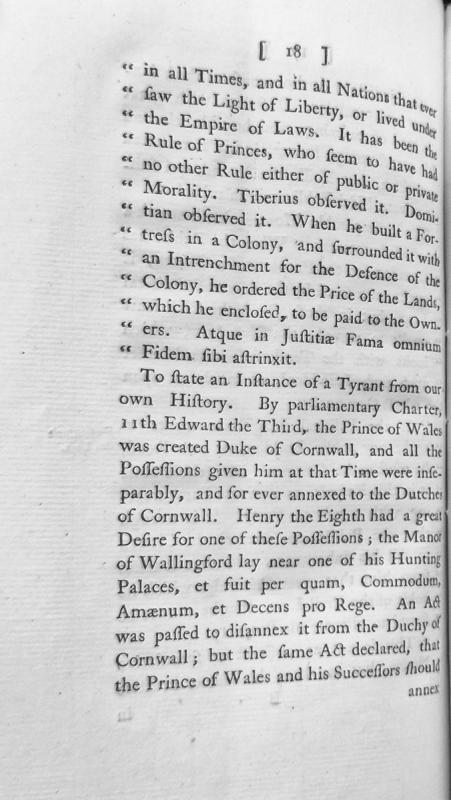
A legal or political argument discussing the principles of justice and tyranny, with historical examples from Roman emperors (Tiberius, Domitian) and English history (Edward III, Henry VIII). The passage argues that even tyrants have recognized the principle of compensating owners for seized lands, citing the example of Henry VIII's seizure of Wallingford Manor from the Duchy of Cornwall.
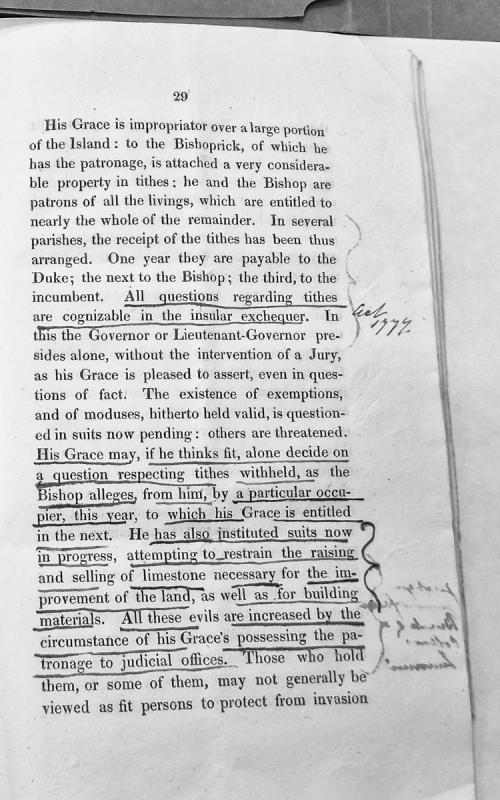
A critical examination of the Duke of Atholl's extensive powers over tithe collection, church patronage, and judicial appointments in the Isle of Man. The document details how tithes are distributed cyclically among the Duke, Bishop, and incumbents, and raises concerns about conflicts of interest arising from his control of both tithe disputes and judicial offices.
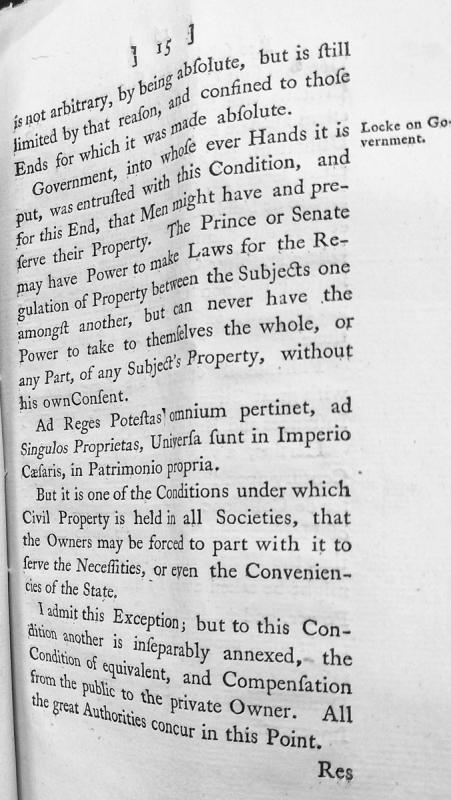
A legal or philosophical treatise discussing the nature of absolute government power and its limitations regarding subjects' property rights. The document cites Locke on Government and Latin legal principles, arguing that while governments may regulate property between subjects, they cannot take property without consent, though exceptions exist for state necessity with compensation.
Parish adjoining Douglas. The Onchan church passage in Chapter 6 is one of the personal-voice passages retained in the Bryson tightening — it works because it emerges from the historical material rather than arriving as memoir. Fletcher Christian was baptised here.
The Manx ritual year ran on a calendar older than Christianity: Laa’l Breeshey (1 February), Laa Boaldyn (May Day), Tynwald Day / Midsummer Eve, Laa Luanys (Lammas), Hop-tu-Naa (31 October).
The Christian calendar laid its feasts on top without replacing the older dates. The Norse added their own layer. In 1753 the Gregorian calendar arrived, shifting everything by eleven days.
Build five parallel calendars for one year: the pre-Christian Manx year, the Christian liturgical year, the Norse/agricultural year, the Julian calendar, and the modern Gregorian calendar.
When you lay them side by side, you can see every culture’s calendar coexisting on the same island. No one replacing any other.
A heraldic opinion by Sir John Vanbrugh (Clarencieux King of Arms) on the rightful arms of the Isle of Man upon James, Duke of Atholl's accession to sovereignty in 1735. The document traces the heraldic history of Man from 1475, examining seals, patents, and the arms borne by various lords and kings, including discussion of the ship seal, the three-legged emblem, and the Stanley family's quarterings.
A heraldic opinion issued by Sir John Vanbrugh (Clarencieux King of Arms) regarding the proper arms and heraldic claims to the Isle of Man upon James, Duke of Atholl's accession to government in 1735. The document traces the heraldic history of Man from 1475, examines historical seals and patents, discusses competing claims (Scrop, Stanley, Montague families), and analyzes Garter plates at Windsor Chapel to establish Atholl's entitlement. Provides crucial genealogical and constitutional context for understanding property transfer and sovereignty claims.
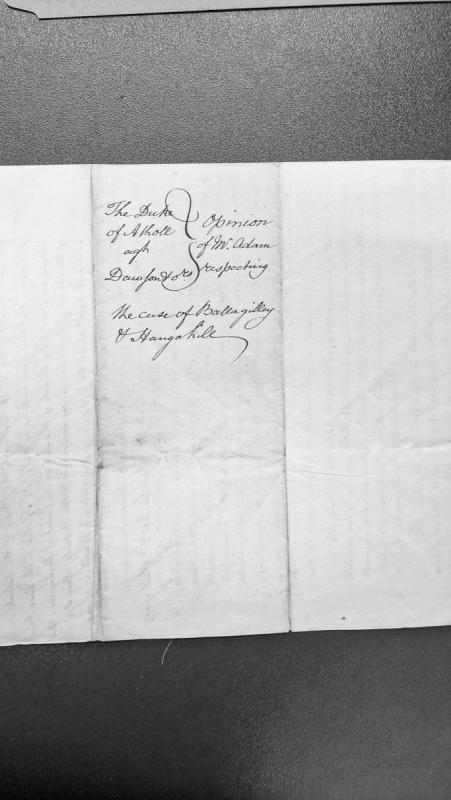
A legal opinion document concerning a dispute between the Duke of Atholl and Dawson and others, relating to properties or lands at Ballagilley and Hango Hill on the Isle of Man. The opinion is provided by Mr. Adam, likely a legal adviser or counsel.
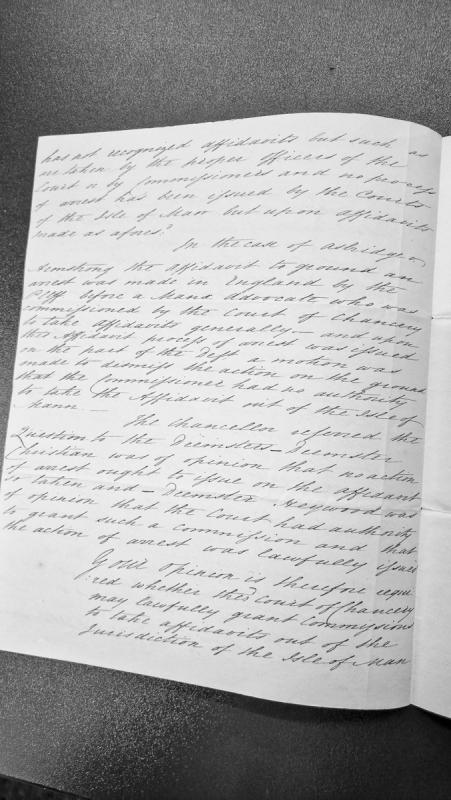
A legal opinion document concerning whether the Court of Chancery of the Isle of Man has authority to grant commissions for taking affidavits outside its jurisdiction. The document references the case of Ashbridge v Armstrong, where an affidavit was taken in England by a Manx Advocate commissioned by the Court, leading to conflicting opinions from two Deemsters on the validity of such commissions.
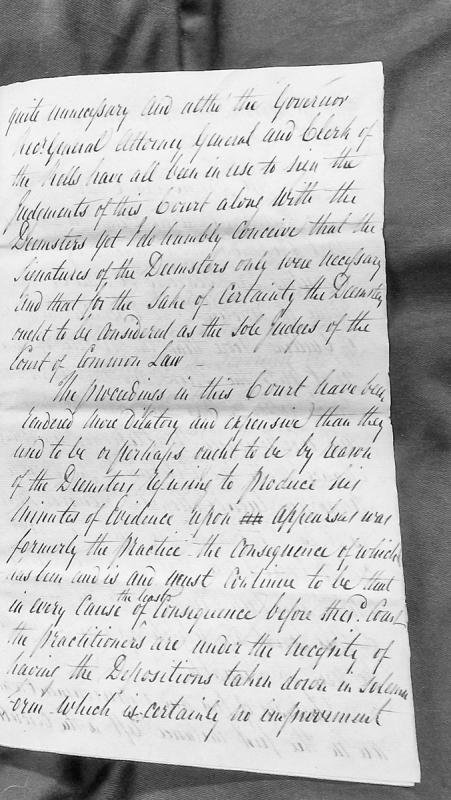
A legal opinion discussing the proper authority and procedures of the Court of Common Law, specifically addressing whether signatures beyond the Deemsters are necessary on judgments and criticizing the Deemsters' refusal to produce minutes of evidence on appeals.
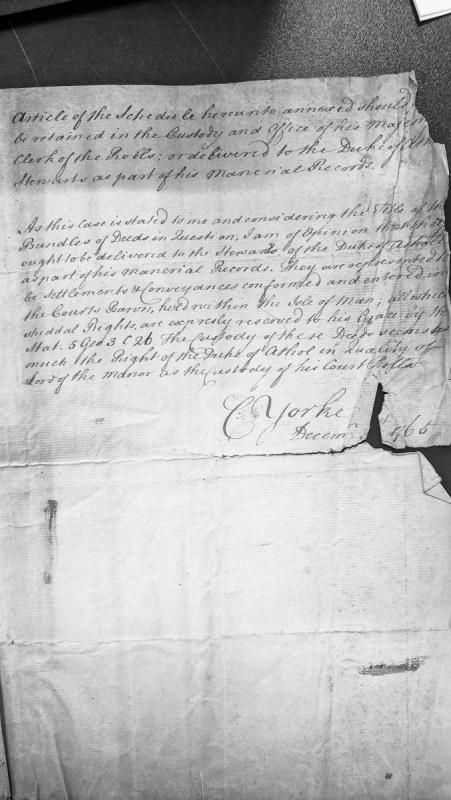
A legal opinion addressing the proper custody and disposition of bundles of deeds relating to the Duke of Athol's manorial records on the Isle of Man. The opinion concludes that the deeds should be delivered to the Duke's stewards as manorial records, citing statutory authority from the reign of George III.
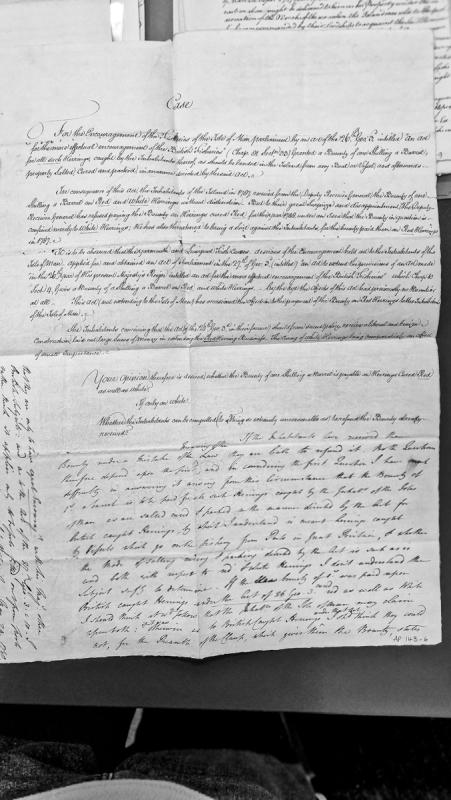
A legal opinion addressing whether Isle of Man herring fishermen are entitled to a one shilling per barrel bounty on red herrings as well as white herrings under the 1786 British Fisheries Act. The opinion discusses conflicting interpretations by the Deputy Receiver General and references subsequent legislation affecting Yarmouth and Liverpool curers.
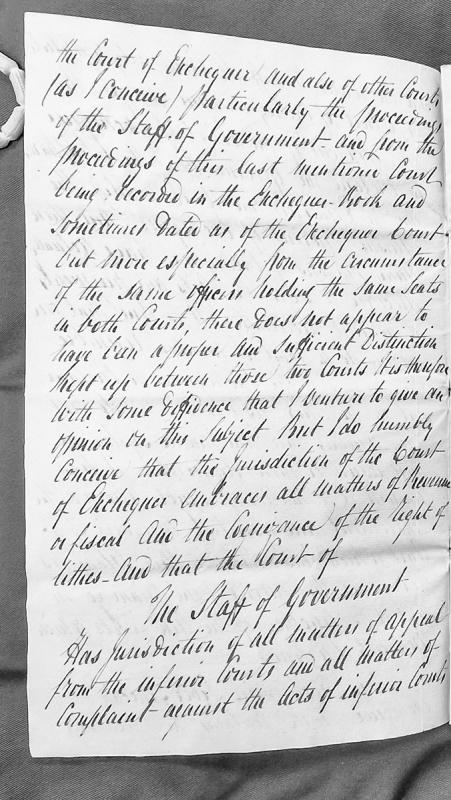
A legal opinion discussing the jurisdictional distinctions between the Court of Exchequer and the Staff of Government court in the Isle of Man. The author expresses uncertainty about the proper separation of these courts, noting that officers hold seats in both and proceedings are sometimes recorded interchangeably in the Exchequer Book. The opinion concludes that the Court of Exchequer has jurisdiction over revenue and fiscal matters including tithes, while the Staff of Government has jurisdiction over appeals and complaints against inferior courts.
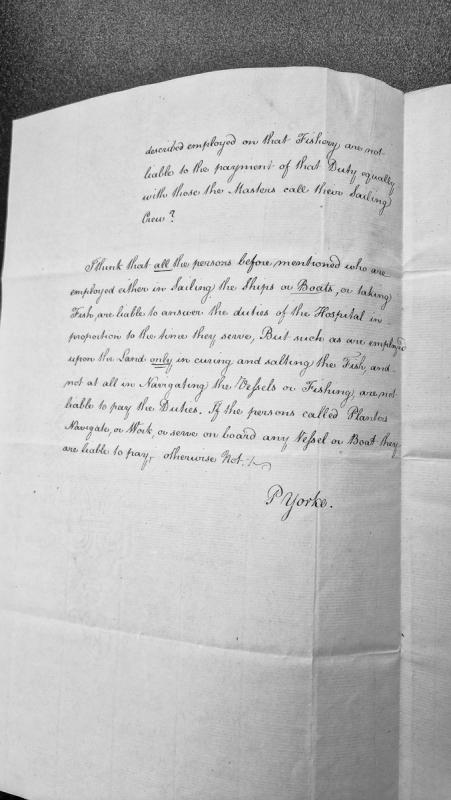
A legal opinion addressing the question of whether certain workers employed in the Manx fishery, particularly those involved in curing and salting fish on land versus sailing and fishing at sea, are liable to pay Hospital duties. The opinion clarifies that only those engaged in sailing vessels or fishing are liable, while those employed solely in land-based processing are exempt.