Legal depositions and inquest proceedings from Rushen Sheading concerning the discovery and investigation of counterfeited Manx copper pence. George Wilks and his son John Wilks were suspected of counterfeiting; evidence includes sworn testimonies from witnesses, soldiers, and the coroner, recovered counterfeit coins, and molds. The grand jury indicted George Wilks but he was later acquitted by the 24 Keys, who found the grand jury's proceedings illegal under the 1709 counterfeiting act. Includes subsequent petitions and fines.
Natural harbour in the south of the Isle of Man near Castletown. Where Bishop Thomas Wilson arrived on 6 April 1698 to begin his fifty-seven-year episcopacy. Named for the Derby family who held the lordship.
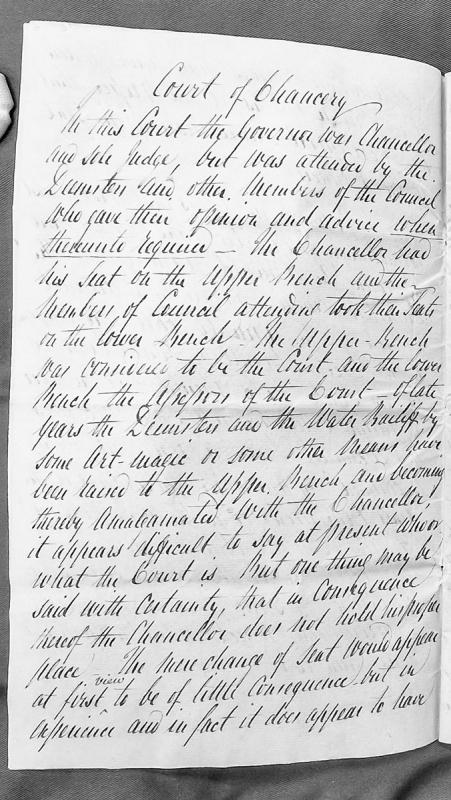
A legal or administrative document describing the structure and composition of the Court of Chancery on the Isle of Man, including the role of the Governor as Chancellor and sole judge, the advisory role of Deemsters and Council members, and recent changes whereby Deemsters and the Water Bailiff have been elevated to the Upper Bench alongside the Chancellor. The author expresses concern about the consequences of these structural changes.
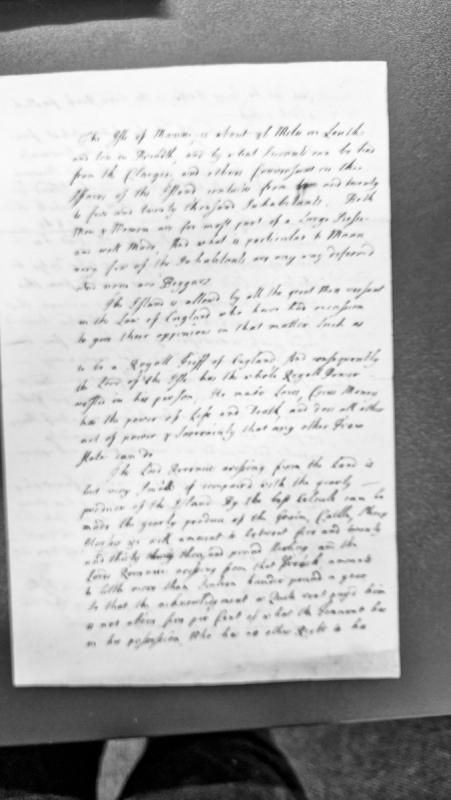
A descriptive account of the Isle of Man covering its dimensions (31 miles long, 10 miles broad), population estimates (24,000 inhabitants), physical characteristics of inhabitants, and its legal status as a Royal Feoff of England. The document discusses the Lord's regalia power and analyzes the island's economic productivity and revenue structure.
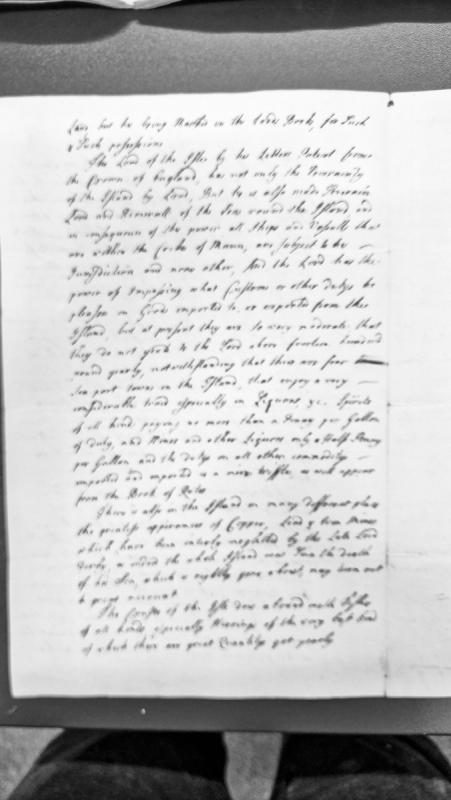
A document describing the Lord of the Isle's authority over Mann granted by Letters Patent from the Crown of England, including his sovereignty over land and sea, powers to impose customs duties, and the island's natural resources including mineral deposits and fishing grounds. The text notes the moderate customs revenues and the neglect of mining development under the late Lord Derby.
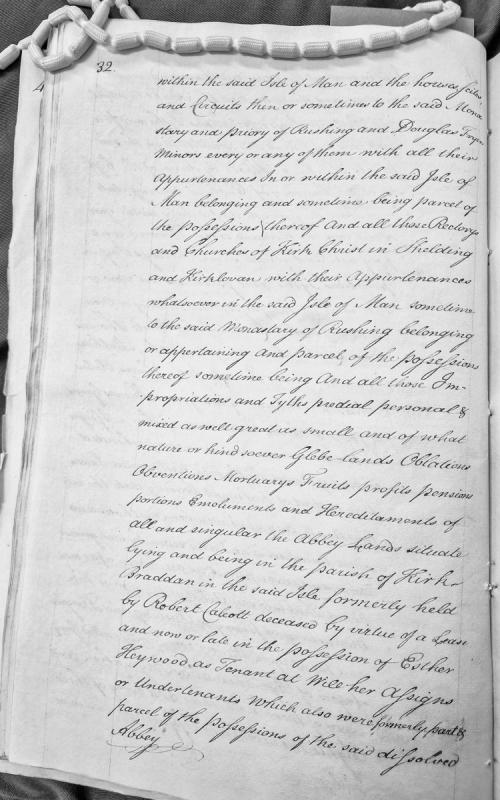
A legal document excerpt describing the extent and nature of lands, houses, churches, and ecclesiastical revenues belonging to dissolved monasteries in the Isle of Man. The text details properties formerly held by the Monastery of Rushen and others, including churches at Kirk Christ in Shelding and Kirklovan, along with various tithes, glebe lands, and other church revenues.
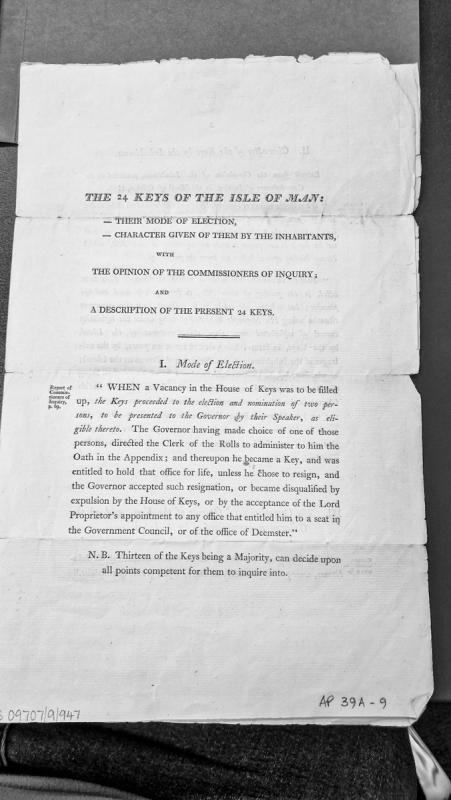
A printed pamphlet describing the structure and function of the House of Keys in the Isle of Man, including their mode of election as reported by the Commissioners of Inquiry. The document outlines the procedure for filling vacancies, the role of the Governor, and the requirements for holding office.
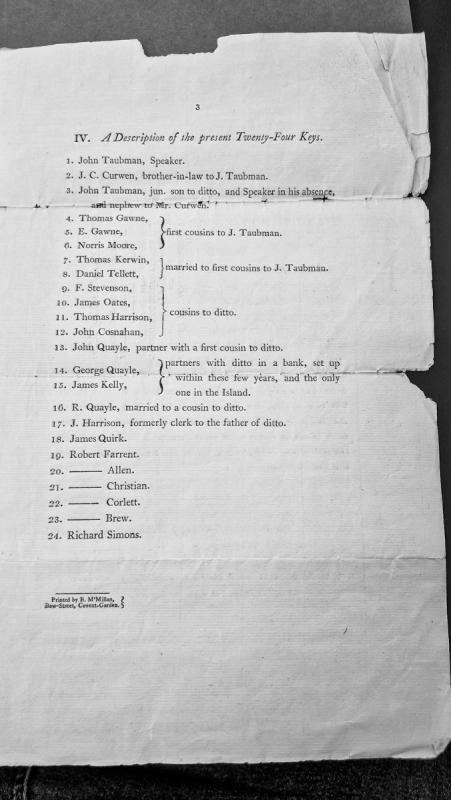
A printed list describing the composition of the House of Keys (the Manx legislature) at a particular point in time, identifying all 24 members by name and noting their family relationships, professional connections, and business interests. The document emphasizes the interconnected nature of the governing body through kinship and partnership ties.
The ecclesiastical jurisdiction of the Isle of Man. Sodor derives from the Norse Sudreyjar, the Southern Isles. The diocese had its own bishop, its own cathedral at Peel (St German's), its own ecclesiastical courts, and its own relationship with the wider church that owed nothing to Canterbury and little to York. The Archbishop of Trondheim held metropolitan authority until Pope Calixtus III transferred the diocese to York in 1458 — a papal act, not an English one. Bishop Thomas Wilson (1698–1755) rebuilt the diocese over fifty-seven years, establishing parochial schools and libraries, translating scripture into Manx, and defending ecclesiastical jurisdiction against the civil power. After the Revestment, the clergy were excluded from Tynwald in 1776 without constitutional authority. The patronage of the bishopric was included in the 1829 final settlement, valued at £100,000.
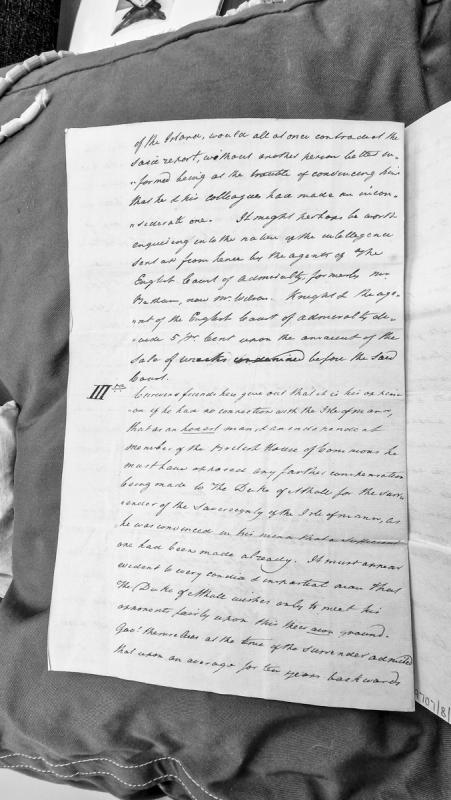
Fragment of a longer administrative or political correspondence discussing intelligence reports from admiralty agents, fee structures for wreck sales, and debate over compensation paid to the Duke of Atholl for surrendering sovereignty of the Isle of Man. References to Member of Parliament Curwen and his position on these matters.
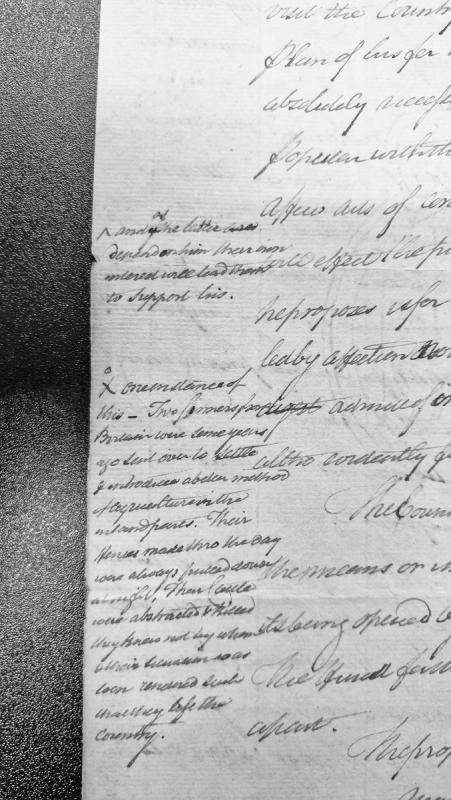
A fragmentary document containing two overlapping handwritten texts discussing agricultural reform in the Isle of Man. The left-hand text describes an instance where two British farmers were sent to introduce improved farming methods but faced local opposition including destruction of fences and theft of cattle, forcing them to leave. The right-hand text is largely obscured but appears to discuss proposals and popular support for improvements.
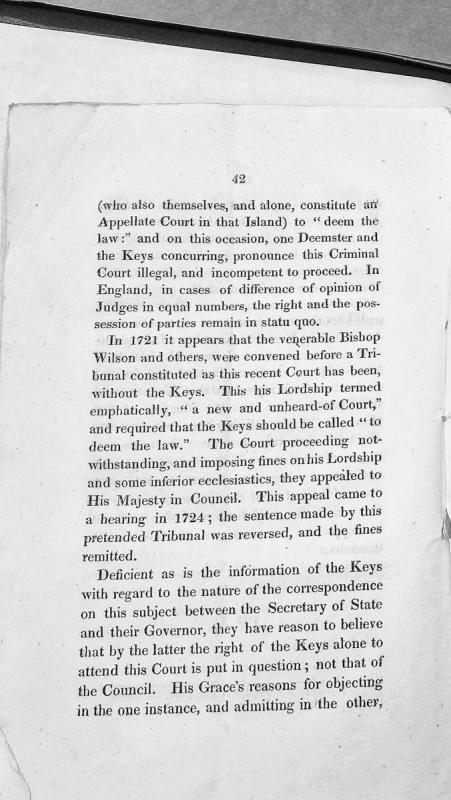
A legal document discussing the constitutional composition and authority of criminal courts on the Isle of Man, referencing historical precedent from 1721 when Bishop Wilson challenged a court convened without the Keys. The document compares Manx court procedures to English practice and addresses disputes over whether the Keys (House of Keys) should participate in such tribunals.
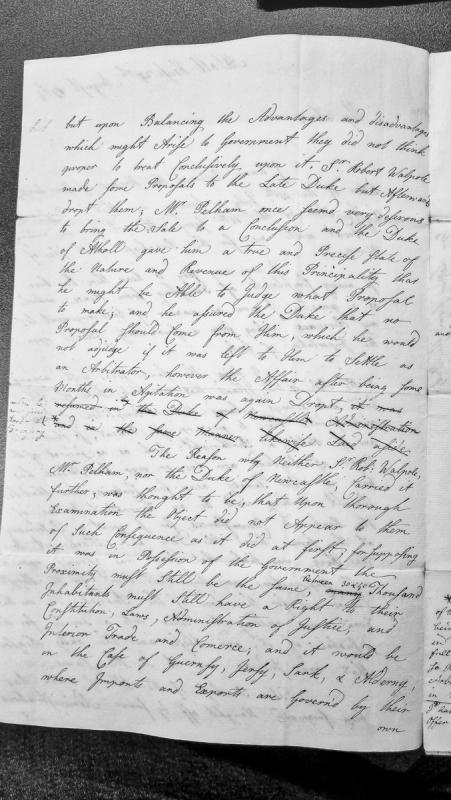
This document discusses historical attempts by various British government officials (Sir Robert Walpole, Mr. Pelham, Duke of Newcastle) to negotiate the purchase or acquisition of the Isle of Man from the Duke of Atholl. It explains why these proposals ultimately failed, noting that examination revealed the island's limited strategic value given that its population would retain constitutional rights regardless of ownership.
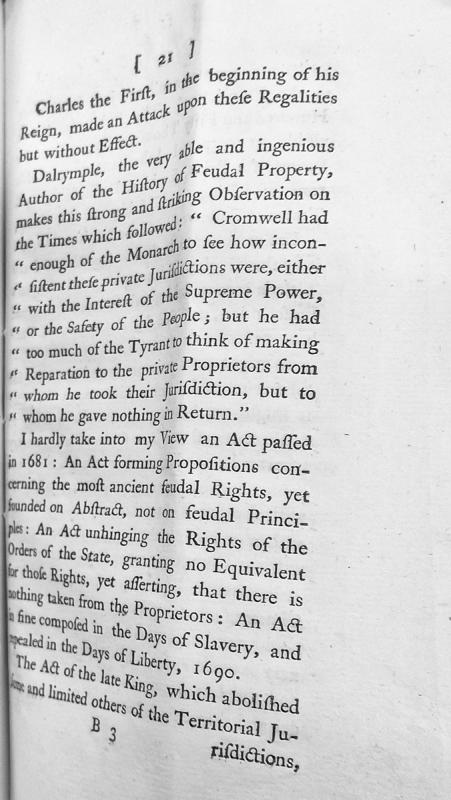
An excerpt from a printed pamphlet discussing historical attacks on private regalities and jurisdictions, particularly referencing Dalrymple's History of Feudal Property and Acts of 1681 and 1690 concerning feudal rights. The author critiques the abstract principles underlying these acts and their impact on proprietors' jurisdictions.
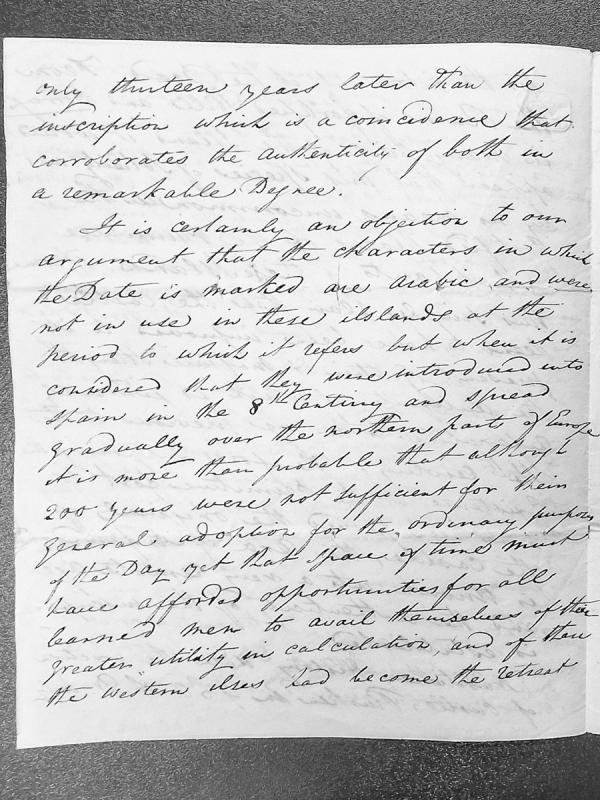
Fragment discussing the authentication of historical inscriptions through chronological coincidence and examining the adoption of Arabic numerals in the northern European regions, particularly the Western Isles. The text addresses objections to dating arguments based on character usage.
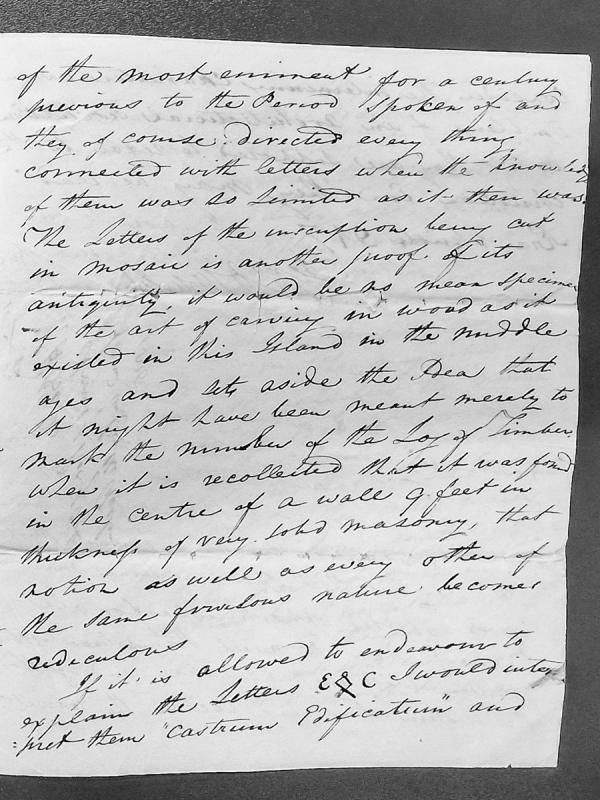
This is an excerpt from a scholarly discussion analyzing ancient letters (E & C) found carved in mosaic within thick medieval masonry on the Isle of Man. The author argues for the antiquity of the inscription based on the mosaic cutting technique and its placement within substantial stonework, rejecting frivolous interpretations. The text proposes a Latin interpretation of the letters as 'Castrum Edificatum' (Fortress Built).
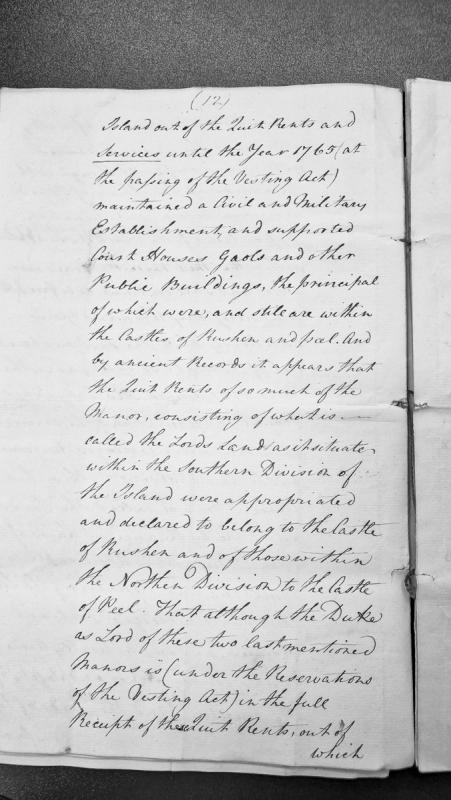
A legal document discussing the historical appropriation of Quit Rents from the Manor of the Isle of Man to support the civil and military establishment, court houses, gaols, and public buildings, particularly those within Rushen and Peel Castles. The document references the Vesting Act of 1765 and the division of Quit Rents between the Northern and Southern divisions of the island.
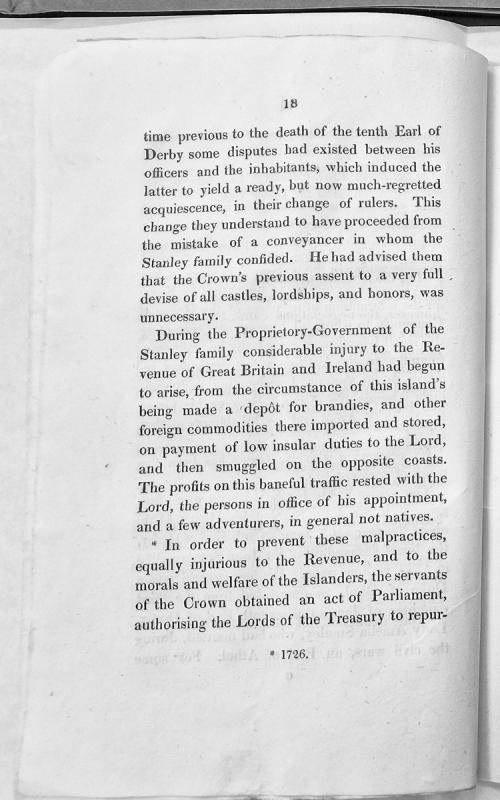
This document discusses the transition of Isle of Man governance from the Stanley family to Crown rule, allegedly prompted by a conveyancer's legal error. It details how the island was used as a depot for smuggled goods under Stanley proprietorship, causing revenue losses to Great Britain and Ireland, and mentions parliamentary action by the Treasury to address these malpractices.
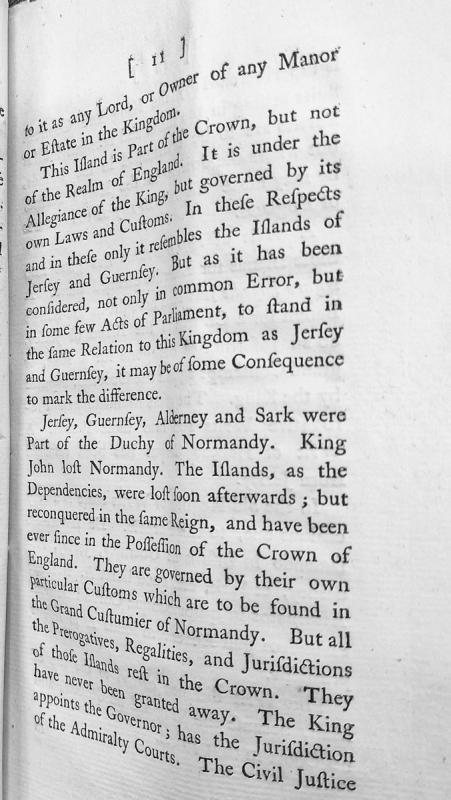
A legal treatise explaining the Isle of Man's unique constitutional position as part of the Crown but not the Realm of England, governed by its own laws and customs. The document clarifies distinctions between Man and Jersey/Guernsey regarding their historical origins and relationship to Crown jurisdiction, discussing prerogatives, regalities, and jurisdictions.
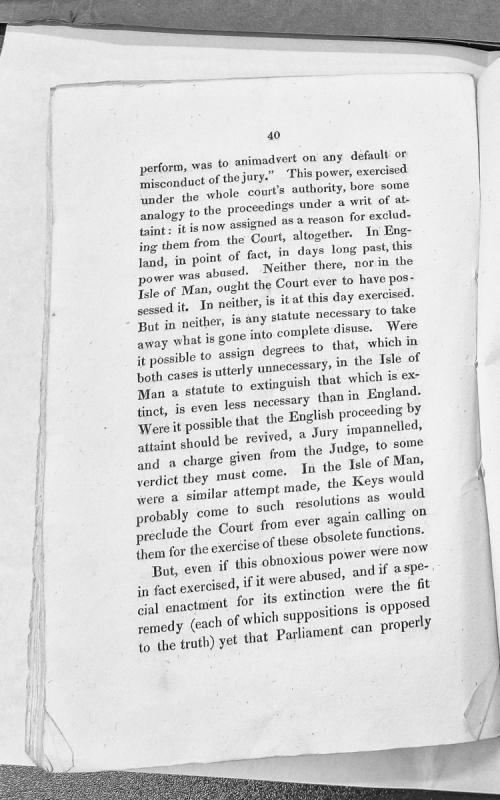
A legal opinion or treatise discussing the historical powers of courts over juries, comparing English and Manx legal procedures. The text examines whether statutory intervention is necessary to extinguish obsolete judicial powers regarding jury oversight, and argues that such powers are already in disuse in both England and the Isle of Man.
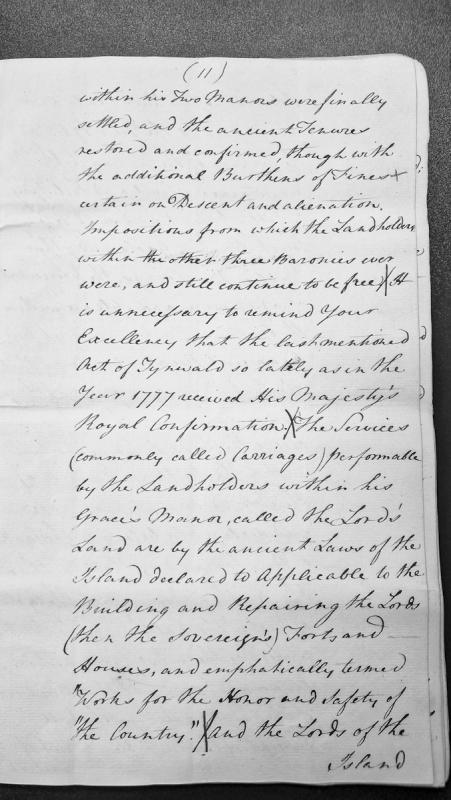
A fragment of a legal document discussing the settlement of tenures within manors on the Isle of Man, the restoration of ancient tenures with additional fines on descent and alienation, and the distinction between burdens imposed on the Lord's Manor versus other baronies. References a 1777 Act of Tynwald confirmed by His Majesty and describes services (carriages) performable by landholders.
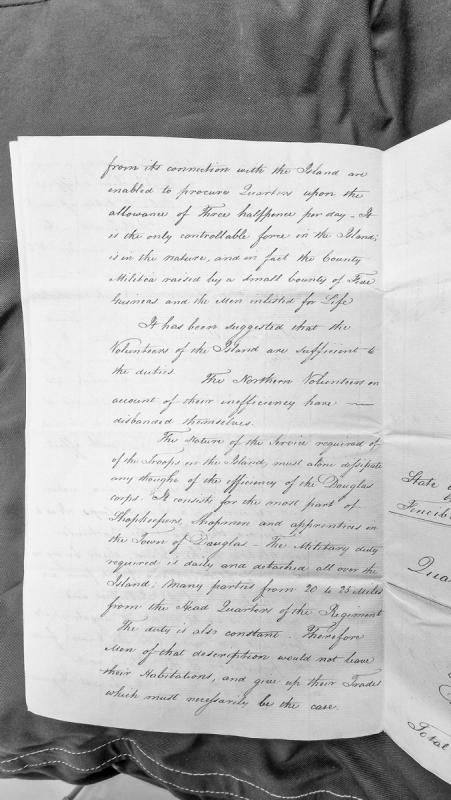
A fragment of administrative correspondence discussing the nature and efficiency of military forces on the Isle of Man, including commentary on militia, volunteers, and the composition of the Douglas corps. The document addresses the impracticality of using local shopkeepers and tradesmen for military duties requiring travel across the island.
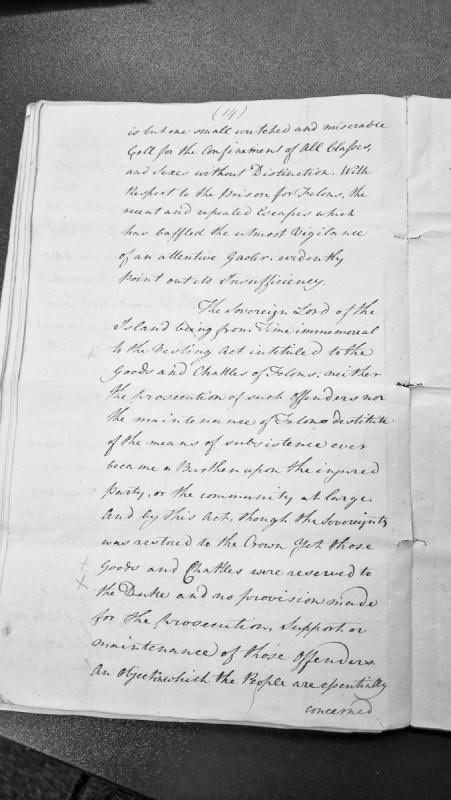
This document discusses the inadequate state of prison facilities on the Isle of Man, particularly regarding confinement of felons and the problems of escapes. It examines the legal and financial implications of the Vesting Act regarding the Crown's sovereignty, the Duke's retained rights to felons' goods, and the unresolved question of who bears responsibility for prosecuting and maintaining offenders.
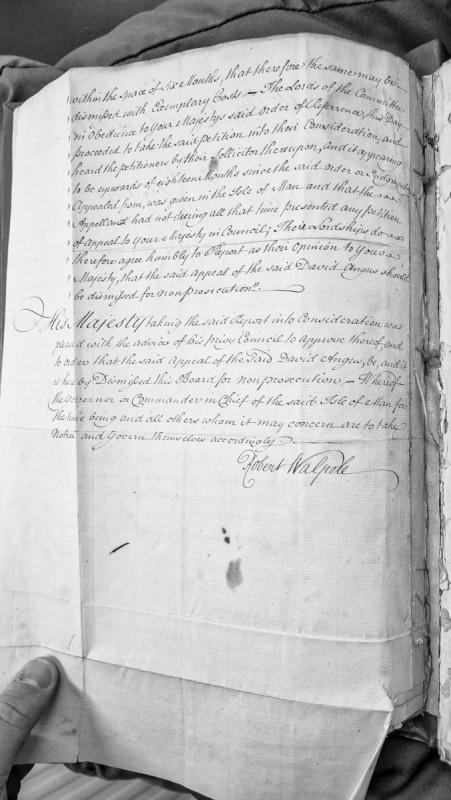
A Privy Council order dismissing the appeal of David Angus for lack of prosecution. The document reports that over eighteen months had elapsed since the original judgment in the Isle of Man without the appellant presenting a petition of appeal, leading the Lords of the Committee to recommend dismissal with exemplary costs, which His Majesty approved.