American colony where the Christians of Milntown had cousins. The Virginia connection produced Patrick Henry, whose brother-in-law William Christian carried the Manx constitutional tradition into the American Revolution. Destination for Manx emigrants in the eighteenth and nineteenth centuries.
Record of the Virginia House of Burgesses' nonimportation resolutions adopted after the Governor dissolved the Assembly. The resolutions protest Parliamentary taxation for revenue (particularly the Townshend duties on tea, paper, glass) and establish binding agreements to boycott British manufactures and restrict imports until the offending acts are repealed. This document demonstrates the constitutional crisis in the American colonies and provides comparative context for similar resistance movements.
Virginia House of Burgesses resolutions drafted by Thomas Jefferson rejecting Lord North's February 1775 conciliatory proposal. The document articulates colonial objections to Parliamentary taxation, trade restrictions, and governance interference, asserting the right to self-taxation and self-government. It references the unified position of the Continental Congress and contrasts North's proposal with Lord Chatham's alternative bill.
Waldron, writing around the 1720s, recorded the native belief that the first inhabitants of the Island were fairies, and that these little people still had their residence among the Manx. They called them the good people and said they lived in wilds and forests and on mountains, shunning great cities because of the wickedness acted therein. All the houses were blessed where they visited, for they fly vice. Waldron noted that a person would be thought impudently profane who should suffer his family to go to bed without having first set a tub of clean water for these guests to bathe themselves in. If anything happened to be mislaid and found again in an unexpected place, they presently told you a fairy took it and returned it.
Whitehaven merchant who co-signed the merchants' memorial to the Treasury in the early 1750s, calling for 'purchasing the sovereignty of the said Island' and claiming £200,000 in annual losses to the Crown plus 'great damage' to the East India Company. The memorial proposed that if purchase failed, smugglers might be transported 'unto the British colonies in America.' The Lutwidge family lobbied for the seizure; Charles Lutwidge was then appointed to administer the result.
War Office letter from Barrington acknowledging Treasury correspondence regarding reimbursement for transporting and victualling one company of the 42nd Regiment from the Isle of Man to Dublin. This represents the final troop reduction from the 1765 post-Revestment garrison of 9 companies plus 2 horse companies to just 3 companies, matching Castle Rushen barracks capacity.
War Office letter from Barrington acknowledging receipt of Treasury correspondence regarding the expense of transporting and victualling one company of the 42nd Regiment from Isle of Man to Dublin. Documents the final phase of military garrison reduction following the 1765 Revestment, concluding with three companies — the capacity of Castle Rushen barracks.
War Office memorandum from 14 March 1772 regarding the establishment and pay costs of four companies of the 42nd (Royal Highland) Regiment of Foot stationed on the Isle of Man. Notes that the regiment's establishment commenced 1 September 1771, and that Great Britain funded the difference between British and Irish pay rates. Includes editorial note on troop reduction to three companies within a year due to Castle Rushen Barracks capacity.
War Office correspondence dated 14 March 1772 regarding the establishment and pay of four companies of the 42nd (Royal Highland) Regiment of Foot stationed on the Isle of Man. The document notes the pay differential between British and Irish establishment and references the transition following Revestment, including reduction from nine to three/four companies.
The dynastic civil wars in England (1455–1487) through which Thomas Stanley, Lord of Mann, navigated with extraordinary political skill. He survived every king and kept his options open until Bosworth, where he chose the winning side.
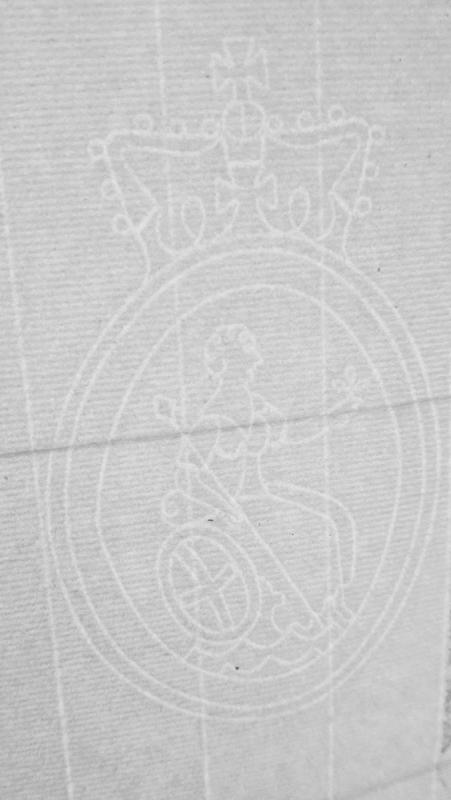
Image showing only a watermark embossed in paper, depicting a crowned figure (likely Britannia) within an oval frame. No handwritten or printed text is present. Typical of 18th-century official paper.
The seat of the Parliament that purchased the Isle of Man. The Revestment debates, the 1792 Commission report, the 1805 decision to divert Manx surplus to the Consolidated Fund — all happened here. Moore's deputations came here and achieved nothing. The Keys' resolution was received here and ignored.
Parliament paid £70,000 for the Isle of Man in 1765. The Duke’s annual revenue was around £7,500. The estimated annual revenue loss to Britain from smuggling was £200,000. The compensation dispute lasted sixty-three years.
Calculate what £70,000 was worth in 1765 — how many years of a labourer’s wages? How many houses? How many ships?
Calculate Parliament’s return on investment. Calculate the Duke’s total compensation over 63 years.
Then ask the question the Manx people asked: what did they get? The answer is in the book. It’s not a comfortable one.
The cost to Mann was not only in the people it lost but in what those people took with them. The parishes were not just losing population — they were losing the families who had served in the Keys, administered justice in the courts, kept the registers, maintained the chapels, and carried the language. When the Corletts of Orrisdale chartered a ship to Ohio, a family that had farmed that land for generations was uprooting itself. When the Cannells and the Sayles boarded the Ocean, they were carrying the island's religious culture across the Atlantic and leaving a gap in the parishes that could not be filled by people who had not grown up in those parishes, who did not know the names of the fields, who could not speak the language of the wells and the keeills and the calendar customs.
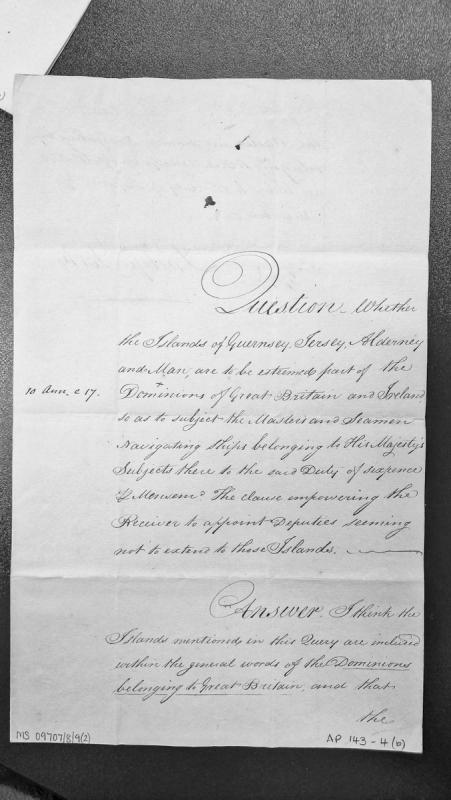
A legal opinion addressing whether Guernsey, Jersey, Alderney, and Man are part of the Dominions of Great Britain and Ireland for purposes of a sixpence per mensem duty on masters and seamen of His Majesty's ships. The query concerns whether the Receiver's power to appoint Deputies extends to these islands.
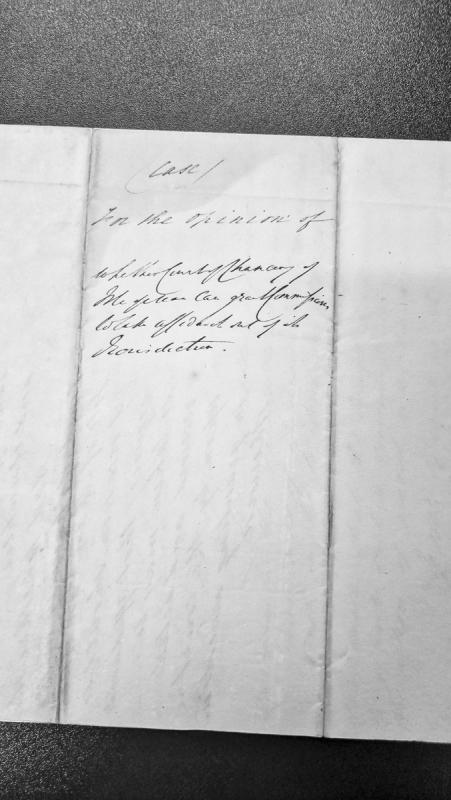
A legal opinion case concerning the jurisdictional powers of the Court of Chancery of the Isle of Man. The document addresses whether the court has authority to grant commissions for taking affidavits outside its territorial jurisdiction.
English port on the Cumbrian coast, directly across the Irish Sea from the Isle of Man. Whitehaven merchants' memorial to Parliament — complaining about the Manx trade — was one of the triggers for the Revestment. The East India Company's commercial interests channelled through Whitehaven complaints.
Whitehaven merchants petitioned Parliament about the Manx trade, complaining that goods entering the Isle of Man at low duty were being re-exported to Britain, undercutting British merchants who paid full rates. The memorial was one of the triggers for Parliament's eventual decision to purchase the Island — the East India Company's commercial interests dressed as a revenue protection measure.
Naval officer who married Elizabeth Betham at the parish church at Onchan on 4 February 1781. He had recently returned from Captain Cook's third and fatal voyage aboard Resolution. Elizabeth was the daughter of Richard Betham, Collector of Customs at Douglas. Her uncle Duncan Campbell was a wealthy Liverpool merchant who employed Bligh in his merchant fleet. Captain Taubman recommended the young Fletcher Christian to Bligh in 1784. Within eight years of his marriage at Onchan, Bligh would command the Bounty.
Vicar of Malew who in 1779 translated the SPG appeal into Manx for distribution to the parishes. The translation survives as Manx Museum manuscript 224a. Fourteen years after the Revestment, Manx was still the working language of the church in the parishes — the language in which you told people things that mattered, because they could not understand them in any other.
A soldier in the Lord of Mann's garrison and also the slater who kept Castle Rushen in repair. The whole establishment across the entire Island numbered perhaps fifty men. A garrison made of neighbours — tradesmen who happened to draw garrison pay.