The Treaty of Perth ended Norwegian suzerainty over the Isle of Man and the Western Isles. Magnus of Norway ceded the territories to Alexander III of Scotland. For the Isle of Man, this began a period of contested sovereignty — alternating between Scottish and English claimants — that would last until the Stanley grant of 1405.
The Treaty of Perth (1266) records the agreement between Magnus IV of Norway and Alexander III of Scotland concerning the cession of the Isles (Mann and the Sodors) to Scottish sovereignty. The document details payment terms (100 marks annually plus 4,000 marks over four years), succession rights, treatment of inhabitants, and jurisdictional provisions. It includes both English and Latin versions and establishes the constitutional framework for Mann's transition from Norwegian to Scottish overlordship.
A complete transcription of the Treaty of Perth (1266), in which Magnus IV of Norway ceded the Isle of Mann and the Hebrides to Alexander III of Scotland in exchange for an annual pension of 100 marks sterling and a lump sum of 4,000 marks over four years. This foundational treaty established Scottish sovereignty over Mann and is essential context for understanding the political history preceding the 1765 Revestment. The text is presented in both English translation and original Latin, with supporting notes on a 1312 reconfirmation by Haakon V.
An extended historical narrative from Draper's 1864 work on the Stanley family, detailing the trial, defence, and execution of James, Earl of Derby in October 1651. Includes the Earl's letter to the Countess from Chester, his detailed legal defence addressing the validity of quarter given in war, his petitions to Cromwell and Parliament, and an account of his execution at Bolton. Critical for understanding Derby's constitutional arguments and the political circumstances surrounding the Revestment.
An extended academic dialogue on the constitutional illegality of the 1765 Isle of Man Revestment, arguing that Parliament misapplied the Pratt-Yorke doctrine (intended for acquired territories) to the Isle of Man, which was a 'Coordinate Kingdom' under a 1609 Tripartite Administrative Lock requiring consent of the Lord, Tynwald, and Parliament. The author argues the 1805 compensation was 'conscience money' for a constitutional coup, and frames the Revestment as part of a broader pattern of imperial asset-stripping that extended to India and America.
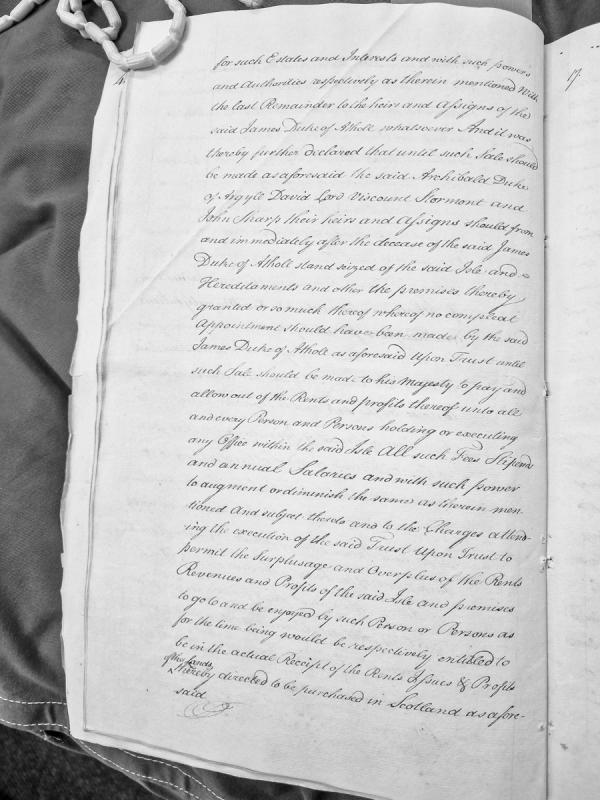
A legal document detailing the terms of a trust arrangement for the Isle of Man and its hereditaments. Following the death of James Duke of Athole, the document outlines how trustees (Archibald Duke of Argyle, David Lord Viscount Stormont, and John Sharp) are to manage the estate, collect rents and profits, pay office holders' fees and salaries, and eventually arrange for sale of the property.
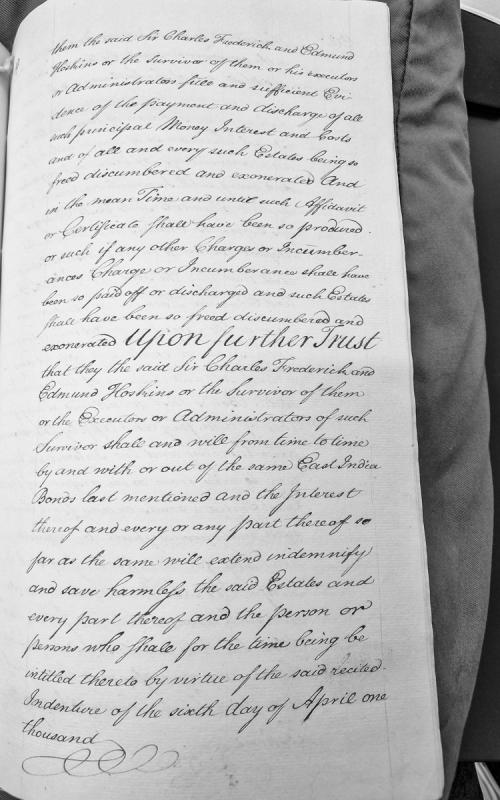
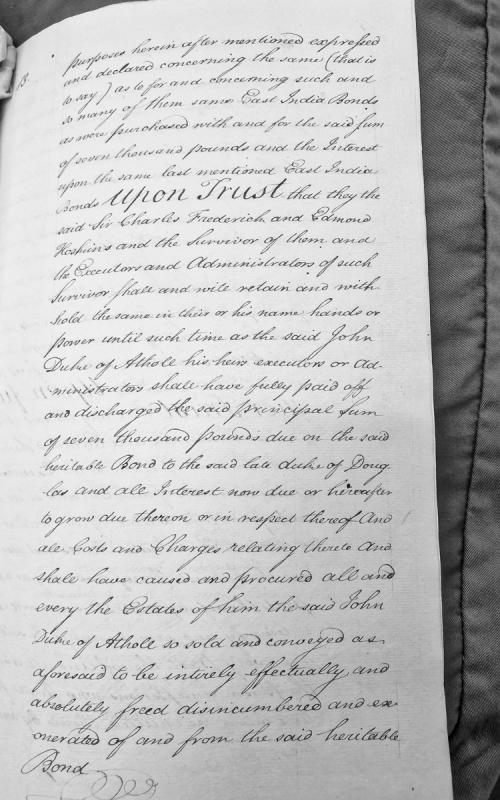
Fragment of a legal document establishing trust arrangements between Sir Charles Frederick and Edmund Hoskins for managing East India Bonds and discharging estate encumbrances. The document outlines procedures for providing evidence of payment and defines ongoing trust obligations for protecting specified estates.
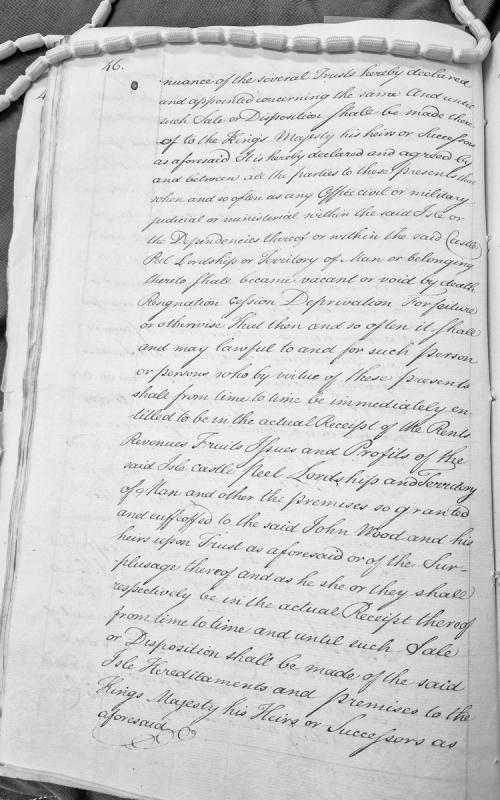
A legal document detailing the terms of trusts declared for the Isle of Man, Castle Peel, and associated territories. It addresses the succession of civil, military, judicial, and ministerial offices upon vacancy, and establishes procedures for revenue collection and eventual transfer to the Crown.
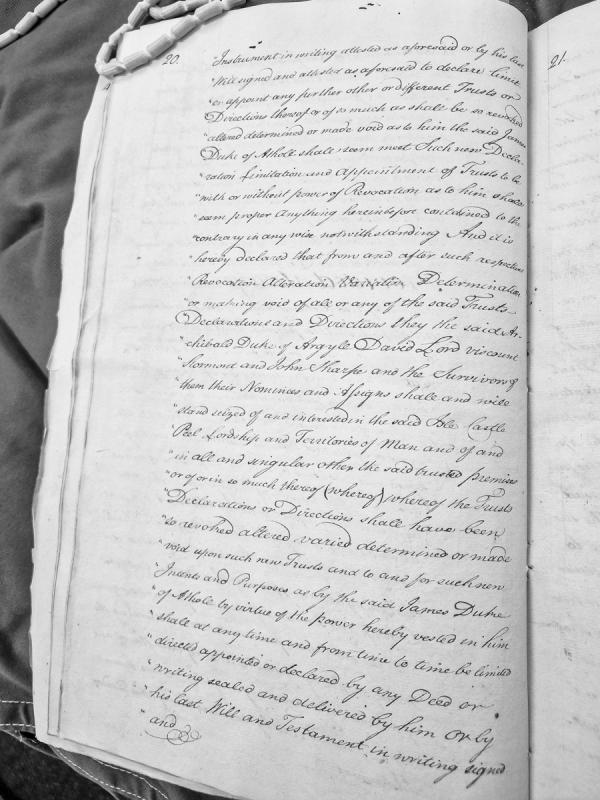
Fragment of a legal instrument concerning trusts and declarations relating to the Isle of Man, Castle Peel, and associated territories. The document grants James, Duke of Athole, power to revoke, alter, or appoint new trusts and directions regarding these properties through deed or will, with surviving trustees (Archibald Duke of Argyle, David Lord Viscount Stormont, and John Sharpe) to hold the premises according to such new directions.
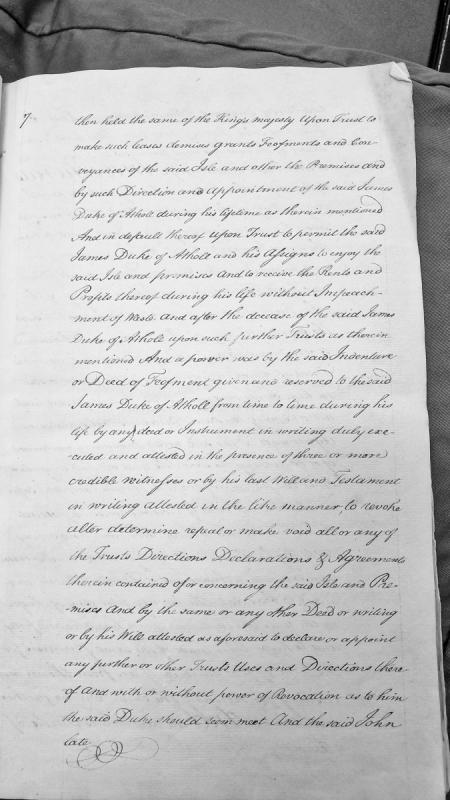
Extract from a legal document describing the terms of a trust deed (Indenture or Deed of Feofment) concerning the Isle of Man. The document outlines the powers granted to James, Duke of Atholl, including the ability to make leases, grants, and conveyances, and to revoke or alter the trust terms during his lifetime. The text is incomplete, ending mid-sentence with reference to 'John Lota'.
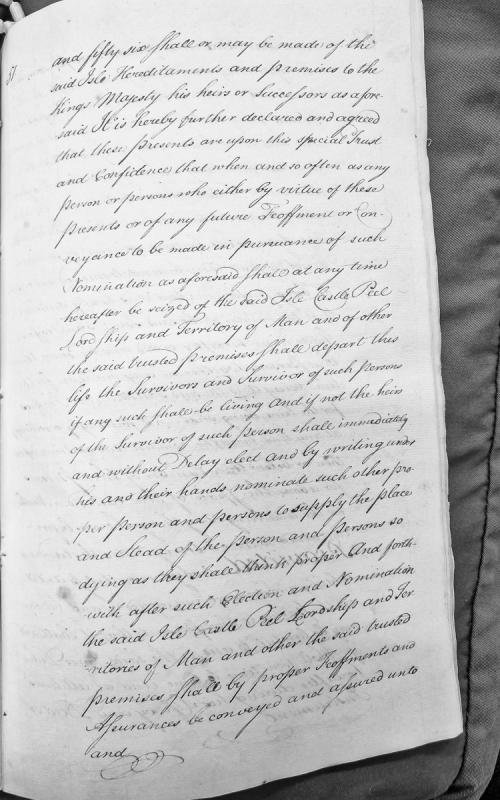
A legal document establishing a trust arrangement for the Isle of Man, Castle Peel, and associated lordship and territories. The document outlines procedures for succession when trustees die, requiring survivors or heirs to nominate replacements and convey properties through proper legal assurances.
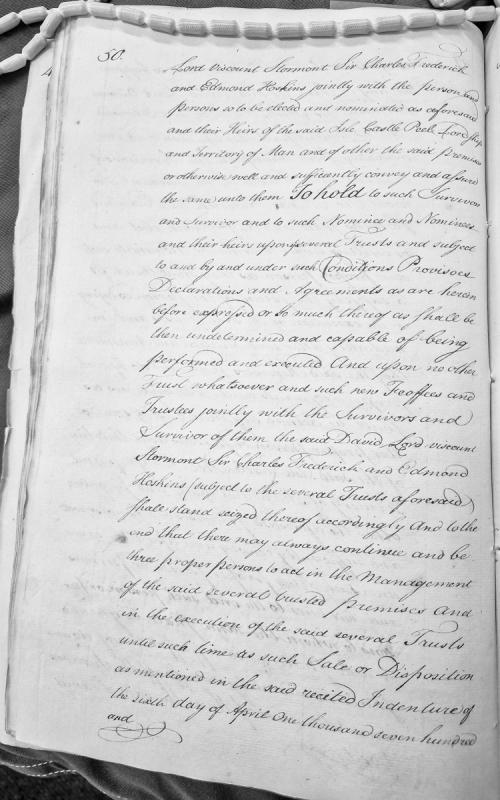
A legal document concerning the conveyance and trust arrangements for Castle Peel and territory of Man. It outlines the appointment of trustees (including Lord Viscount Stormont, Sir Charles Frederick, and Edmond Hoskins) to manage specified premises under various conditions and trusts, with reference to an indenture dated April 6th, 1700.
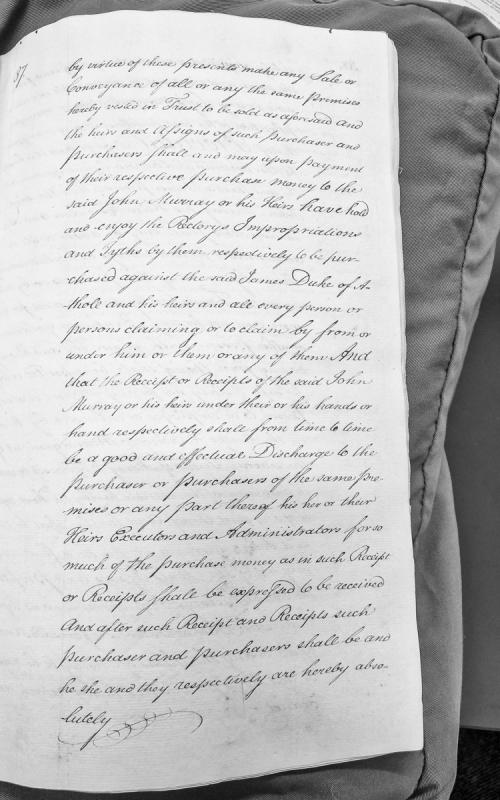
Fragment of a legal document concerning the sale of ecclesiastical properties (rectories, impropriations, and tithes) in trust. The text addresses the powers of a purchaser and the discharge procedures for payment to John Murray or his heirs, with protections against claims from James Duke of Athole.
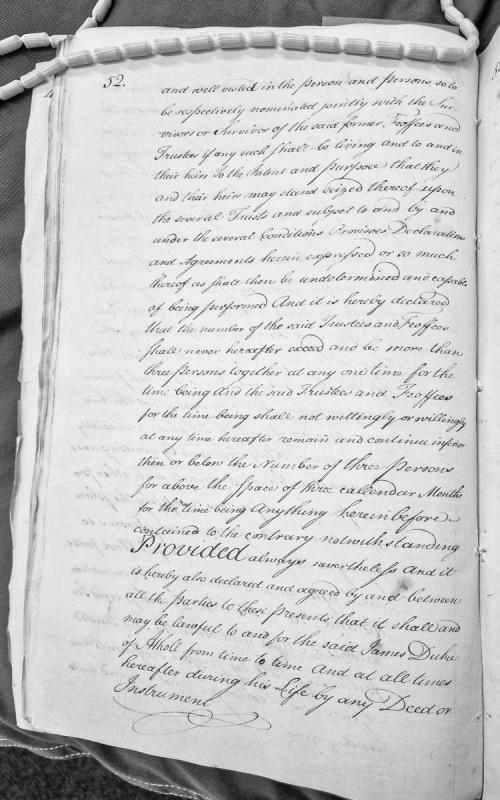
This is an excerpt from a trust deed or settlement document establishing provisions for trustees and feoffees managing property. The document specifies that no more than three trustees shall hold the property at any time, and that they must maintain this minimum number. It references James, Duke of Atholl, and his authority to make changes by deed during his lifetime.
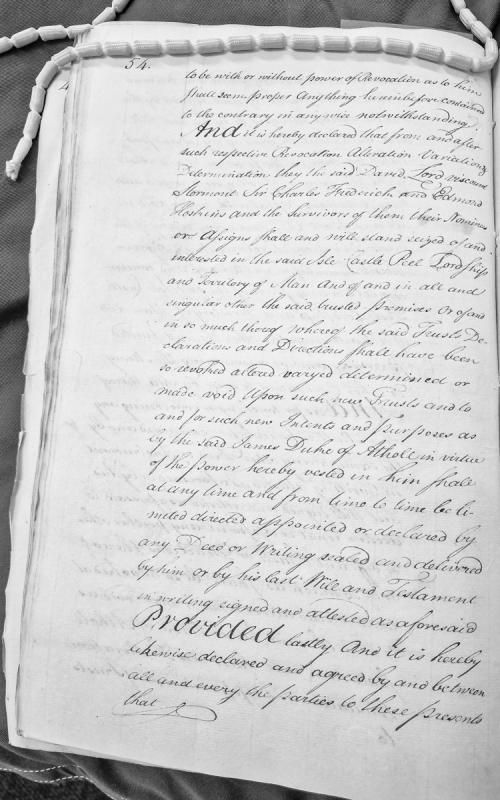
A legal document establishing trust arrangements for the Isle of Man, Castle Peel, and associated lordship and territory. The document grants power of revocation and alteration to James Duke of Atholl and outlines the conditions under which David Lord Viscount Stormont, Sir Charles Frederick, and Edmond Hoskins (as trustees) shall hold the properties under new trusts as determined by the Duke.
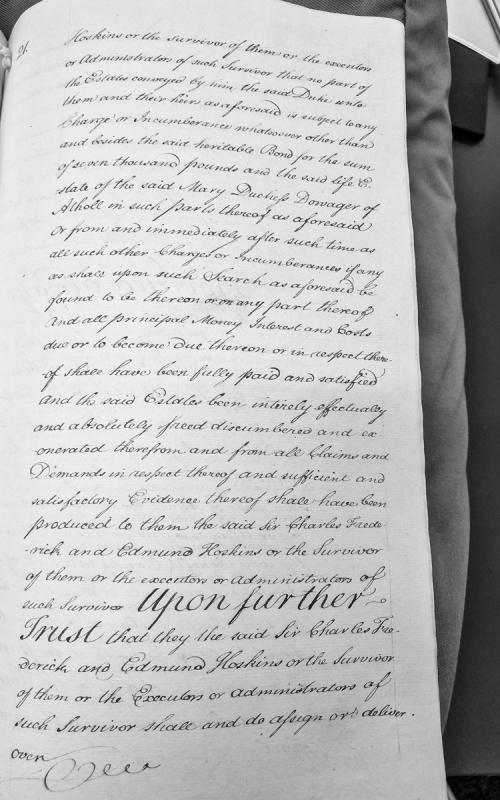
This is a fragment of a legal trust deed concerning the conveyance of estates by a Duke to Sir Charles Frederick and Edmund Hoskins. The document outlines conditions regarding charges, encumbrances, and the life estate of Mary, Duchess Dowager of Atholl, with requirements for clearing all claims before final transfer.
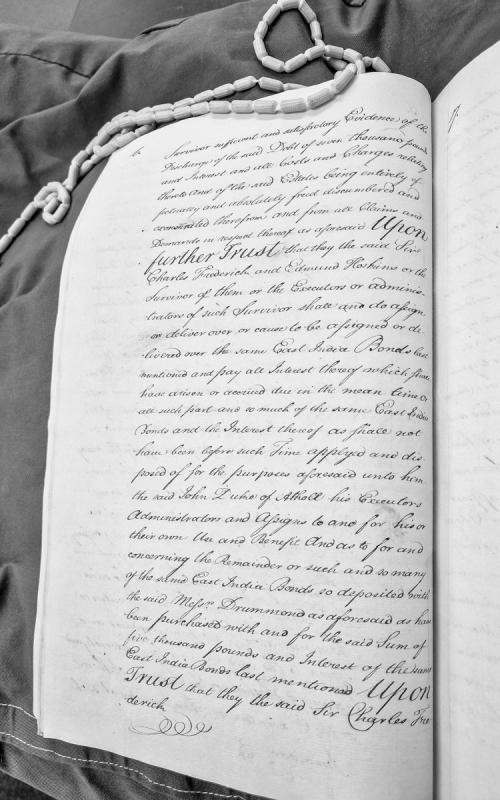
Fragment of a trust deed concerning the discharge of a seven thousand pound debt and the management of East India Bonds held with Messrs Drummond. The document outlines conditions for the release of estates and the transfer of bonds and accrued interest to the Duke of Atholl or his successors.
This is a legal trust document concerning the holding of East India Bonds purchased for £7,000, to be retained by trustees (Sir Charles Frederick and Edmond Hoskins) until the Duke of Athole fully discharges a heritable bond owed to the late Duke of Douglas. The document outlines the conditions for release of the bonds and the requirement to clear all related debts and charges.
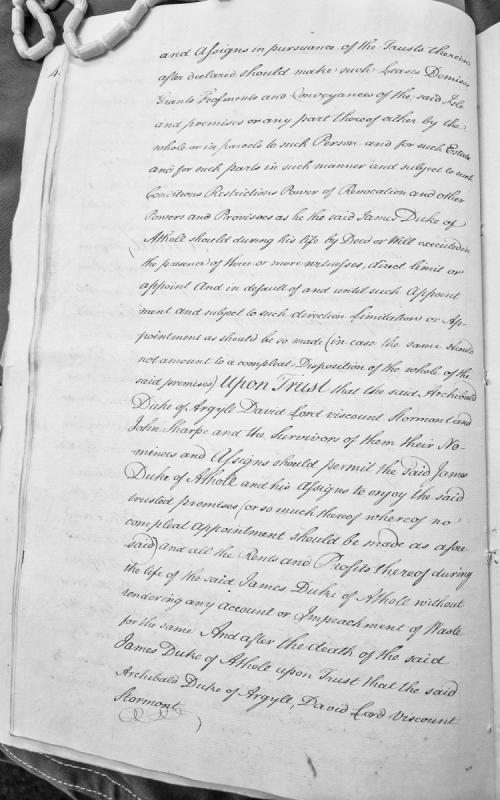
This is a fragment of a legal document detailing a trust arrangement concerning the Isle of Man. The document outlines provisions for James Duke of Athole to make leases, grants, and conveyances of the Isle and its premises, with specific conditions regarding appointments, revocation powers, and the enjoyment of rents and profits during his lifetime. The text breaks off mid-sentence regarding post-death arrangements.
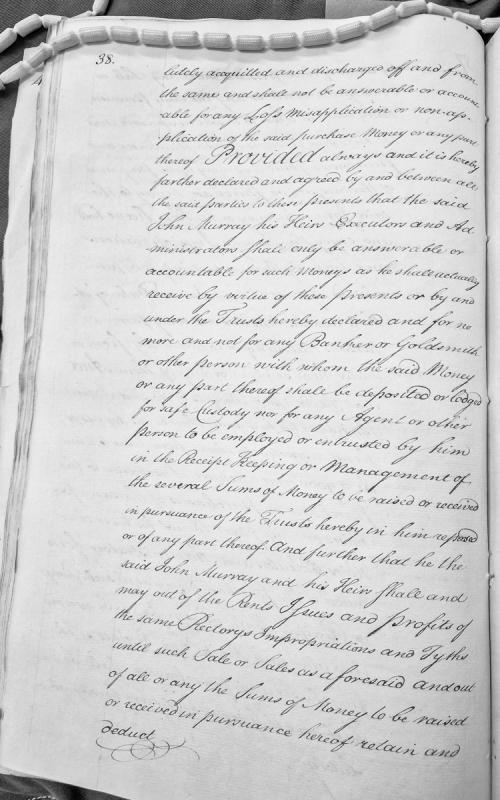
A legal document establishing a trust arrangement concerning rectories, improprieties, and tithes. John Murray is appointed as trustee with authority to manage rents, issues, and profits, and to conduct sales of property. The document specifies limitations on Murray's liability regarding deposited funds and third-party agents.
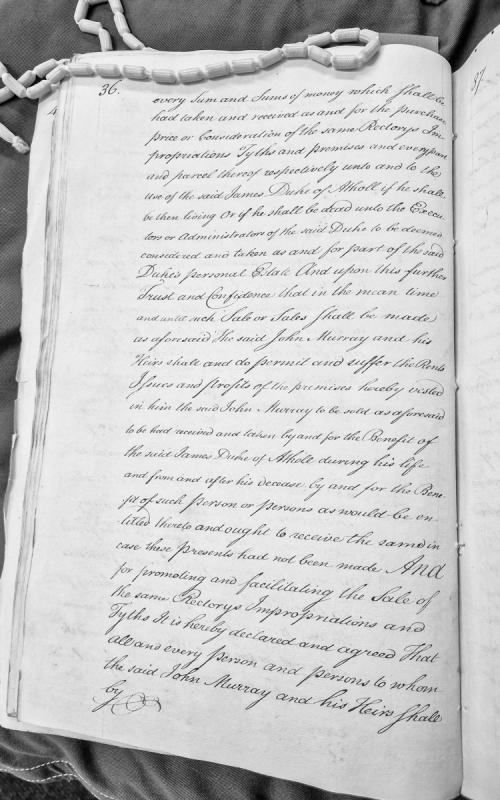
This is an excerpt from a legal trust document concerning the management and sale of ecclesiastical properties (rectories, impropriatins, and tythes). John Murray is appointed as trustee to hold these properties and facilitate their sale, with proceeds and interim profits to benefit James Duke of Atholl during his lifetime and subsequently his heirs or designated beneficiaries.
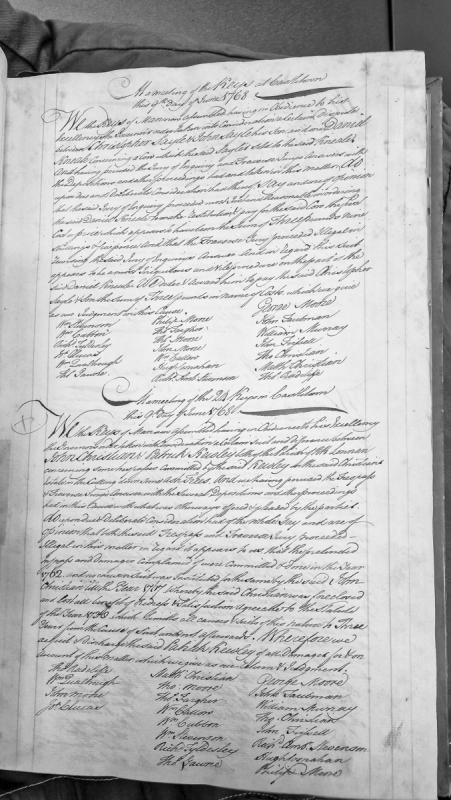
Two separate judgments issued by the House of Keys at Castletown on the same date. The first concerns a dispute over a cow sold by Christopher and John Sayle to Daniel Kneale, ordering Kneale to pay costs. The second addresses a trespass dispute between John Christian and Patrick Kewley regarding tree-cutting, dismissing the claim as barred by the three-year statute of limitations from 1738.
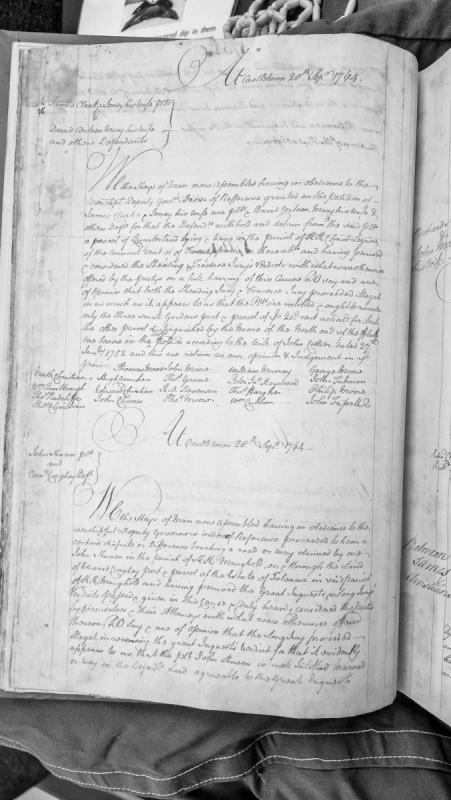
Two related House of Keys judgments delivered at Castletown on 20 September 1764. The first concerns a dispute between James Clark and Joney (plaintiffs) versus David Corteen, Mary, and others (defendants) over possession of a quarterland in the Parish of Kirk Christ Lezayre. The second addresses a dispute between John Kneen (plaintiff) and Patrick Cughey (defendant) regarding a claimed road or way through land in the Parish of Kirk Michael Maughold.
The parliament of the Isle of Man, widely considered the longest continuously operating parliament in the world. Established at the assembly field at St John's, where a four-tiered mound — Tynwald Hill — has served as the site for the promulgation of law for at least a thousand years. The name derives from the Old Norse þing-völlr, the assembly field. Laws not promulgated at Tynwald Hill were not, in Manx understanding, fully laws. The legislature met in two places: the chapel of St John the Baptist for ordinary debate, and the hill itself for ceremonial promulgation. After the Revestment, Tynwald was silenced for eleven years (1765–1776) and the outdoor ceremony at St John's did not resume until 1770. Colonel Smith legislated behind closed doors from 1777. The institution survived every change of overlord — Norse, Scottish, English, Crown — because the people who operated it understood that their smallness was their protection. Tynwald still meets every July on the hill where it has met since before the Normans came to England.
The codification of Manx customary law at Tynwald. The breast law — the legal tradition carried in the memory of the Deemsters — was written down for the first time. This was not the imposition of new law but the recording of what the Deemsters already knew and applied. The codification preserved the Island's legal tradition in a form that would survive the centuries.