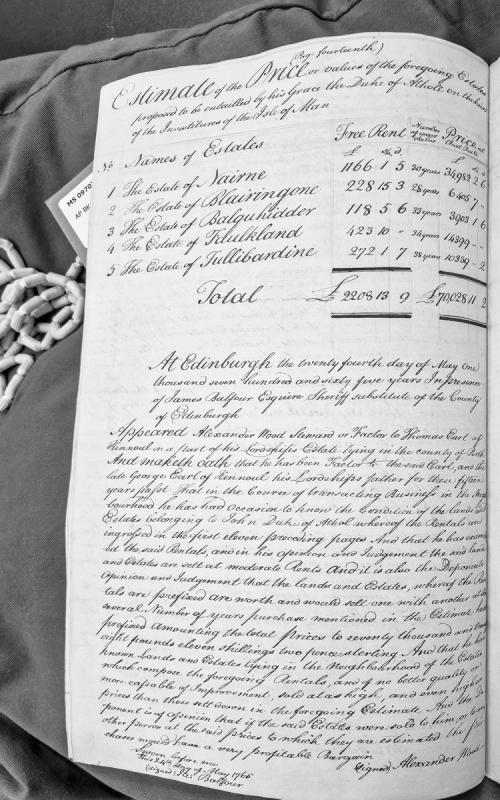
A sworn affidavit by Alexander Wood, factor to the Earl of Kinnoul, attesting to the moderate valuation of lands and estates belonging to John Duke of Athol. Wood provides expert opinion on rental assessments and estimated sale prices totaling £70,028 11s 2d, based on 15 years of experience managing neighboring estates.
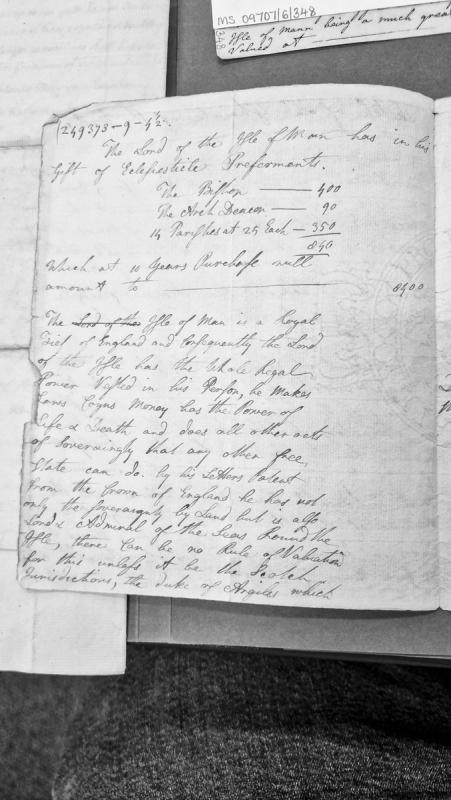
A document describing the ecclesiastical patronage held by the Lord of the Isle of Man, listing the Bishop, Arch Deacon, and 14 parishes with their valuations, totalling 8,400 at 10 years purchase. It also outlines the sovereign and regal powers vested in the Lord of the Isle, including legislative authority, coinage, and judicial powers, comparing the jurisdiction to Scottish precedents.
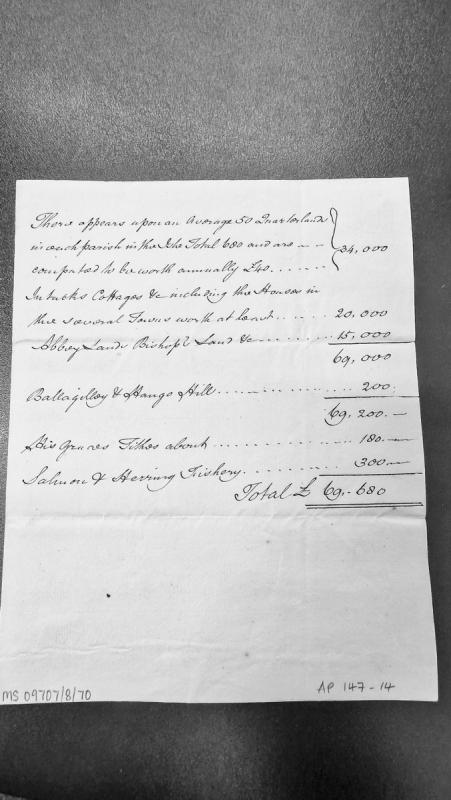
A revenue abstract estimating the annual value of various categories of property and resources on the Isle of Man, including quarterlands, intacks, cottages, abbey lands, bishop's lands, tithes, and fisheries. The total valuation reaches £69,680.
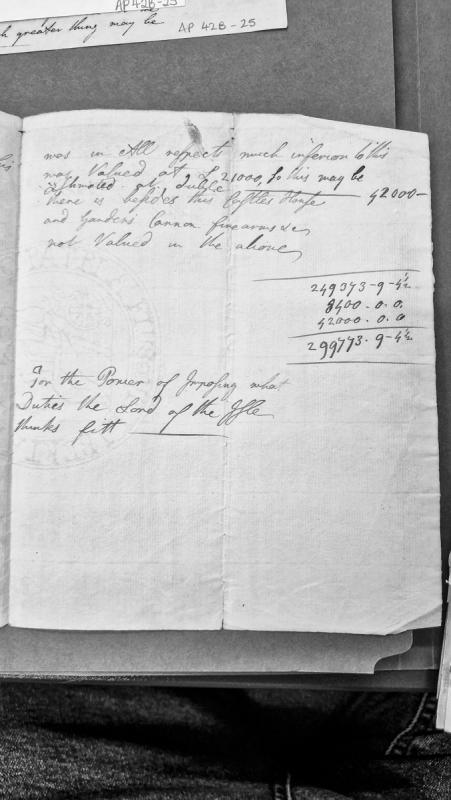
A revenue abstract calculating property valuations, including a castle, house, gardens, and military equipment. The document shows comparative valuation methodology and totals approximately £299,773, with a note regarding the Lord of the Isle's power to impose duties as seen fit.
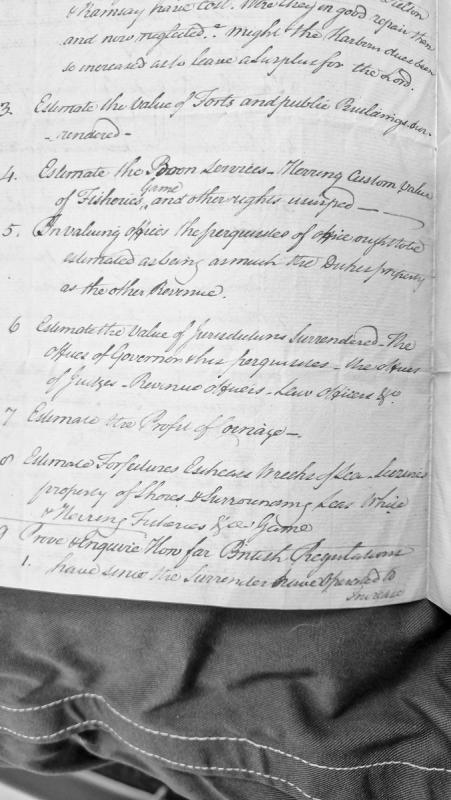
A numbered list of items to be valued and evaluated regarding Manx properties, offices, and rights that were surrendered, likely related to compensation claims or accounting following the transfer of governance. Includes estimates for forts, harbours, fisheries, offices, and jurisdictions.
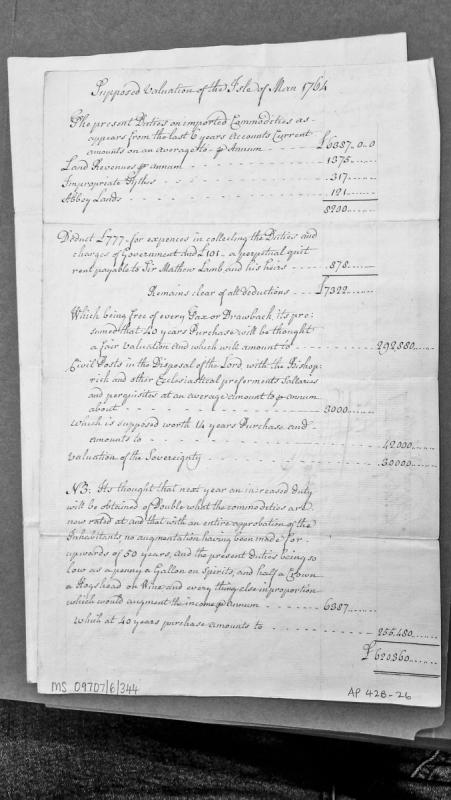
A financial assessment of the Isle of Man's revenue sources and property valuations dated 1764. The document calculates annual revenues from duties, land, tythes and abbey lands, deducts administrative costs, and applies multiplier factors (40 and 14 years purchase) to estimate total valuation of approximately £620,360. It includes a note on anticipated duty increases.
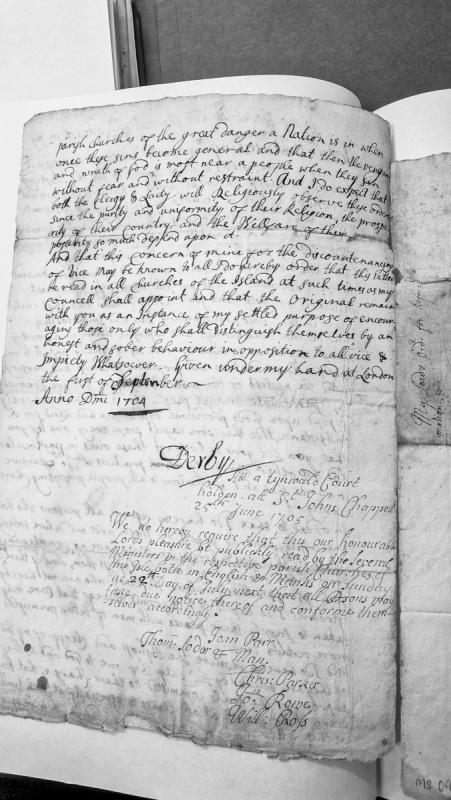
A letter from the Earl of Derby (dated 1 September 1704) addressing the dangers of vice and immorality becoming widespread in society, ordering clergy and laity to observe strict moral standards. The letter was subsequently ordered to be read publicly in all parish churches by the Tynwald Court on 25 June 1705, with instructions for dissemination in both English and Manx.
Record of the Virginia House of Burgesses' nonimportation resolutions adopted after the Governor dissolved the Assembly. The resolutions protest Parliamentary taxation for revenue (particularly the Townshend duties on tea, paper, glass) and establish binding agreements to boycott British manufactures and restrict imports until the offending acts are repealed. This document demonstrates the constitutional crisis in the American colonies and provides comparative context for similar resistance movements.
Virginia House of Burgesses resolutions drafted by Thomas Jefferson rejecting Lord North's February 1775 conciliatory proposal. The document articulates colonial objections to Parliamentary taxation, trade restrictions, and governance interference, asserting the right to self-taxation and self-government. It references the unified position of the Continental Congress and contrasts North's proposal with Lord Chatham's alternative bill.
War Office letter from Barrington acknowledging Treasury correspondence regarding reimbursement for transporting and victualling one company of the 42nd Regiment from the Isle of Man to Dublin. This represents the final troop reduction from the 1765 post-Revestment garrison of 9 companies plus 2 horse companies to just 3 companies, matching Castle Rushen barracks capacity.
War Office letter from Barrington acknowledging receipt of Treasury correspondence regarding the expense of transporting and victualling one company of the 42nd Regiment from Isle of Man to Dublin. Documents the final phase of military garrison reduction following the 1765 Revestment, concluding with three companies — the capacity of Castle Rushen barracks.
War Office memorandum from 14 March 1772 regarding the establishment and pay costs of four companies of the 42nd (Royal Highland) Regiment of Foot stationed on the Isle of Man. Notes that the regiment's establishment commenced 1 September 1771, and that Great Britain funded the difference between British and Irish pay rates. Includes editorial note on troop reduction to three companies within a year due to Castle Rushen Barracks capacity.
War Office correspondence dated 14 March 1772 regarding the establishment and pay of four companies of the 42nd (Royal Highland) Regiment of Foot stationed on the Isle of Man. The document notes the pay differential between British and Irish establishment and references the transition following Revestment, including reduction from nine to three/four companies.
Image showing only a watermark embossed in paper, depicting a crowned figure (likely Britannia) within an oval frame. No handwritten or printed text is present. Typical of 18th-century official paper.
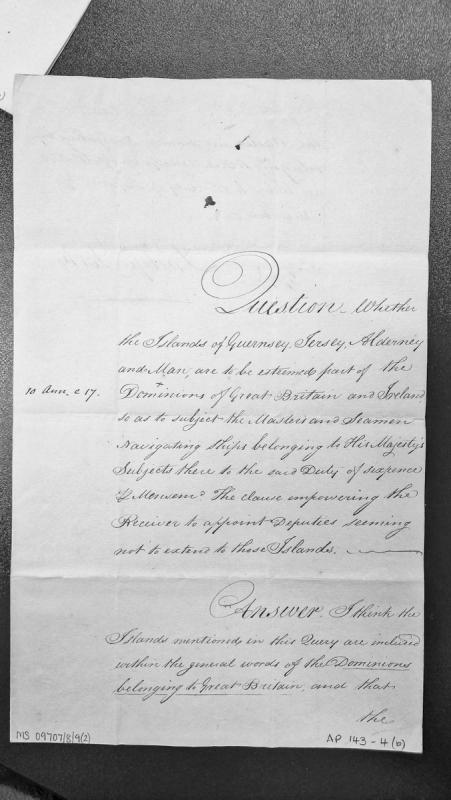
A legal opinion addressing whether Guernsey, Jersey, Alderney, and Man are part of the Dominions of Great Britain and Ireland for purposes of a sixpence per mensem duty on masters and seamen of His Majesty's ships. The query concerns whether the Receiver's power to appoint Deputies extends to these islands.
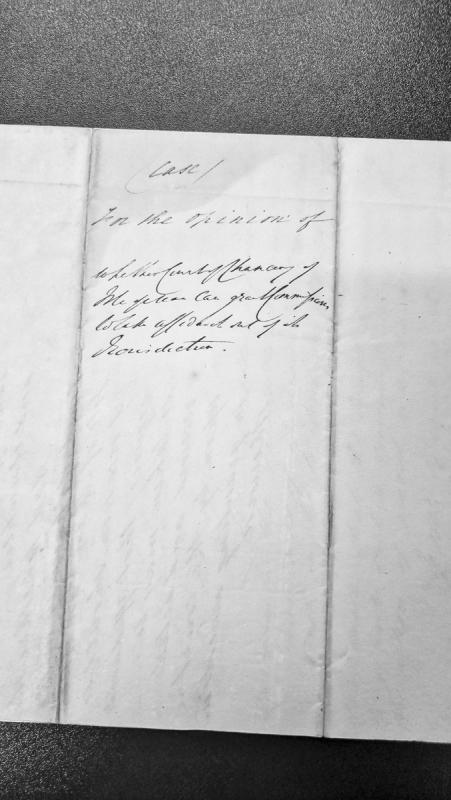
A legal opinion case concerning the jurisdictional powers of the Court of Chancery of the Isle of Man. The document addresses whether the court has authority to grant commissions for taking affidavits outside its territorial jurisdiction.
Letter from William Crawford to George Washington detailing land surveying activities in Pennsylvania and Virginia territories, the progress of the Mason-Dixon line, Indian land rights disputes, and opportunities for private land acquisition west of the Allegheny Mountains. The letter provides contemporary perspectives on colonial expansion, Indian relations, and boundary disputes relevant to understanding the broader constitutional and commercial context of the 1765 Revestment period.
A 13th-century petition to the English Crown recorded in the Rotuli Parliamentorum, in which William de Twynham of the Isle of Man seeks royal redress against Justice Duncan Matkory and his son for alleged unlawful seizure of goods worth fifty marks. The record demonstrates early legal interaction between Manx residents and English royal justice, and the Crown's involvement in Isle of Man governance.
A 13th-century parliamentary record documenting a dispute between William de Twynham of the Isle of Man and Justice Duncan Matkory over goods valued at fifty marks. The record shows the King's response to defer judgment pending investigation by the King's Keeper of Man, illustrating early medieval Manx legal jurisdiction and the Crown's oversight of Manx affairs.
Extract from William of Malmesbury's 12th-century chronicle covering Norse succession and Magnus of Norway's conquest of the Orkney and Mevanian (Hebridean/Manx) islands circa 1098. Provides medieval historical context for Norse control of the Irish Sea islands and early medieval governance structures relevant to pre-Revestment Manx history.
Extracts from William of Malmesbury's 12th-century chronicle (composed c.1125) covering Norwegian dynastic succession and Magnus's expeditions against the Orkney and Mevanian (Isle of Man) islands in 1066 and 1098. Provides medieval context for Norse control of the Isle of Man and its strategic importance in the North Sea and Irish Sea region.
Extract from Draper's 'House of Stanley' (1864) covering the life and tenure of the 9th Earl of Derby (d. 1702), his appointment of Dr. Thomas Wilson as Bishop of Sodor and Man in 1698, and the Earl's modest involvement in Isle of Man governance. Includes genealogical details of the Derby family and accounts of Wilson's influence on the Earl's financial and personal affairs.
Chapter 4 from John Wood's comprehensive 1811 Account of the Isle of Man, detailing Manx property law, land tenure systems, and inheritance customs. Covers the evolution of landholding from feudal obligations to the Lord through the 1703 settlement and 1777 confirmation act. Documents the distinction between entailed and purchased estates, commons rights, game laws, and widow's rights—all fundamental to understanding post-Revestment property administration.