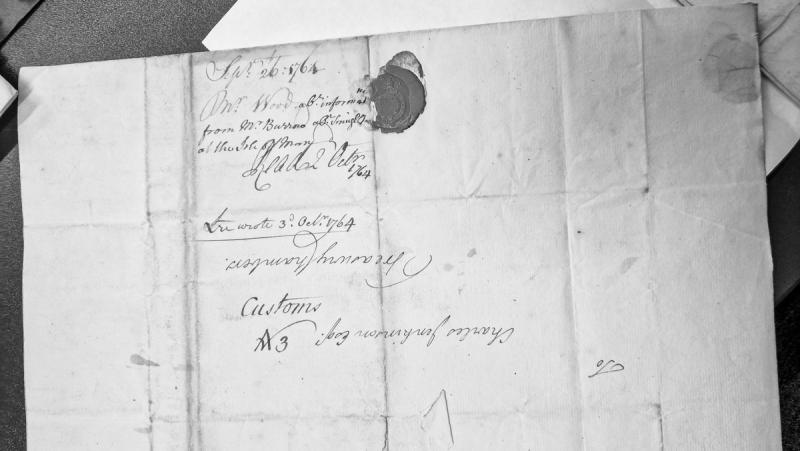
Administrative correspondence dated September 1764 relating to information about smuggling at the Isle of Man, received by the Treasury on October 2nd. A letter was written in response on October 3rd, 1764. The document appears to be a routing or filing note within the Customs department.
A cover letter from Samuel Martin at the Treasury Chambers to the Duke of Atholl, dated 11 July 1758, transmitting a Memorial from the Commissioners of the Customs regarding the smuggling trade operating from the Isle of Man. The letter requests the Duke's assistance in suppressing this 'Enormous fraud upon the publick Revenue'. This document predates the 1765 Revestment by seven years and illustrates the Treasury's awareness of and concern about illicit trade from the island.
A letter from J Freemantle at the Customhouse London (12 Jan 1765) reporting the Treasury Commissioners' dismissal of complaints about fraudulent practices in the Isle of Man, following investigation by Charles Lutwidge (Surveyor General). The document includes related correspondence from September 1764 detailing investigations by Thomas Wilson into smuggling and alleged involvement of customs vessels (the Lurcher, Hornet, Ranger, and other cutters) in contraband trade. It provides evidence of systematic corruption among revenue officers and reveals the scale of smuggling operations.
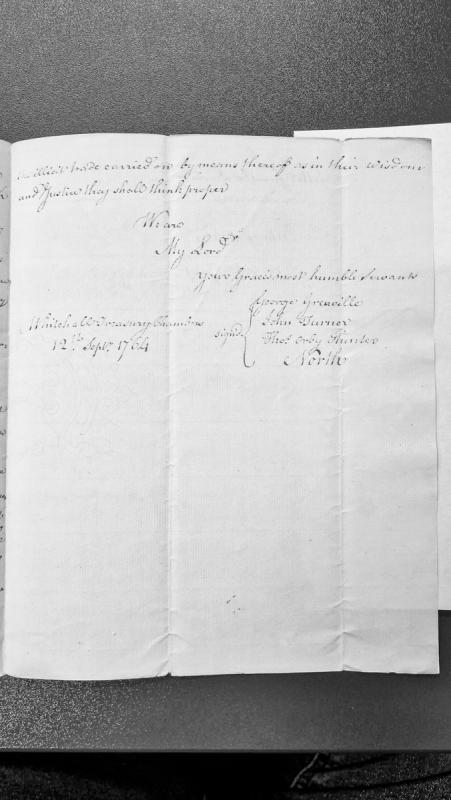
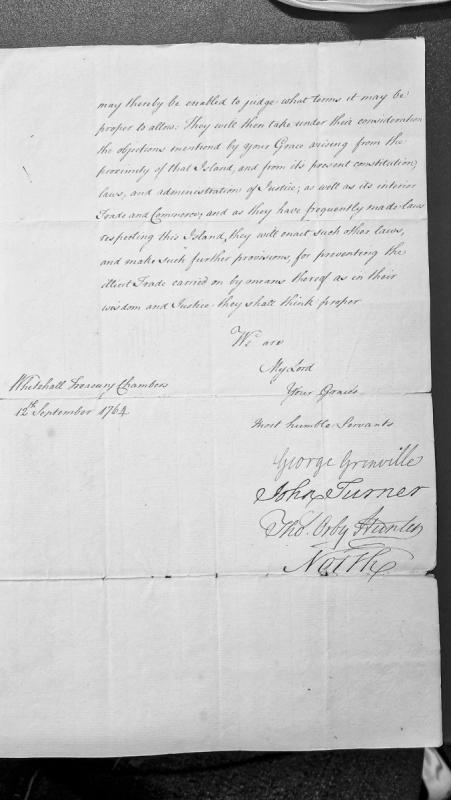
A formal letter from the Treasury addressing measures to combat illicit trade. The document is signed by George Grenville and other Treasury officials from Whitehall Treasury Chambers, dated September 1764.
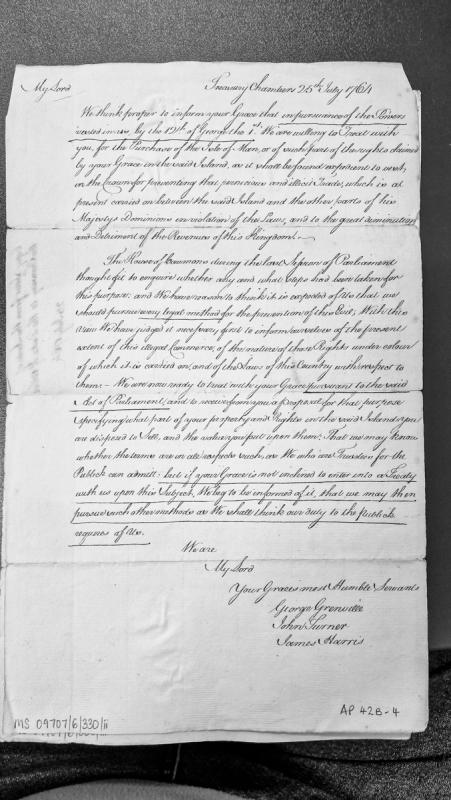
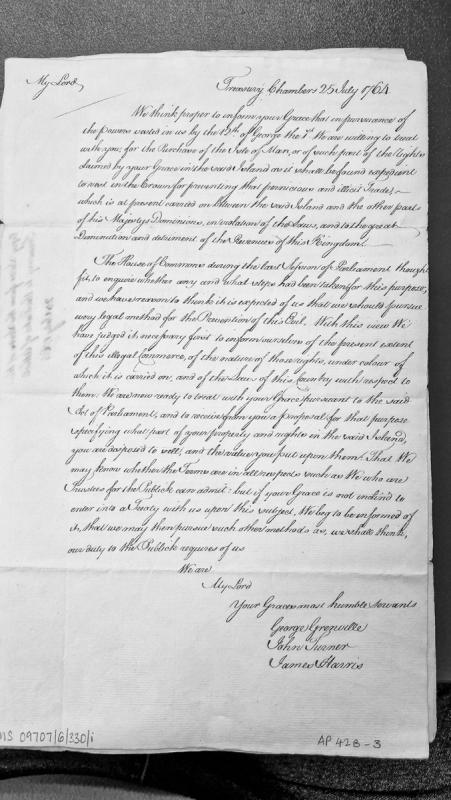
A formal letter from the Treasury to the Duke of Atholl (presumably) dated 25 July 1764, offering to negotiate the purchase of the Isle of Man or the Duke's claimed rights on the island. The letter cites parliamentary powers under the 12th of George I and references illicit trade between the Isle of Man and other British dominions that damages royal revenues. The Treasury requests either a proposal specifying what property and rights the Duke is willing to sell and at what price, or notice of his unwillingness to negotiate.
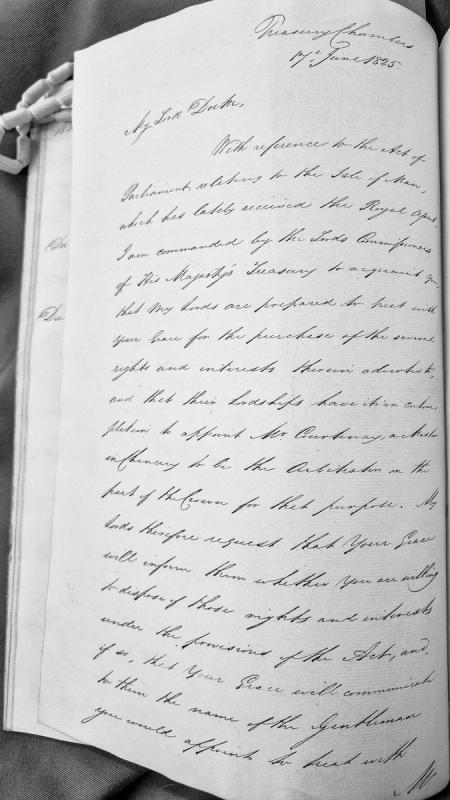
Official correspondence from the Treasury Chambers to a Duke regarding the potential purchase of rights and interests in the Isle of Man following recent Parliamentary legislation. The letter proposes appointment of arbitrators to negotiate terms and requests the Duke's response regarding his willingness to sell.
Cover letter from Samuel Martin (Treasury) to the Duke of Atholl transmitting a memorial from the Commissioners of Customs regarding the smuggling trade from the Isle of Man. The letter requests the Duke's assistance in suppressing the trade, which is described as an 'enormous fraud upon the publick Revenue.' This document pre-dates the Revestment by seven years and evidences the growing concern about Manx smuggling that would contribute to parliamentary action.
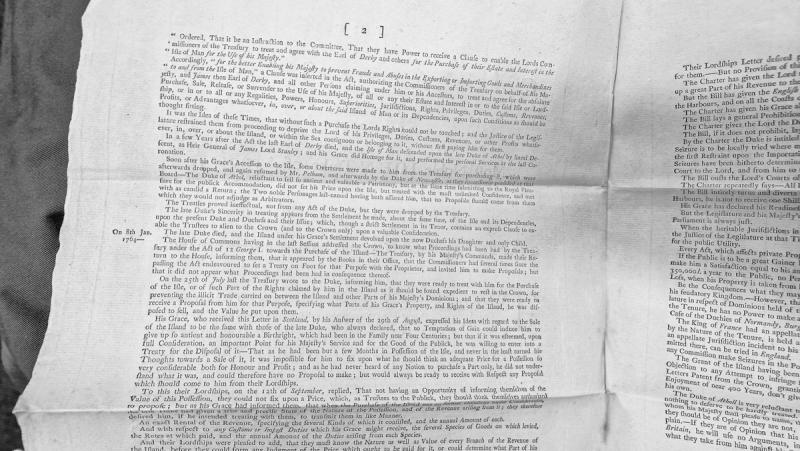
Administrative document detailing correspondence between the British Treasury and the Duke of Athol regarding the potential purchase of the Isle of Man and its revenues. The document traces the history of acquisition attempts since the Act of 12 George I, including letters exchanged between July and September 1764, and discusses the legal and financial complexities of the transaction.
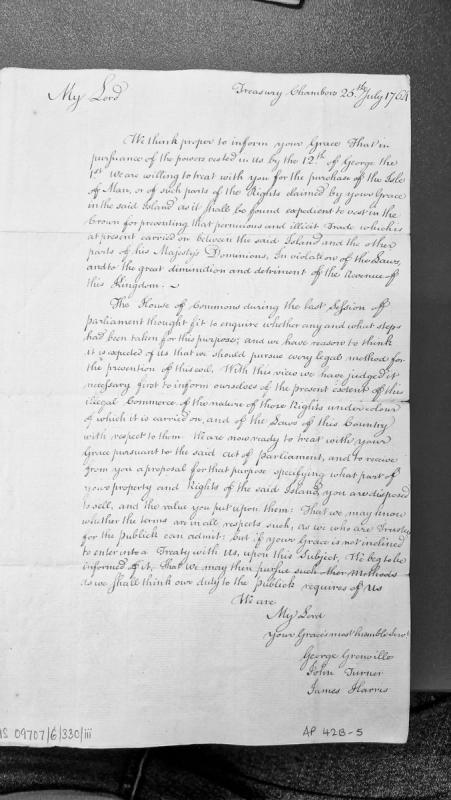
Official letter from the Treasury to the Duke of Atholl (or similar noble with rights in Man) proposing to purchase the Isle of Man or rights therein under powers granted by Act 12 of George I. The letter addresses the problem of illegal commerce between Man and other British dominions, requests a formal proposal with valuation, and threatens alternative action if the Duke refuses to negotiate.
A table of contents page from the Manx Notebook website indexing Treasury Papers covering the critical period 1764-1771, which encompasses the lead-up to and execution of the 1765 Isle of Man Revestment. This is a finding aid and navigation page for a collection of transcribed primary documents.
A web-based index/table of contents page for a collection of Treasury Papers spanning 1764-1771, hosted on the Manx Notebook website. This is a finding aid and navigation page for historical Treasury documents relevant to the period immediately before and during the 1765 Revestment. The page notes it was designed for frames-enabled browsers and references non-frame alternatives.
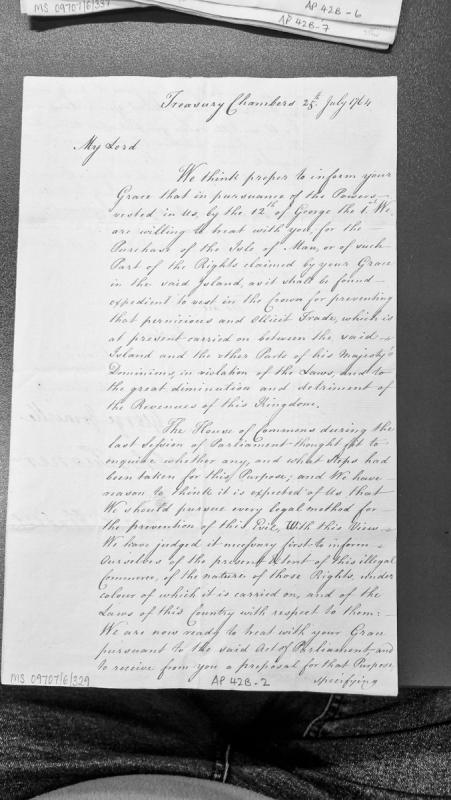
A letter from Treasury Chambers to an addressee of high rank (referred to as 'your Grace') proposing to purchase the Isle of Man or certain rights claimed there, in order to suppress smuggling and illicit trade. The letter references powers granted under the 12th of George I and notes that Parliament has enquired into steps taken for this purpose.
A letter from the Treasury to an unnamed Grace (likely the Duke of Atholl) proposing negotiations for the purchase of the Isle of Man or rights therein, to suppress smuggling and illicit commerce. The letter references parliamentary inquiry and legal authority under the 12th of George I, and requests the recipient to submit proposals for sale.
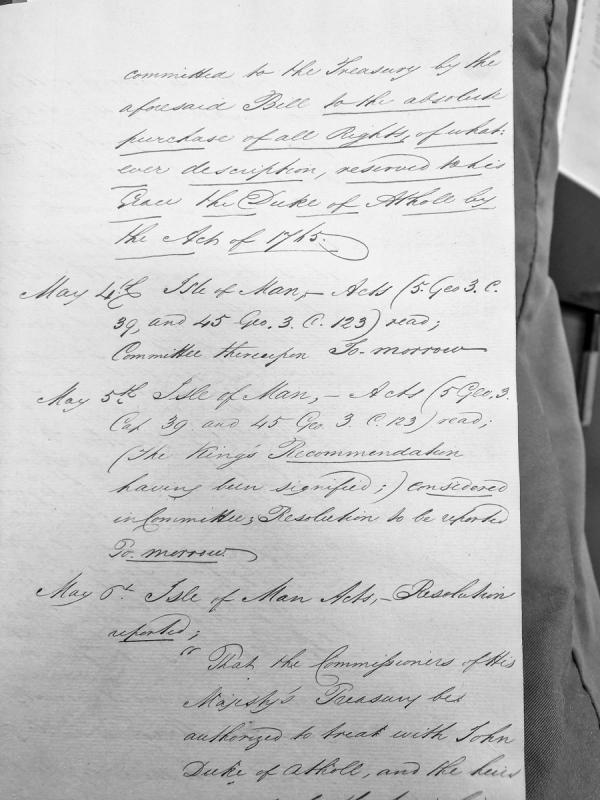
Fragment of administrative record documenting parliamentary proceedings on the Isle of Man concerning Acts relating to the Duke of Atholl's reserved rights. The document records committee meetings and resolutions from May 4-6 regarding authorization for Treasury commissioners to negotiate with John Duke of Atholl.
An administrative letter from Whitehall Treasury Chambers addressed to a Grace (likely a Duke or Archbishop) regarding the Isle of Man. The correspondence discusses considerations for allowing terms related to the island, objections concerning its proximity, constitution, laws, and justice administration, as well as interior trade and commerce. The Treasury commits to enacting laws to prevent illicit trade.
Letter from Abiah Hume to the Lords Commissioners of the Treasury, evaluating Anthony Bacon's proposals for supplying His Majesty's Forces in the Isle of Man with bread, forage, straw, and coals. Hume notes difficulty obtaining pricing information from the Island and compares proposed rates to London prices. Includes Bacon's original memorial (16 July 1765) detailing supply terms and quantities. Relevant to post-Revestment military administration and provisioning logistics.
A trilingual (Latin, English, French) transcription of a 1414 treaty between England and France, notable for its enumeration of allied sovereignties and lordships. The document specifically mentions the Lord of Man and John Stanley as signatories/representatives for the Lordship of Man on behalf of England, and again references Man under French allies. This source is relevant to understanding the constitutional and feudal status of the Isle of Man in the medieval period, predating the 1765 Revestment by 351 years.
A tripartite treaty text (Latin, English, French) from 1414 between England and France, listing allied sovereigns and lords party to peace negotiations. The document explicitly names 'John Stanley, for the Lordship of Man' and 'The Lord of Man' as parties, providing evidence of Man's status as a distinct lordship recognized in international diplomacy during the late medieval period.
The Treaty of Allahabad (16 August 1765) between Robert Clive and John Carnac for the East India Company and Nawab Sujah al-Dowlah establishes perpetual peace, military alliance, and commercial privileges. The treaty confirms EIC territorial gains, grants duty-free trade rights throughout the Nawab's dominions, and obligates financial compensation of 50 lacs of rupees to the Company. This document provides crucial context for understanding EIC financial power and commercial interests contemporaneous with the 1765 Revestment negotiations.
The Treaty of Perth (1266) records the agreement between Magnus IV of Norway and Alexander III of Scotland concerning the cession of the Isles (Mann and the Sodors) to Scottish sovereignty. The document details payment terms (100 marks annually plus 4,000 marks over four years), succession rights, treatment of inhabitants, and jurisdictional provisions. It includes both English and Latin versions and establishes the constitutional framework for Mann's transition from Norwegian to Scottish overlordship.
A complete transcription of the Treaty of Perth (1266), in which Magnus IV of Norway ceded the Isle of Mann and the Hebrides to Alexander III of Scotland in exchange for an annual pension of 100 marks sterling and a lump sum of 4,000 marks over four years. This foundational treaty established Scottish sovereignty over Mann and is essential context for understanding the political history preceding the 1765 Revestment. The text is presented in both English translation and original Latin, with supporting notes on a 1312 reconfirmation by Haakon V.
An extended historical narrative from Draper's 1864 work on the Stanley family, detailing the trial, defence, and execution of James, Earl of Derby in October 1651. Includes the Earl's letter to the Countess from Chester, his detailed legal defence addressing the validity of quarter given in war, his petitions to Cromwell and Parliament, and an account of his execution at Bolton. Critical for understanding Derby's constitutional arguments and the political circumstances surrounding the Revestment.
An extended academic dialogue on the constitutional illegality of the 1765 Isle of Man Revestment, arguing that Parliament misapplied the Pratt-Yorke doctrine (intended for acquired territories) to the Isle of Man, which was a 'Coordinate Kingdom' under a 1609 Tripartite Administrative Lock requiring consent of the Lord, Tynwald, and Parliament. The author argues the 1805 compensation was 'conscience money' for a constitutional coup, and frames the Revestment as part of a broader pattern of imperial asset-stripping that extended to India and America.
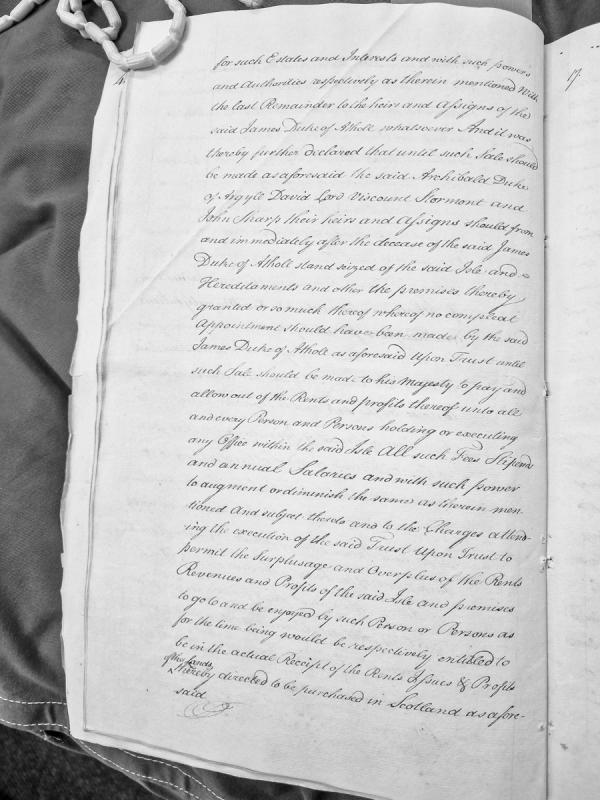
A legal document detailing the terms of a trust arrangement for the Isle of Man and its hereditaments. Following the death of James Duke of Athole, the document outlines how trustees (Archibald Duke of Argyle, David Lord Viscount Stormont, and John Sharp) are to manage the estate, collect rents and profits, pay office holders' fees and salaries, and eventually arrange for sale of the property.
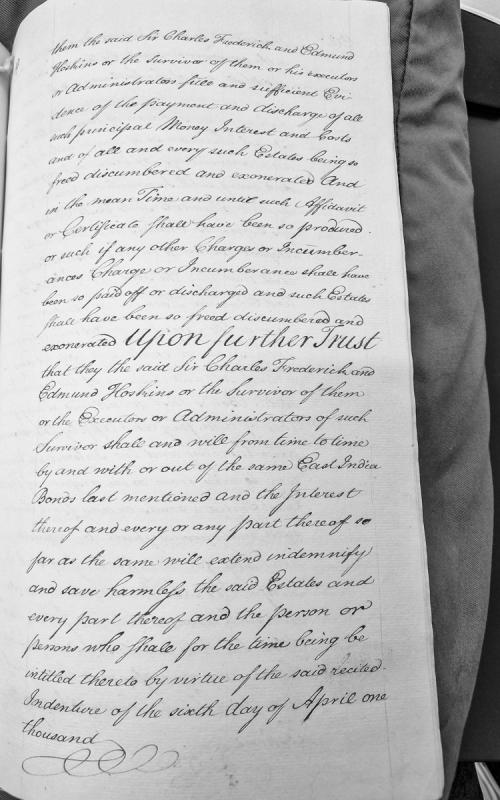
Fragment of a legal document establishing trust arrangements between Sir Charles Frederick and Edmund Hoskins for managing East India Bonds and discharging estate encumbrances. The document outlines procedures for providing evidence of payment and defines ongoing trust obligations for protecting specified estates.