A comprehensive historical narrative of the 1765 Revestment of the Isle of Man from the Dukes of Athole to the British Crown. Covers the death of Duke James in 1764, negotiations under George Grenville, the Duke's initial resistance and eventual acceptance of £70,000 compensation, Parliamentary legislation, and subsequent disputes over inadequate compensation by the fourth Duke until 1805. Includes detailed analysis of revenue figures, the Mischief Act, and the constitutional implications for Manx independence.
A comprehensive historical chapter on the 1765 Revestment of the Isle of Man, covering negotiations between the British Ministry under George Grenville and the 2nd Duke of Atholl, the passage of the Act of Revestment and supplementary Mischief Act, and subsequent disputes over compensation raised by the 4th Duke. Includes analysis of smuggling, revenue, constitutional law, and the impact on Manx sovereignty and trade.
A Master's thesis examining western colonial schemes (particularly Vandalia) and land speculation companies in British North America after the Seven Years' War. Analyzes how debates over new colonial governments and western settlement revealed fundamental disconnects between pragmatic republican visions emerging in the colonies and authoritarian imperial ideology in London, contributing to revolutionary sentiment.
Extract from Draper's 'The House of Stanley' (1864) providing a comprehensive genealogical account of the Alderley branch of the Stanley family from Sir John Stanley (14th century) through the second Lord Stanley of Alderley (19th century). Includes details of marriages, offices held, and notable descendants. Directly relevant to understanding the Stanley family's holdings and political prominence during the 1765 Revestment period.
A genealogical and biographical history of the Cross-Hall branch of the Stanley family, a collateral line of the Earls of Derby. The work traces the Stanley lineage from the 17th century and includes detailed biographical information on family members, including Colonel Thomas Stanley (1749–1818), knight of the shire for Lancashire (1780–1812), who notably sat as chairman of a committee of enquiry in 1805 into the Duke of Atholl's claims for further remuneration as former proprietor of the Isle of Man. This parliamentary reference is directly relevant to the Revestment project.
A comprehensive compilation of Manx statutes and ordinances in force as of 1792, alphabetically arranged by Thomas Stowell, Advocate. Includes the foundational 1704 Act of Settlement establishing customary tenures, fines, rents, and land law, alongside ordinances covering civil procedure, probate, game preservation, wrecks, and other governance matters. Directly relevant to understanding the constitutional and legal framework of the Isle before the 1765 Revestment.
Thomas Grindle's comprehensive historical narrative examining the 1765 Revestment of the Isle of Man to the British Crown. Grindle argues that the Revestment resulted from deliberate English imperial policy rather than smuggling alone, tracing the commercial negotiations of 1710–1714, the suspension of anti-smuggling measures, and the subsequent fifty-year period of uncontrolled trade that provided the pretext for sovereignty acquisition. The work emphasizes the Manx Government's good-faith efforts to comply with English customs demands and the English Government's rejection of reciprocal free-trade agreements.
Thomas Grindle's historical essay on the 1765 Revestment, reprinted from The Isle of Man Times. Argues the Revestment resulted from deliberate English imperial policy rather than smuggling concerns, and traces Manx trade negotiations 1709-1714 with detailed analysis of Acts of Tynwald. Contends the English Government refused reasonable trade concessions, forcing the Manx to resume smuggling and ultimately lose independence.
L.B. Namier's foundational 1929 scholarly work analyzing the British House of Commons and electoral system circa 1760-1761. Examines why men entered Parliament, the electoral structure, the 1761 general election, and secret service money under the Duke of Newcastle. Essential context for understanding the political and constitutional dynamics preceding the American Revolution and relevant to the 1765 Revestment.
Letter from the Penn proprietors to Benjamin Franklin explaining delays in obtaining opinions from the Attorney and Solicitor General on matters in dispute between the Proprietors and the Pennsylvania Assembly. Discusses the procedural obstacles and expresses desire for speedy resolution, relevant to understanding the political and legal dynamics of colonial governance during Franklin's agency in England.
Correspondence between Thomas Gawne (Acting Attorney General) and Treasury officials regarding unpaid salary for performing the duties of Attorney General in the Isle of Man from July 1813. Gawne requests remuneration from the official salary allocated to the absent Attorney General John Frankland. The letters illustrate administrative and constitutional issues in Manx governance post-Revestment, including the relationship between Manx officials and the Home Office/Treasury.
Correspondence from Thomas Gawne, Acting Attorney General of the Isle of Man, to Home Office officials requesting remuneration for two years of service (from 31 July 1813). Gawne argues that the nominal Attorney General, Mr Frankland, is incapacitated and cannot pay him, and requests the Treasury authorize payment from Frankland's £300 annual salary. Includes follow-up letter of 3 February 1816 to John Beckett (Under-Secretary of State) with marginal note indicating Treasury approval.
Letter from Philadelphia merchant Thomas Wharton to Benjamin Franklin discussing multiple versions of Patrick Henry's Virginia House of Burgesses resolves against the Stamp Act (May 1765), with detailed editorial analysis of textual variants and manuscript copies in Franklin Papers. Also reports on Cumberland County's violent opposition to supplying Fort Pitt, including the seizure and burning of Joseph Spear's goods.
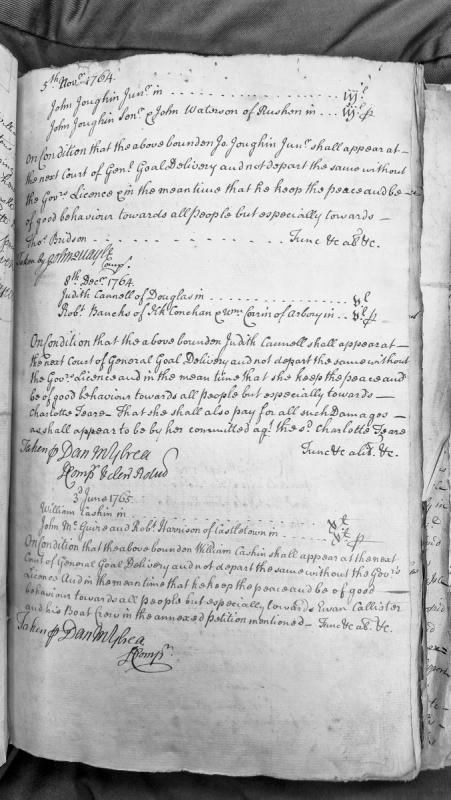
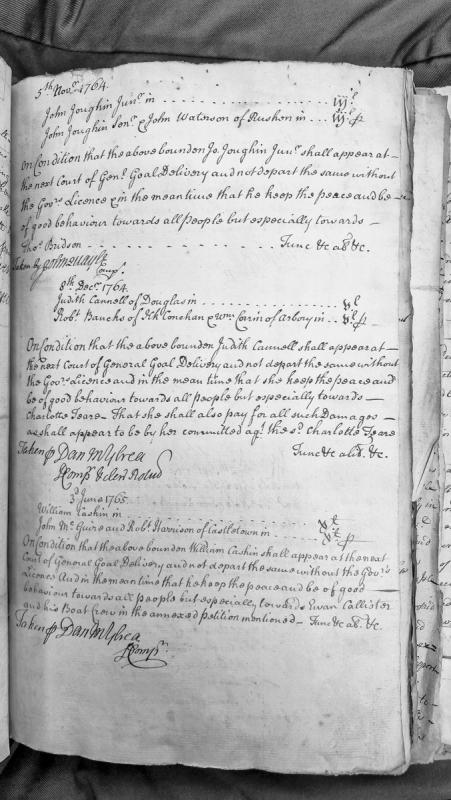
A record of three recognisance bonds requiring individuals to appear before the Court of General Gaol Delivery and maintain good behaviour. The bonds cover John Joughin Jr. (November 1764), Judith Cannell of Douglas (December 1764), and William Cashin (June 1765), each with named sureties and specific conditions regarding peace-keeping and reparations.
A record of three separate recognisance bonds taken before the Manx courts between November 1764 and June 1765. Each bond requires the named party to appear at the next Court of General Goal Delivery, keep the peace, and maintain good behaviour, with named sureties. The bonds relate to disputes involving Thomas Bridson, Charlotte Tears, and Ewan Callister and his boat crew.
A series of three recognisances (bonds) taken before John Quayle, Coroner and Jurat, requiring individuals to appear at the next Court of General Gaol Delivery and keep the peace. Each recognisance names two sureties bound in £3 or £6 amounts and specifies particular individuals toward whom peaceful behaviour must be maintained.
Chapter 22 from Train's 1844 History and Account of the Isle of Man, covering the rise and suppression of the contraband trade from circa 1670 to the 1830s. Details the smuggling operations, the role of Manx islanders and adventurers like Commodore Thuròt, revenue losses to Britain, and government attempts at regulation culminating in the 1765 Revestment Act and subsequent fiscal reforms.
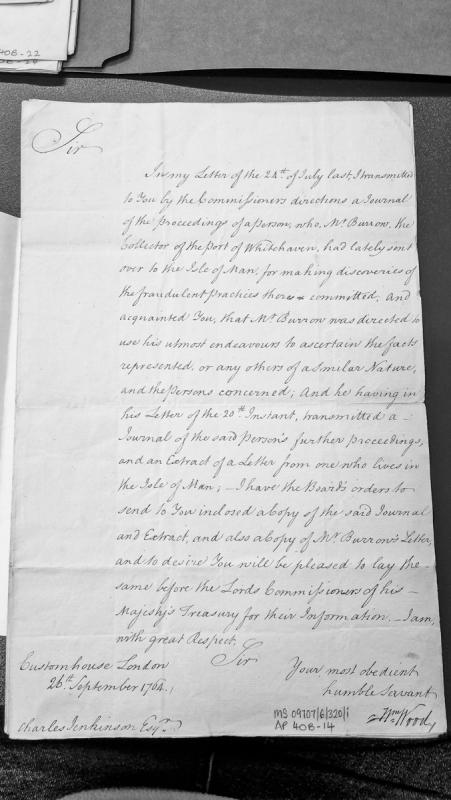
Official letter from William Wood at the Customhouse, London, to Charles Jenkinson Esq., transmitting copies of a journal documenting investigations into fraudulent customs practices on the Isle of Man, along with related correspondence from Mr. Burrow, Collector of the Port of Whitehaven, for submission to the Lords Commissioners of the Treasury.
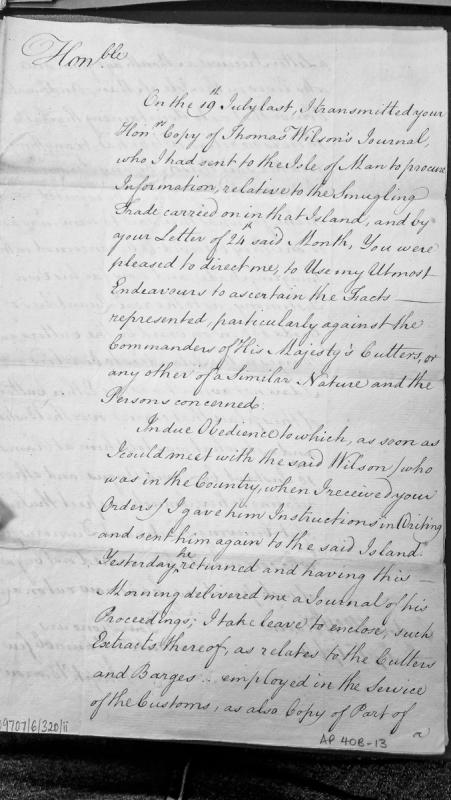
Administrative letter enclosing extracts from Thomas Wilson's investigative journal concerning smuggling activities in the Isle of Man and the conduct of His Majesty's Customs cutters and barges. The sender reports having received instructions on 24th July to investigate facts represented against commanders of royal vessels and persons involved in smuggling operations.
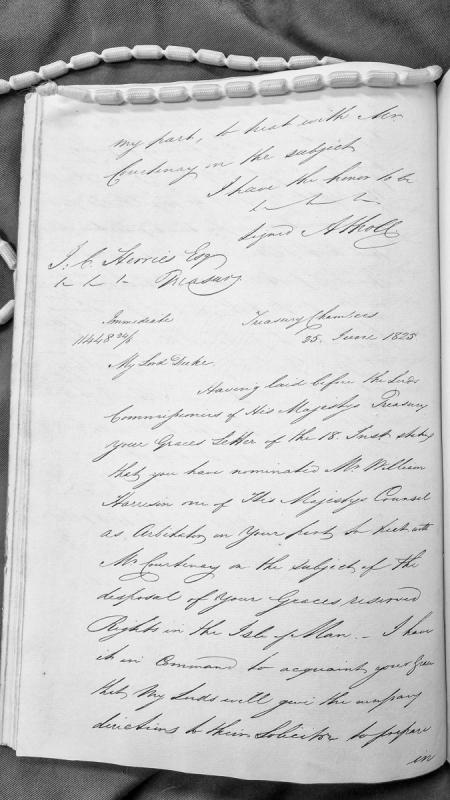
Letter from J. C. Herries at Treasury Chambers to a Duke, acknowledging receipt of his letter dated 18 June 1825 regarding nomination of William Harrison as arbitrator to negotiate disposal of the Duke's reserved rights in the Isle of Man. The Treasury confirms it will instruct its Solicitor to prepare necessary directions.
Letter from Abiah Hume to the Treasury Lords (22 July 1765) evaluating Anthony Bacon's Memorial proposing prices for supplying bread, forage, straw, and coals to military forces newly stationed on the Isle of Man. Discusses consultation with the Duke of Atholl, comparative pricing with Great Britain, and recommends consulting island officials for accurate local rates. Includes Bacon's original proposal (16 July 1765).
A letter from J Freemantle at the Customhouse London to the Lords Commissioners of the Treasury, reporting on investigations into alleged fraudulent smuggling practices in the Isle of Man. The document includes related correspondence from 1764 regarding inquiries conducted by Thomas Wilson, a customs investigator sent to the Island, and reports from Joseph Burrow (Collector of Whitehaven) detailing alleged involvement of government cutters and barges in smuggling operations. The Treasury ultimately deemed the complaints 'frivolous and groundless' based on Surveyor General Lutwidge's assessment.
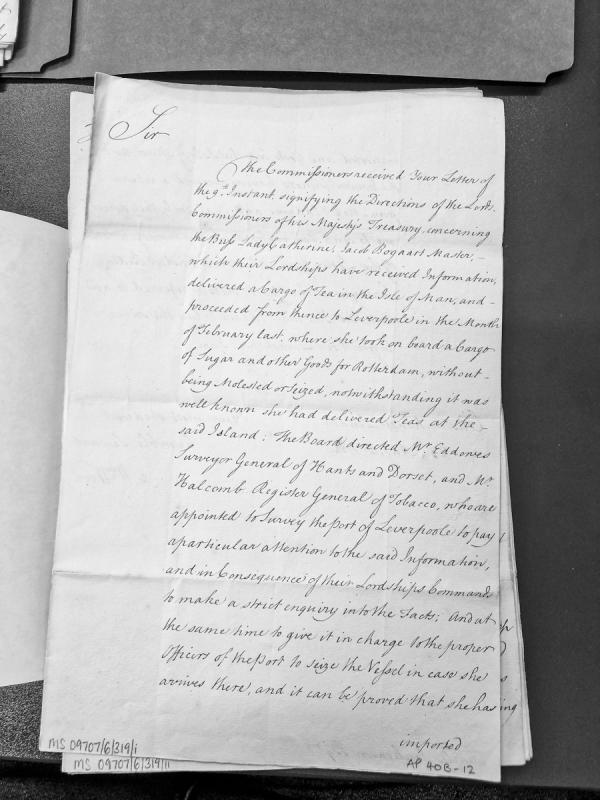
Administrative correspondence from the Commissioners to an official regarding Treasury directions concerning the Brig Lady Catherine, which allegedly delivered smuggled tea to the Isle of Man before proceeding to Liverpool. The letter directs appointed surveyors to investigate the matter and instruct port officers to seize the vessel if it arrives and smuggling can be proved.
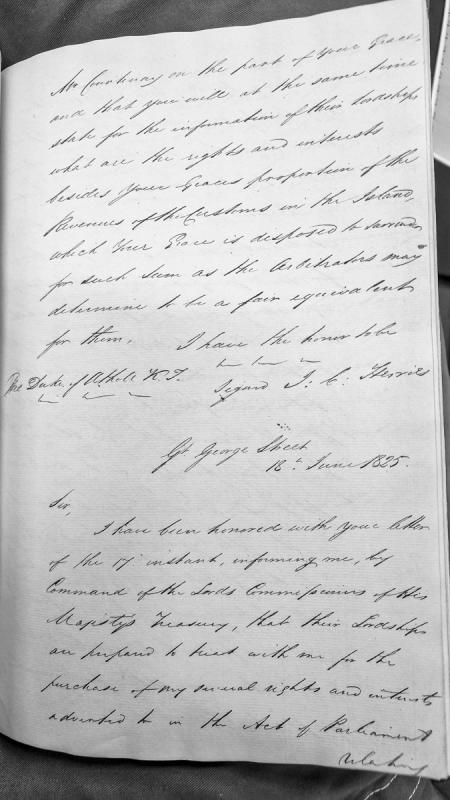
Official correspondence from the Lords Commissioners of His Majesty's Treasury to the Duke of Atholl regarding the purchase of his rights and interests in the Isle of Man, including customs revenues and other property interests. The letter discusses terms for arbitration of a fair equivalent compensation.
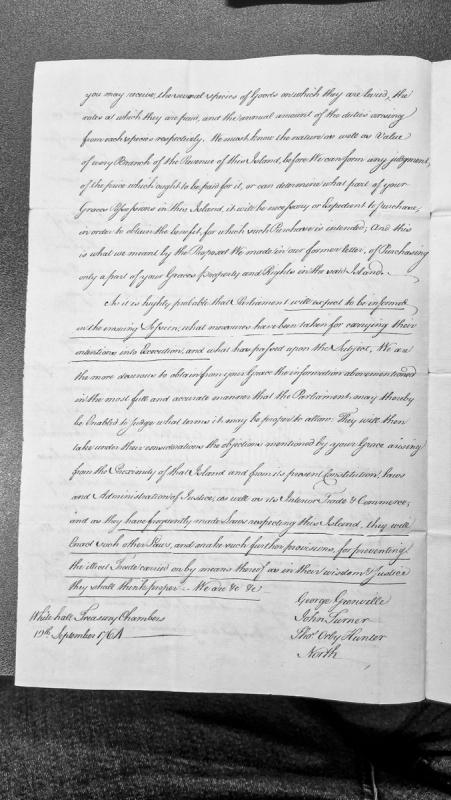
Letter from Treasury officials to an unnamed Grace (likely a nobleman) requesting detailed information about the Isle of Man's revenue, duties, and goods taxation. The correspondence discusses Parliament's expectations regarding measures taken to execute their intentions, and addresses concerns about the island's proximity, constitution, laws, and illicit trade.