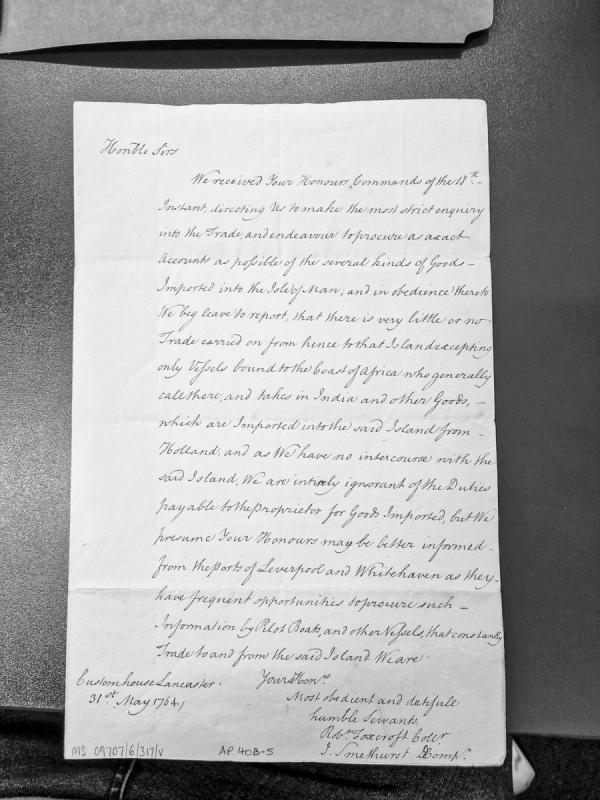
A letter from the Customhouse at Lancaster reporting on trade between England and the Isle of Man, in response to commands from 18th instant. The writers indicate minimal direct trade from their port, note that vessels bound for Africa call at the Isle of Man for goods imported from Holland, and suggest that Liverpool and Whitehaven ports would have better information about duties and imports.
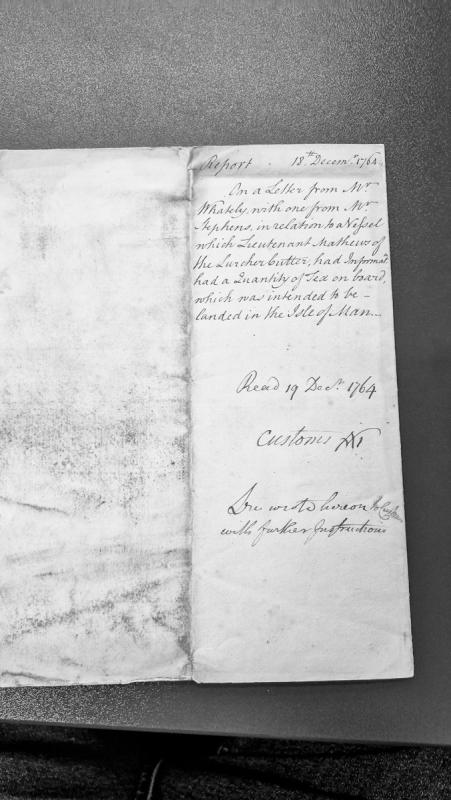
Administrative report dated 18 December 1764 concerning a vessel that Lieutenant Mathews of the Lurcher Cutter had information about, allegedly carrying a quantity of tea intended to be landed in the Isle of Man. Letters from Mr. Whately and Mr. Stephens are referenced. The document was read on 19 December 1764, with subsequent customs instructions issued.
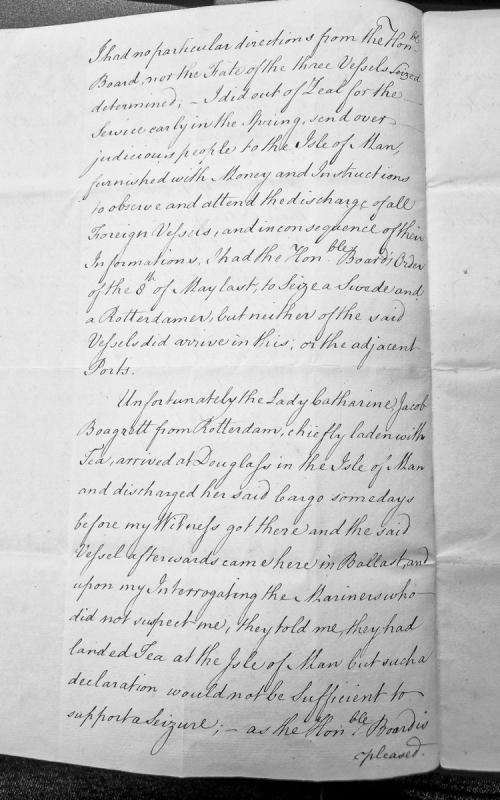
An official report detailing efforts to seize foreign vessels engaged in smuggling tea to the Isle of Man. The author describes sending observers to monitor foreign vessel discharges and reports on the attempted seizure of a Swedish and Rotterdam vessel, as well as the Lady Catharine which discharged tea at Douglas before the witness arrived.
Charles Lutwidge reports to the Treasury Lords on changes in vessel numbers and tonnage trading to/from the Isle of Man since the Crown's purchase in 1765. He distinguishes foreign trade (East Indian commodities, spirits, silks, wine, tobacco) from trade with Great Britain and Ireland, documenting the decline of legitimate Manx merchant vessels and the shift of smuggling operations to Irish wherries and French bases. The report provides quantitative data on vessel types and numbers engaged in both lawful and illicit trade.
Official report from Charles Lutwidge, Receiver General of the Isle of Man, to the Treasury Lords comparing the number and tonnage of vessels engaged in trade to/from the Island before and after the 1765 Crown purchase. Documents the decline in legitimate trade vessels and the shift of smuggling operations from Manx to foreign vessels post-Revestment.
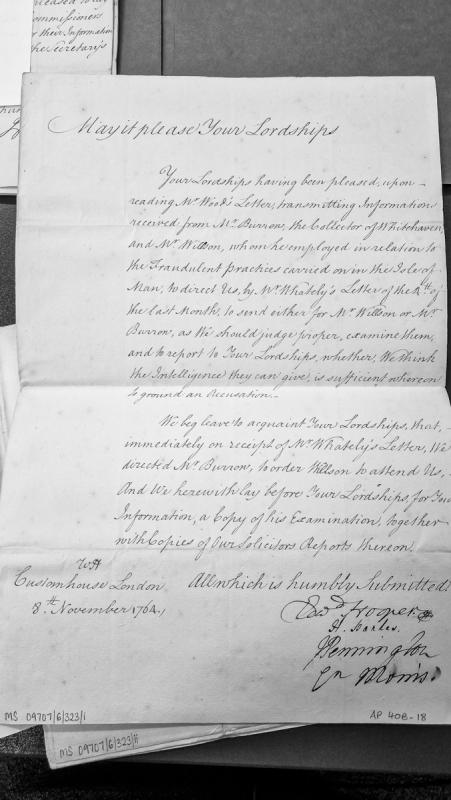
A letter from Customhouse London officials to their Lordships reporting on their examination of Mr. Willson regarding fraudulent practices occurring in the Isle of Man. The officials relay that they have obtained and are submitting a copy of Willson's examination and their solicitors' reports, as directed by Mr. Whately's letter of the previous month.
A published collection of legal case reports from the High Court of Chancery covering 1757-1766, compiled from the manuscripts of Lord Chancellor Northington (Lord Henley, created Earl of Northington in 1764) and arranged by Robert Henley Eden, one of the Masters in Chancery. This second edition (1827) with additions includes indexed cases on property, wills, trusts, settlements, and constitutional matters relevant to English law during the period surrounding the Isle of Man Revestment.
A published collection of legal cases decided in the High Court of Chancery between 1757 and 1766, compiled and arranged by Robert Henley Eden from the original manuscripts of Lord Chancellor Northington (later Earl of Northington). This second edition (1827) contains two volumes with detailed case reports including trusts, settlements, wills, and property disputes. Includes cases on voluntary gifts, executory trusts, portions for younger children, and charitable dispositions.
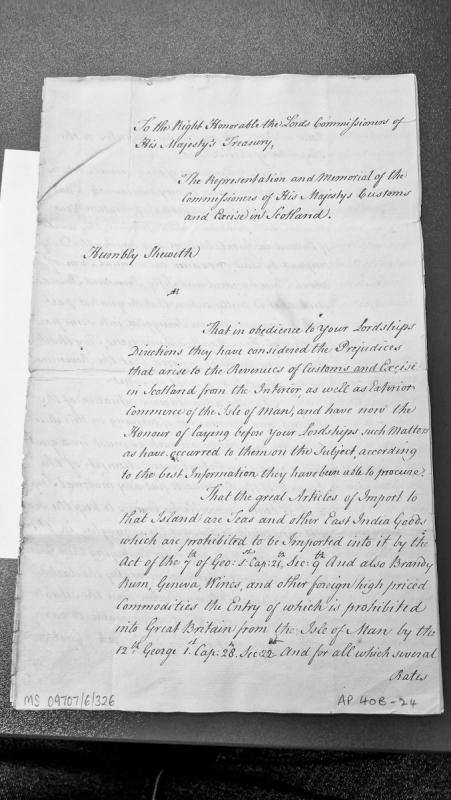
A memorial from the Commissioners of His Majesty's Customs and Excise in Scotland to the Lords Commissioners of the Treasury, detailing the prejudices to revenues arising from the interior and exterior commerce of the Isle of Man. It identifies prohibited imports including East India goods, teas, brandy, rum, and other foreign commodities.
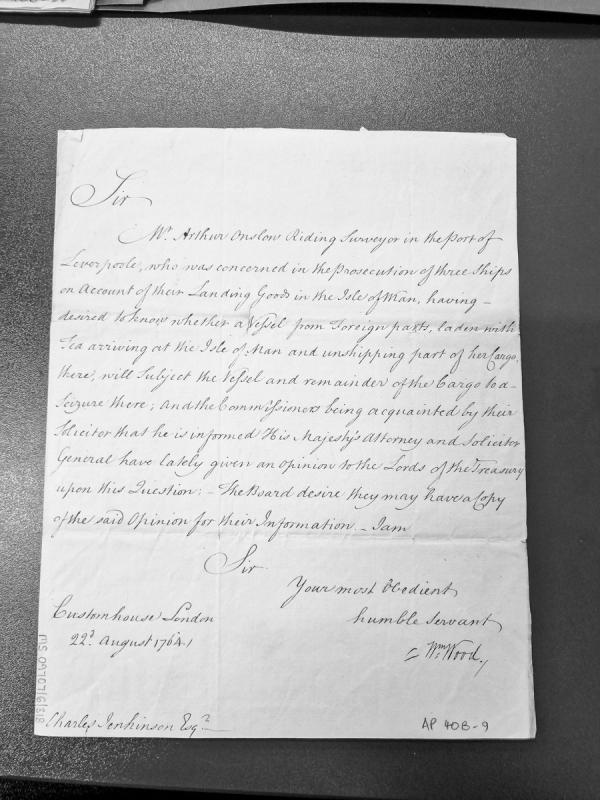
Official letter from William Wood at the Customhouse London to Charles Jenkinson, requesting a copy of a legal opinion from His Majesty's Attorney and Solicitor General regarding the seizure of foreign vessels landing cargo in the Isle of Man. The query arose from prosecutions of three ships by Mr Arthur Onslow, Riding Surveyor in the Port of Liverpool.
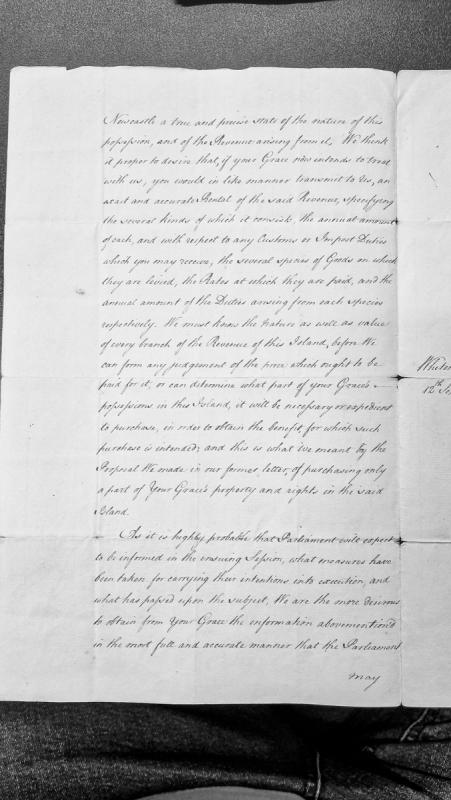
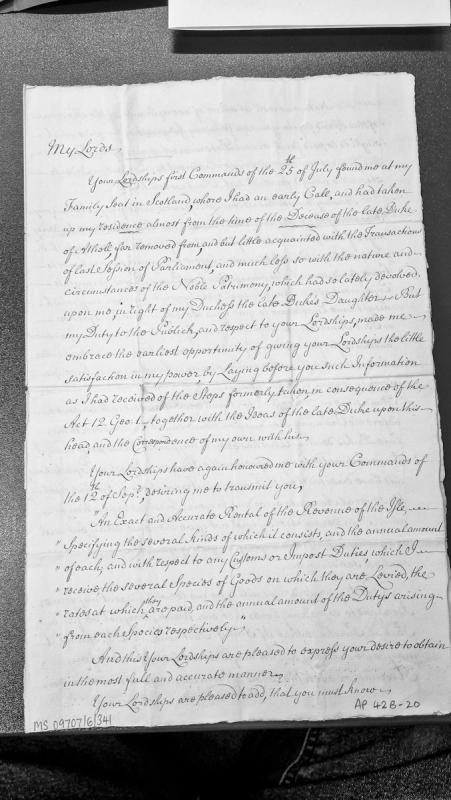
A formal letter requesting precise financial details about the revenue arising from Isle of Man possessions, including customs duties, rental values, and commodity specifications. The writer indicates Parliament expects updates on measures taken regarding the island's administration and seeks accurate information before determining purchase terms.
William Frankland's resignation letter as Attorney General of the Isle of Man, sent to Home Secretary Lord Sidmouth from Dijon on 2 February 1815. Frankland cites his desire to travel Europe and requests no retirement pension. He emphasizes the importance of appointing his successor from the English Bar and unconnected to the Island. The letter was forwarded with a covering note to under-Secretary Beckett requesting discretion until the successor's appointment.
William Frankland resigns from the office of Attorney General of the Isle of Man, citing his intention to travel on the Continent for several years. He requests appointment of a successor from the English Bar with no prior connection to the Island. The letter reveals post-Revestment administrative succession practices and concerns about governance independence.
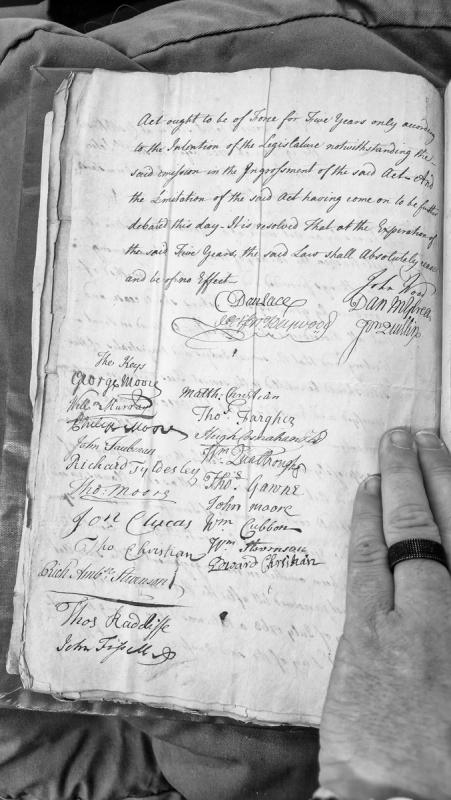
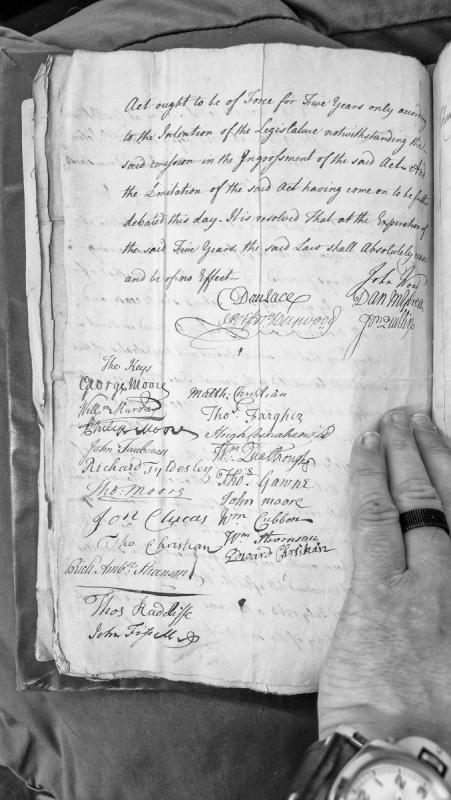
A House of Keys resolution addressing a legislative act intended to have a five-year duration. The document resolves that despite an omission in the engrossment of the act, it shall expire and cease to have effect after five years as originally intended by the legislature.
A House of Keys resolution concerning the expiration and termination of an Act after five years. The document addresses an omission in the engrossment of the Act and confirms that upon expiration of the five-year period, the law shall absolutely cease and be of no effect.
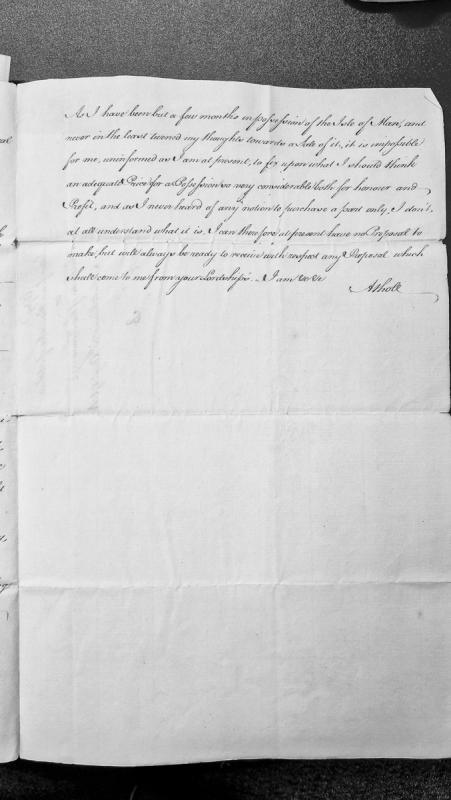
A brief letter from the Duke of Atholl responding to what appears to be an inquiry about selling or selling part of the Isle of Man. Atholl states he has only recently acquired the island and has given no thought to its sale, therefore cannot propose an adequate price. He expresses willingness to receive proposals from the addressees.
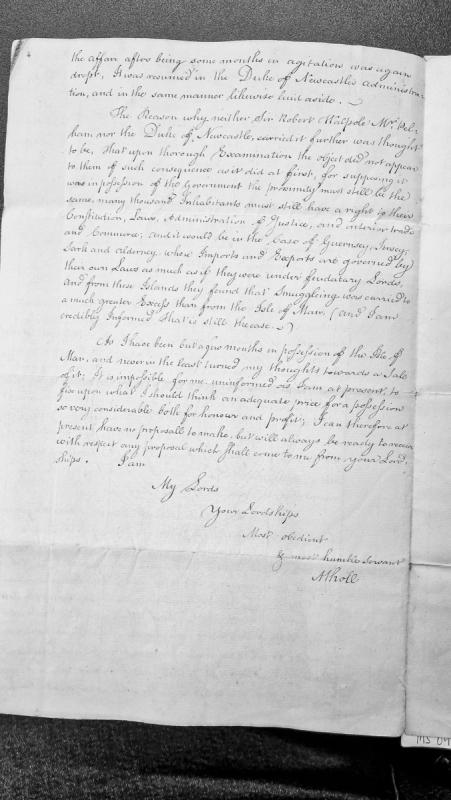
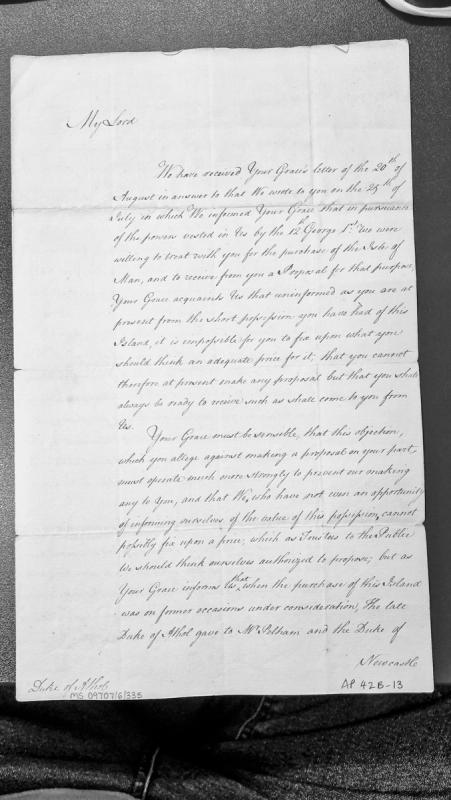
Fragment of correspondence discussing the history of government attempts to acquire the Isle of Man during the administrations of Sir Robert Walpole, Henry Pelham, and the Duke of Newcastle. The writer (the Duke of Athol, current possessor) declines to propose a sale price but expresses willingness to receive offers, noting the island's considerable value for both honour and profit.
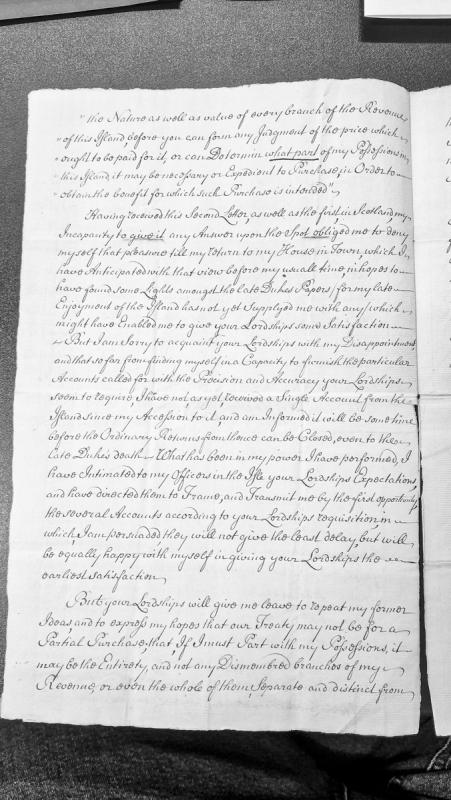
A letter responding to inquiries about the nature and value of the Island's revenue branches. The writer explains their inability to provide detailed accounts immediately upon receiving letters in Scotland, having returned to town to search for relevant papers from the late Duke. They inform the recipients of their disappointment at not yet receiving proper accounts from the Island and direct their officers to compile and transmit the required documents, while expressing hope that any purchase negotiations concern the entirety of possessions rather than partial branches.
Administrative correspondence addressing a proposal for the purchase of the Isle of Man. The sender responds to the Duke of Athol's letter of August 20th, noting that both parties lack sufficient information to establish an adequate price for the island. The discussion references previous negotiations and the powers vested by the 12th George 1st.
A letter from a nobleman (likely the Duke of Atholl or his successor) responding to commands from the House of Lords dated 25 July and 12 September, regarding the provision of detailed revenue information for the Isle of Man. The writer acknowledges his duties and commits to providing accurate rental and customs data as requested.
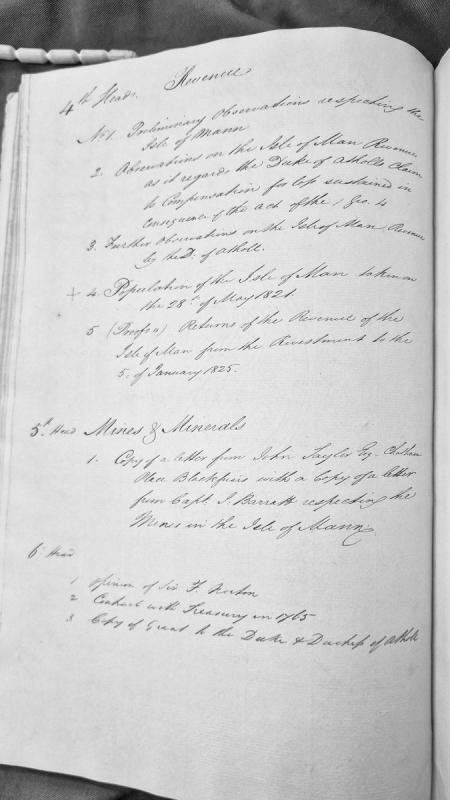
An index or table of contents for a collection of administrative and revenue documents pertaining to the Isle of Man, including observations on revenue claims by the Duke of Atholl, population data from 1821, and correspondence regarding mines and minerals. This appears to be a finding aid or organizational document for archival materials.
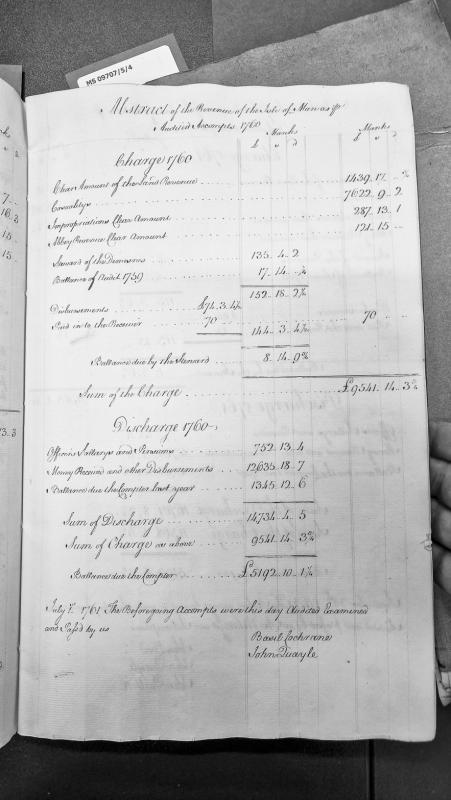
This is an Abstract of the Revenue of the Isle of Man for the year 1760, based on audited accounts. It details charges including land revenue, casualties, impropriations, and abbey revenue, followed by disbursements and officer salaries, with a final balance due to the Comptroller of £5192. 10s. 1¼d. The document was audited and passed on 1 July 1761.
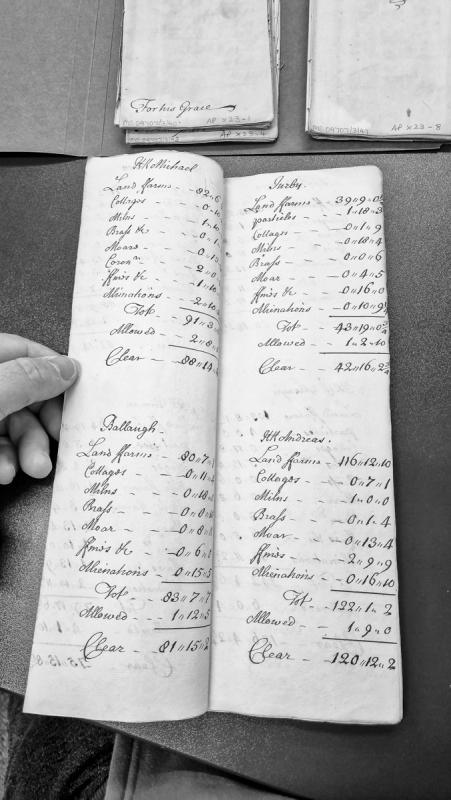
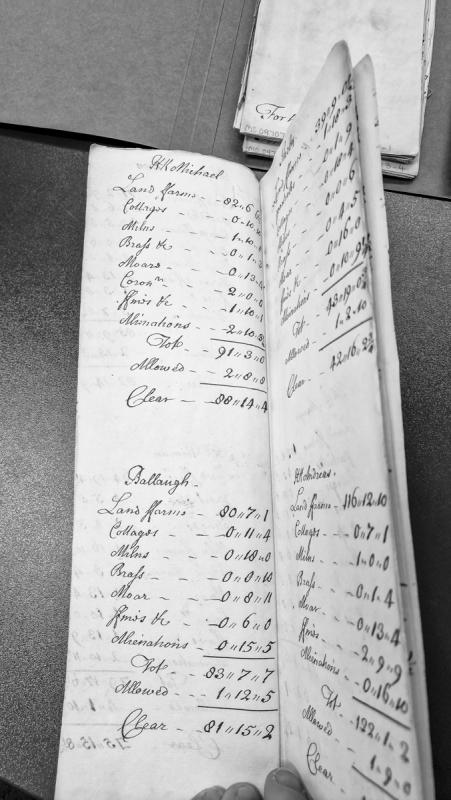
A financial revenue abstract detailing land valuations, cottages, mills, and other properties across three Manx parishes (Jurby, Ballaugh, and Andreas). The document lists land farms, cottages, mills, brafs, moar, fines, and alienations with corresponding monetary values in what appears to be pounds, shillings, and pence notation, with totals, allowances, and clear amounts calculated for each parish.
Fragment of a revenue abstract listing land valuations and income sources for K.K. Andreas, including farms, cottages, mills, brafs, fines, and alienations with associated monetary values. The document is partially obscured and damaged, with unclear totals.
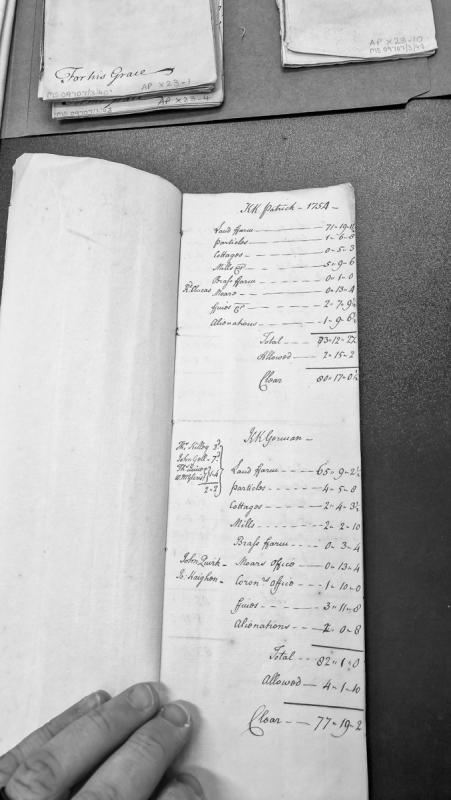
A financial abstract document listing various properties and holdings under K.K. Gorman's name, including land farms, particles, cottages, mills, and valuations for specific offices. The document shows total valuations, allowances, and a clear net figure, typical of Isle of Man revenue records.