A petition submitted by William Christian to King Charles II in 1660, appealing against his imprisonment and trial for treason by the Earl of Derby on the Isle of Man. Christian claims the proceedings violate English law and that any wartime actions are covered by the Act of Indemnity. The petition reveals tensions between Manx and English legal jurisdiction and post-Restoration political instability on the Island.
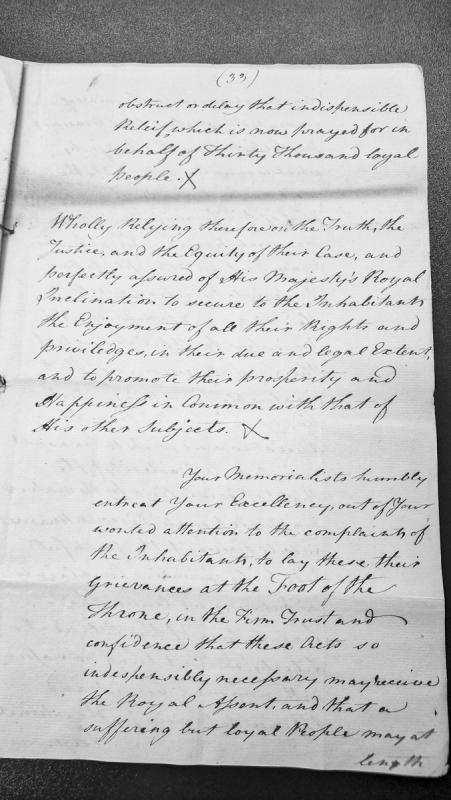
This is an excerpt from a petition addressing grievances of the inhabitants, likely of the Isle of Man. The petitioners appeal to the Crown through an official (likely a Governor or similar) to lay their grievances before the throne, seeking royal assent for necessary acts and relief for a suffering but loyal population.
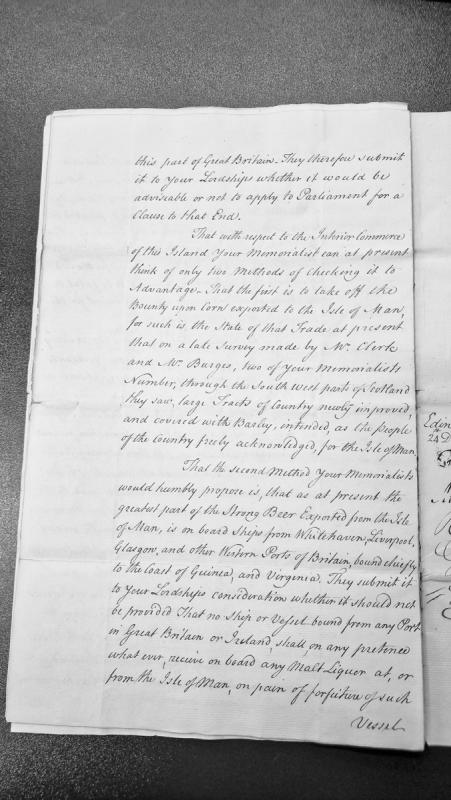
A petition submitted to the House of Lords addressing trade regulations affecting the Isle of Man. The memorialists propose two methods to regulate interior commerce: removing bounties on corn exports to the Isle of Man and restricting the export of strong beer from the island on British and Irish vessels bound to overseas ports.
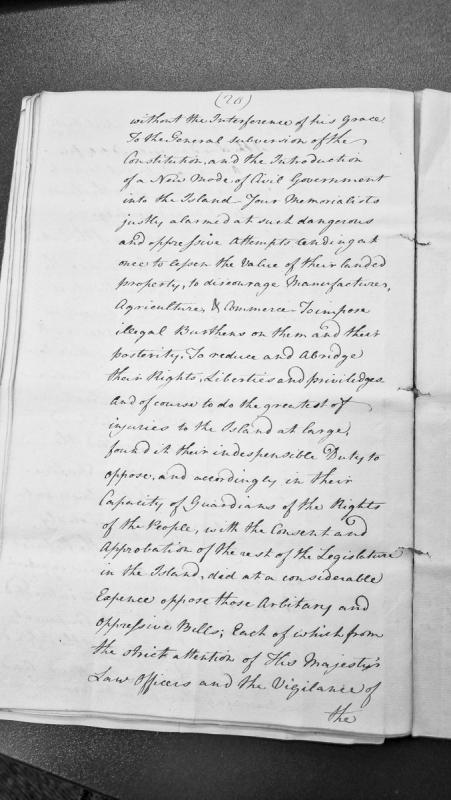
A formal petition from memorialists expressing alarm at what they characterize as dangerous and oppressive legislative attempts. The petitioners, acting as guardians of the people's rights with legislative consent, detail their concerns about threats to landed property values, commerce, agriculture, and the constitutional rights and liberties of islanders.
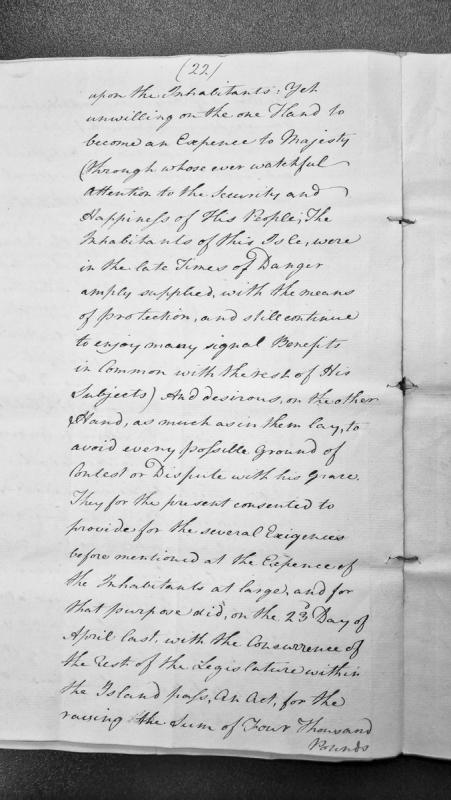
Fragment of a formal petition or administrative document discussing the inhabitants' willingness to fund public expenses while avoiding dispute with the Duke (his Grace). References an Act passed on 23 April for raising Four Thousand Pounds. The document expresses gratitude for royal protection during times of danger.
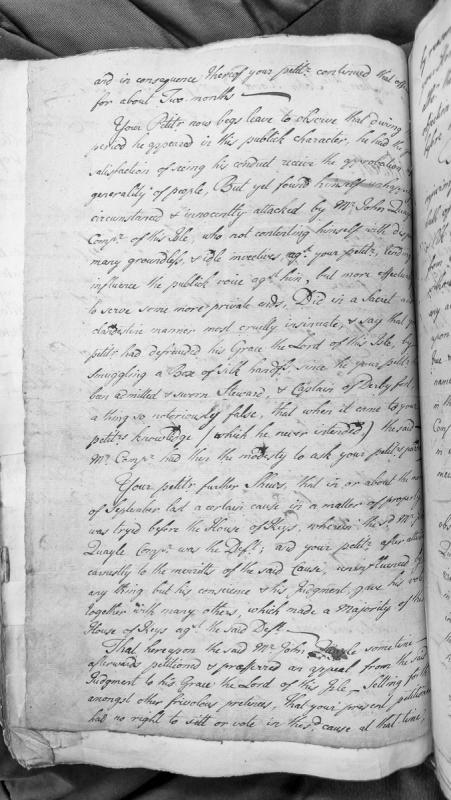
A petition submitted to authorities (likely the Lord of the Isle) by an individual who served as Steward and Castlain of Derby Fort. The petitioner complains of defamatory accusations by John Quayle (Comptroller) regarding alleged silk smuggling, and disputes Quayle's appeal of a House of Keys judgment in which the petitioner voted against him.
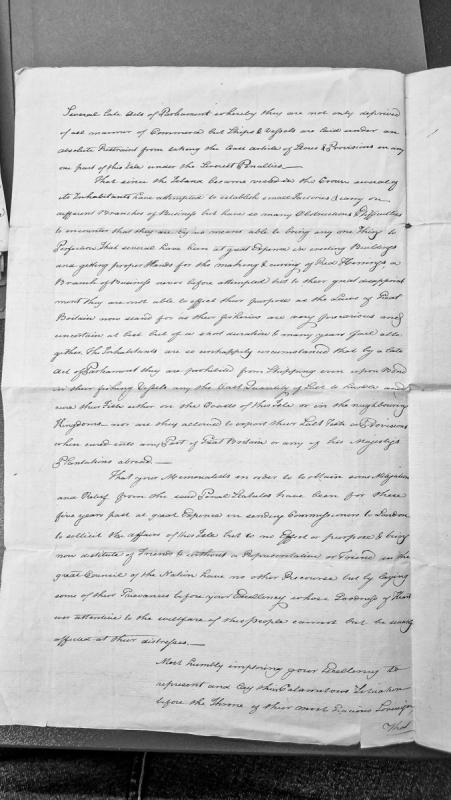
A petition from Isle of Man inhabitants detailing their grievances regarding parliamentary acts that restrict commerce, fishing, and the export of provisions. The petitioners describe their failed attempts to establish industries such as herring curing and salt fish production, and their unsuccessful efforts to obtain relief through commissioners sent to London over five years.
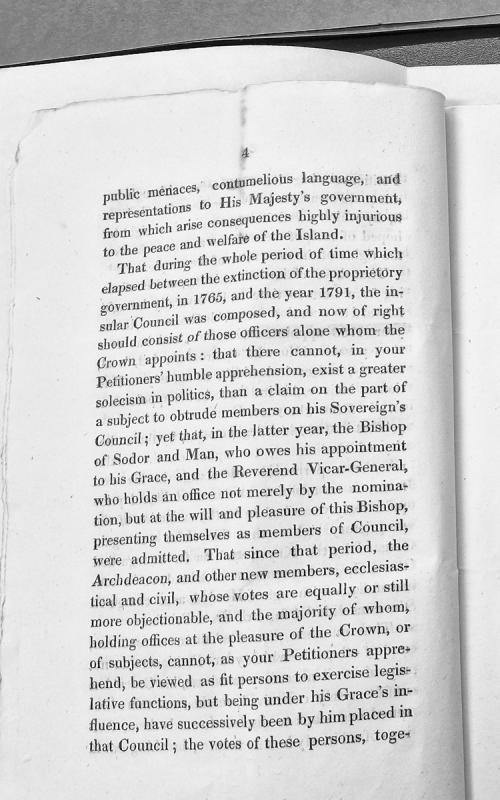
A petition addressing concerns about the composition of the insular Council, particularly objecting to the admission of ecclesiastical members (Bishop, Vicar-General, Archdeacon) appointed through the Duke of Atholl's influence rather than direct Crown appointment. The petitioners argue this constitutes a breach of proper governance principles established after 1765.
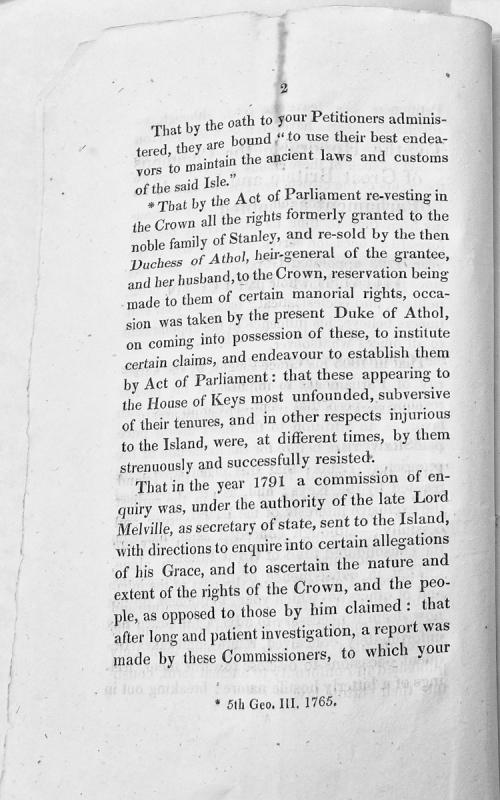
This is page 2 of a petition to authorities concerning disputes over manorial and Crown rights on the Isle of Man. It references oaths to maintain ancient laws, an Act of Parliament re-vesting rights to the Crown from the Stanley family (via the Duchess of Athol), and the Duke of Athol's subsequent claims that were resisted by the House of Keys. It mentions a commission of enquiry sent in 1791 under Lord Melville.
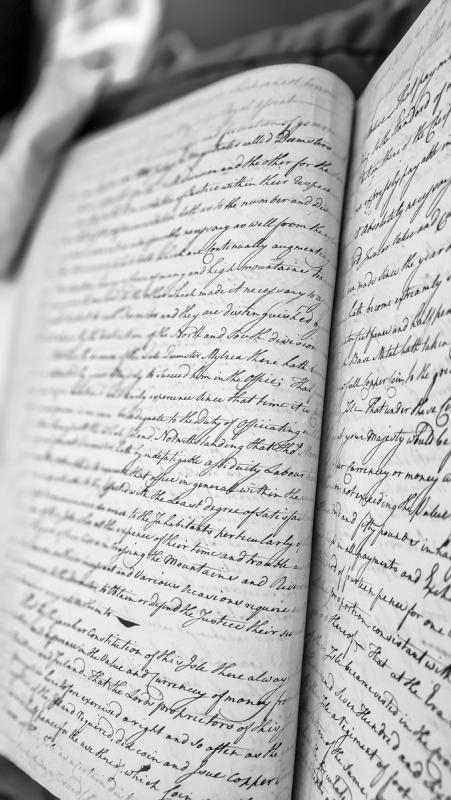
A petition addressing the Crown regarding the adequacy of the Deemster (judicial officer) system on the Isle of Man. The document discusses the division of administrative and judicial authority between North and South divisions, references the late Deemster Mylrea, and argues that a single Deemster is inadequate for serving the entire island, particularly given geographical challenges such as mountainous terrain. It also touches on currency and coinage rights of the Lords Proprietors.
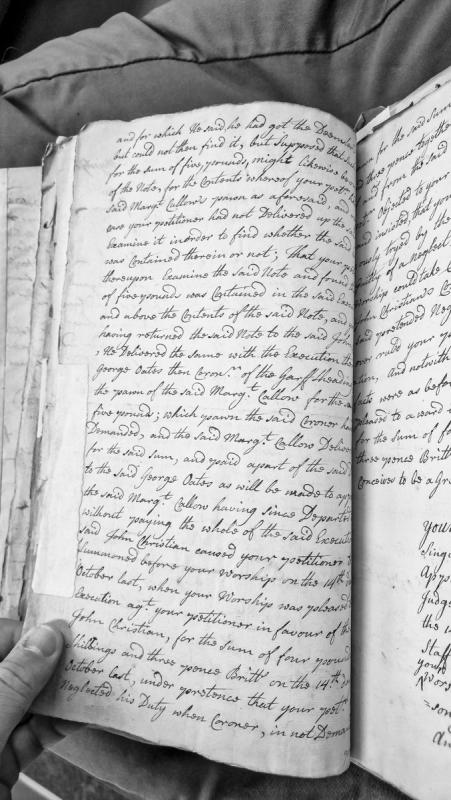
A petition concerning a dispute between the petitioner and John Christian over an execution, a pawn held by Margaret Callow, and allegations that the petitioner neglected his duty as Coroner of the Garff Sheading. The document details transactions involving a note for five pounds and disputes over payment of an execution.
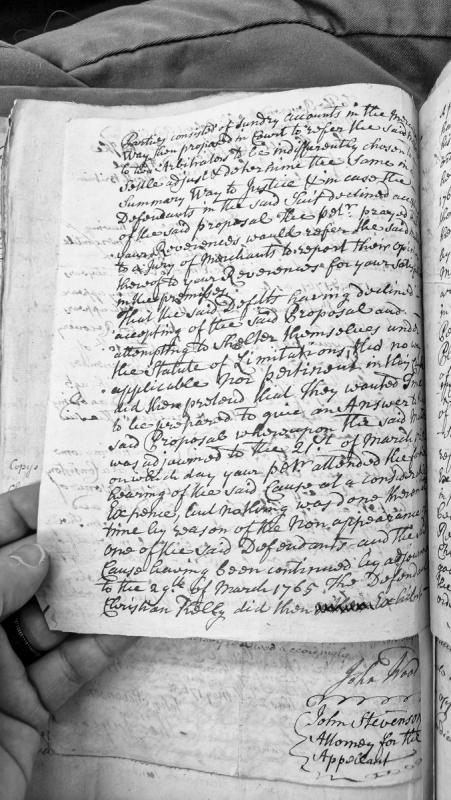
A petition describing a dispute involving sundry merchant accounts. The petitioner proposed referral to two arbitrators or, if defendants declined, to a jury of merchants. The defendants invoked the Statute of Limitations and sought delay, and the matter was adjourned multiple times, with the case continuing to 29 March 1765 when defendant Christian Kelly exhibited evidence.
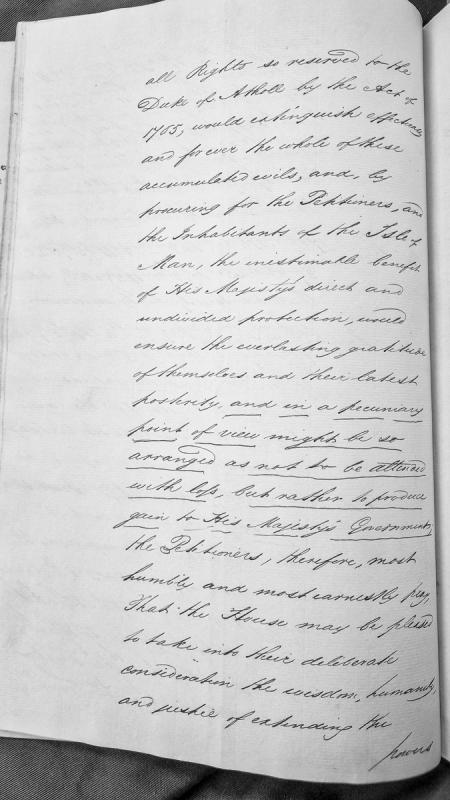
A petition addressing the House of Keys concerning the rights reserved to the Duke of Atholl by the Act of 1765 and requesting consideration of extending His Majesty's direct protection to the Isle of Man. The petition argues that such action would eliminate accumulated evils and benefit both the inhabitants and the Crown financially.
A petition complaining that John Quayle, acting as Comptroller and Clerk of the Rolls, has unlawfully erased the petitioner's name from the official roll or list of House of Keys members without proper authority. The petitioner claims this action violates official duty, damages his character and credit, and threatens the security of property rights.
This is a fragment of a petition (page 10) addressing the preservation of estates, titles, tenures, and interests of inhabitants in the Isle of Man. It references historical disputes in 1643 during the English Civil War involving the Duke's ancestors' attempts to abolish tenures in his two Manors, and cites the 1703 Act of Settlement (Tynewald) as resolving disputes between the Lord and landholders.
This is an excerpt from a petition protesting the expulsion of members from the Court of Gaol-delivery by the Duke of Athol. The petitioners claim they received no prior notice or warning of their intended removal, and argue that this constitutes a material innovation to their constitutional status. They also note that no charges of misconduct have been made against any member.
A petition protesting the expulsion of members from the Court of Gaol-delivery by the Duke of Athol. The petitioners assert they had no prior notice or cause to suspect such action, claim the decision was made secretly over two years, and deny any misconduct by their members.
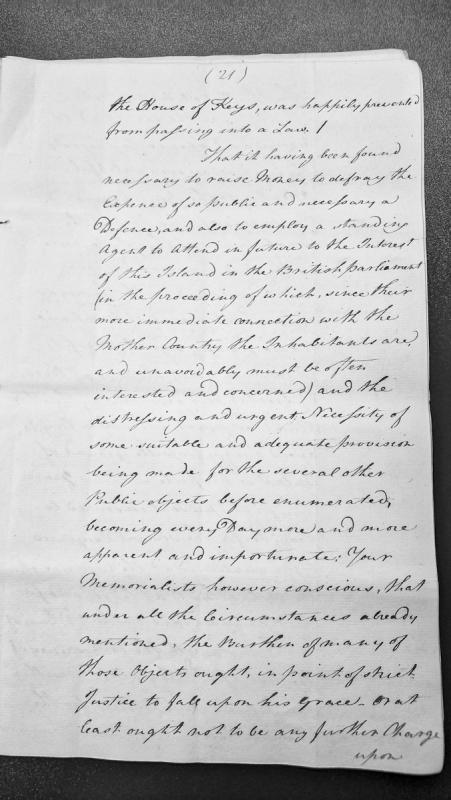
This is an excerpt from a petition to authorities (likely the Governor) addressing the financial burden of defending the Isle of Man and maintaining a standing agent in Parliament. The petitioners argue that certain public expenses should rightfully fall upon the Governor rather than further burdening the Island's inhabitants.
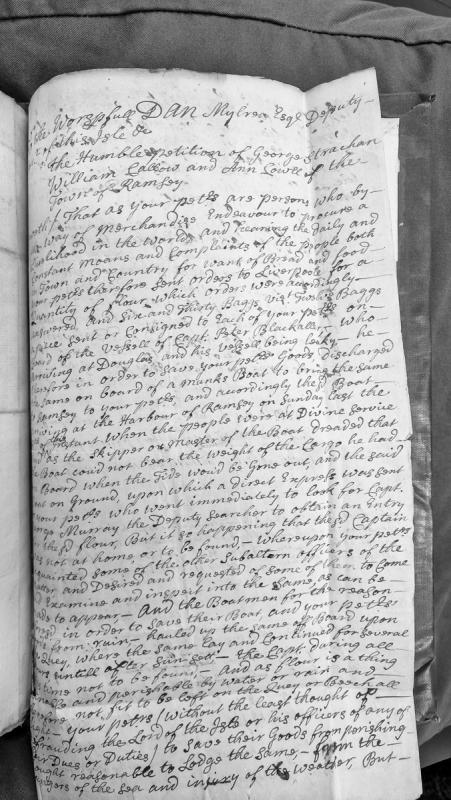
A petition from three merchants (George Strachan, William Calcot, and Ann Cowle) of Ramsey to the Deputy Governor DAN Mylrea, explaining their receipt of flour consigned from Liverpool. The petitioners describe how they were forced to land cargo at Ramsey without proper customs entry due to an unavailable customs officer and perishable goods at risk from weather.
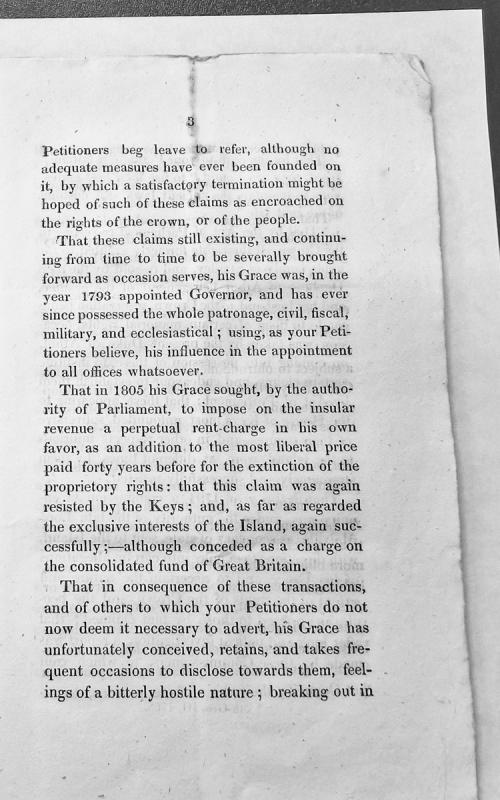
This is page 3 of a petition addressing the Crown, detailing grievances against the Governor (referred to as 'his Grace') regarding historical claims on the insular revenue, his appointment in 1793, and his exercise of patronage over civil, fiscal, military, and ecclesiastical offices. The petitioners document his 1805 attempt to impose a perpetual rent-charge and allege that he has since harbored hostile feelings toward them.
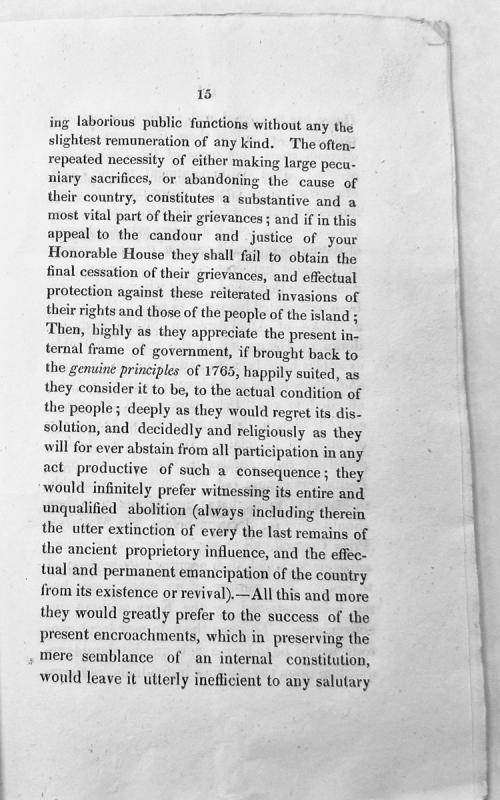
This is a page from a formal petition addressing grievances related to public service without remuneration and perceived invasions of rights. The petitioners appeal to an honorable house (likely the House of Keys) for redress, expressing preference for restoration of the 1765 constitutional principles and warning of preference for complete abolition of the current system over continued encroachments.
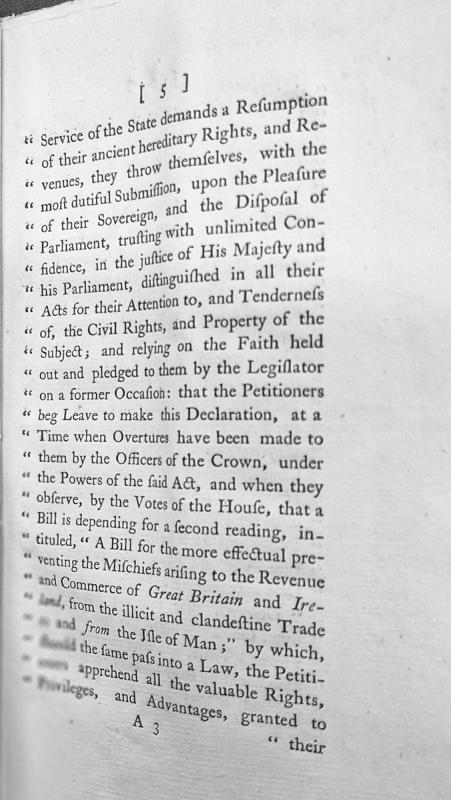
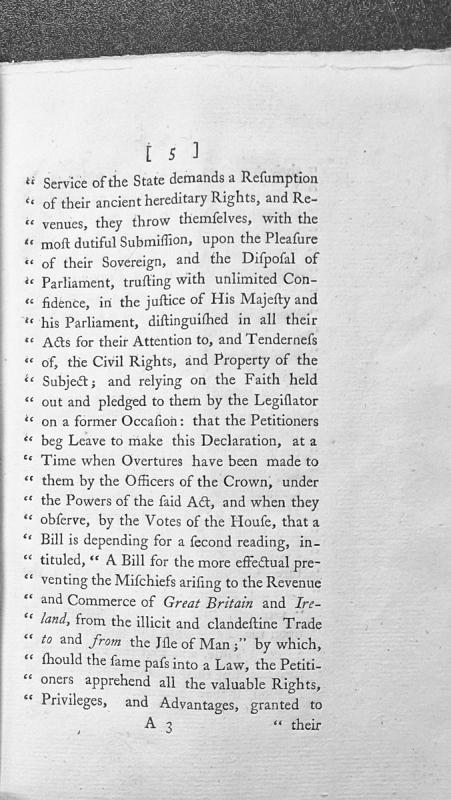
This is an excerpt from a petition to Parliament submitted by petitioners from the Isle of Man. The petitioners appeal to the Crown and Parliament regarding the resumption of their ancient hereditary rights and revenues, and express concern about pending legislation to prevent illicit trade between Great Britain, Ireland, and the Isle of Man.
Fragment of a petition (page 5) from Manx petitioners expressing submission to Crown authority while defending their ancient hereditary rights and revenues. The petitioners invoke Parliament's attention to civil rights and property, and express concern about a pending bill to prevent illicit trade to and from the Isle of Man, which they fear will diminish their valuable privileges and advantages.
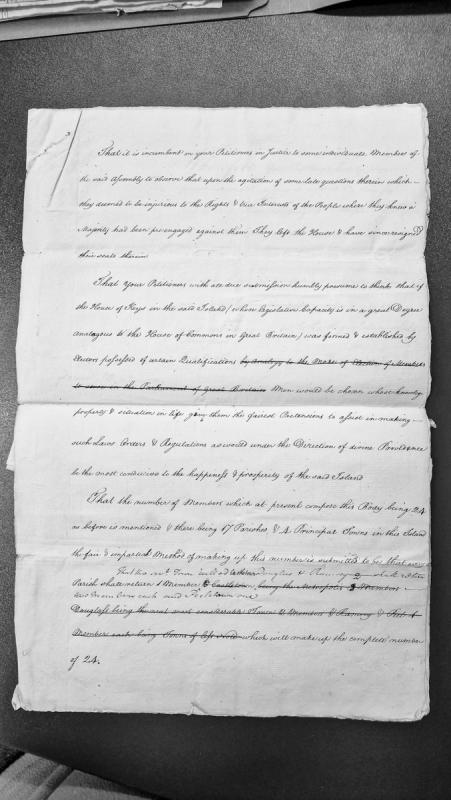
A petition to reform the electoral system of the House of Keys on the Isle of Man, proposing that representation be based on parishes and principal towns rather than the current system. The petitioners note that some assembly members have resigned in protest over matters they deemed injurious to the people's rights and interests.
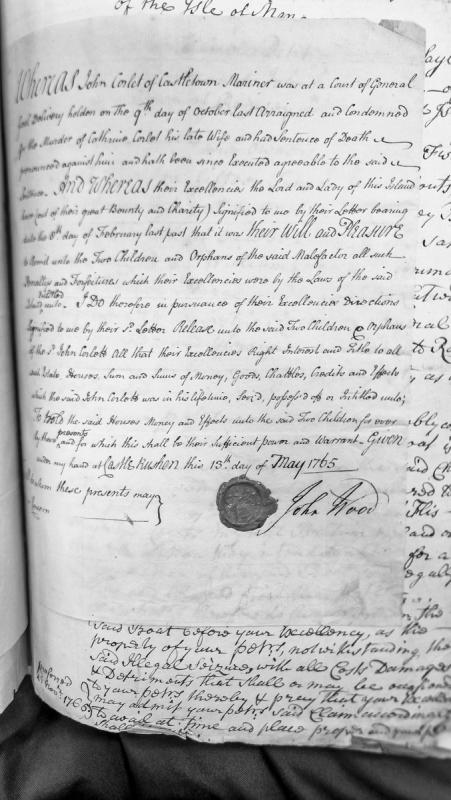
A fragmentary petition to an authority (addressed as 'your Excellency') concerning the illegal seizure of a boat belonging to the petitioners. The document requests recovery of the vessel and compensation for costs, damages, and detriments incurred. A marginal note indicates performance on 23 March of an illegible year in the 1760s.