Two petitions and related memoranda from James Brew and Paul Kelly to Governor Basil Cochrane regarding a disputed land enclosure (intack) belonging to merchant George Moore near Douglas Fort. The petitioners, who had contracted to build a stone wall around the intack, seek legal authority to present evidence that no encroachment on Lord's property has occurred, after the Attorney General challenged the work. The documents reveal conflicts between the Governor, Deemster, and petitioners over jurisdiction and legal procedure in Manx land disputes.
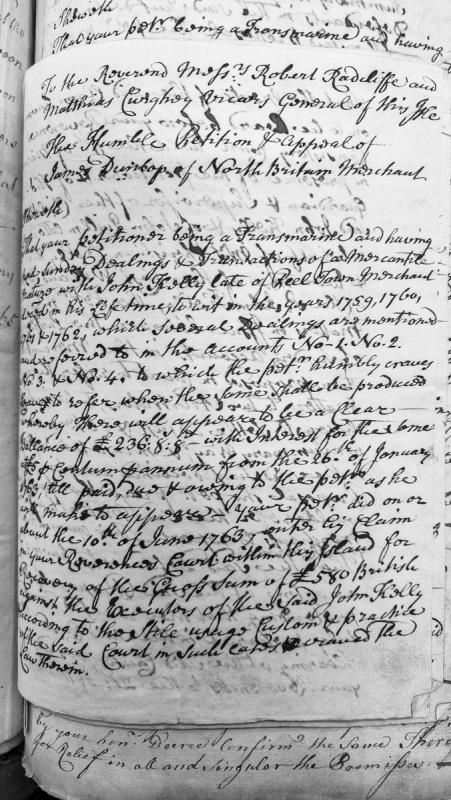
A humble petition and appeal submitted to the Vicars General of the Isle of Man by James Dunlop, a merchant from North Britain, seeking recovery of a debt of £236 8s 8d (with interest at 5% per annum from 26 January 1763) owed by the estate of John Kelly, late merchant of Peel Town. The petitioner details mercantile transactions conducted between 1759-1762 and references supporting accounts, having entered his claim in the ecclesiastical court on or about 10 June 1763.
A 14th-century petition presented to the English Crown by John de Waldeboef claiming the lands of the Isle of Man and adjacent islands as heir to Reginald, formerly King of Man. The petition traces the descent of rights through Mary (daughter of Reginald, wife of Waldeboef) and her son William. The document is significant for establishing early claims to Manx sovereignty and illustrating the jurisdictional complexity between English and Scottish overlordship of Man.
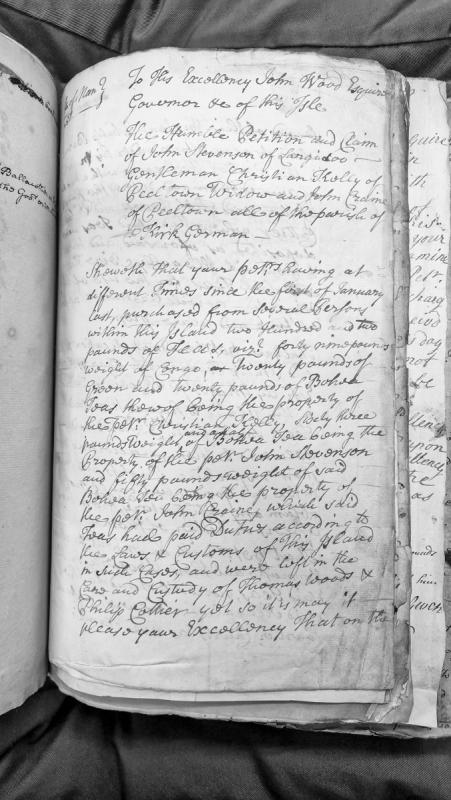
A humble petition addressed to Governor John Wood concerning the seizure or custody of tea purchased by the petitioners. The petitioners claim to have purchased various types of tea (Congo, Green, and Bohea) totaling 202 pounds, which had paid proper duties and were left in the care of Thomas Woods and Philip Collier.
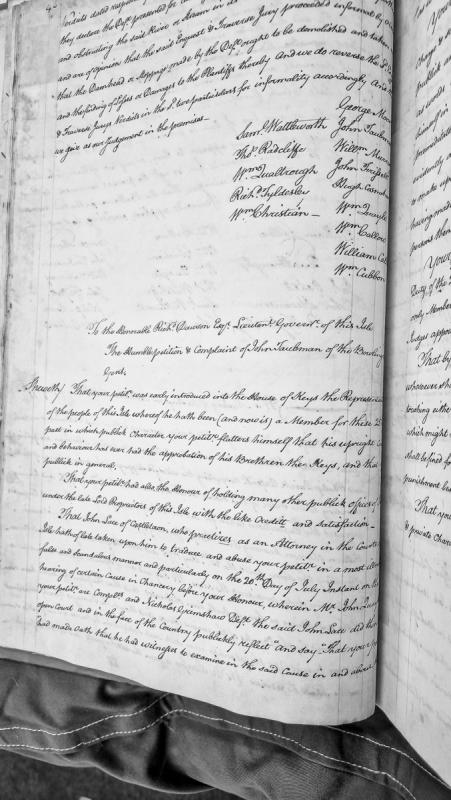
A petition to the Lieutenant Governor from John Taubman, a 25-year member of the House of Keys, complaining of defamation by attorney John Lace of Castletown. Taubman alleges that Lace publicly reflected upon his character during a Chancery hearing on 20 July, claiming Taubman falsely swore to having witnesses in a case where John Quayle and Taubman were complainants against Nicholas Grimshaw.
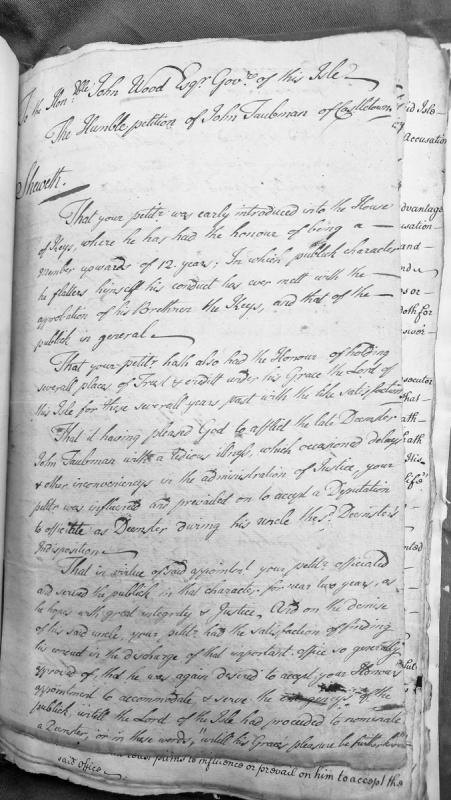
A petition to Governor John Wood from John Taubman of Castletown, highlighting his 12+ years service in the House of Keys and his temporary deputisation as Deemster following his uncle's illness. Taubman seeks formal appointment to the Deemster position following his uncle's death.
A 14th-century petition to the English Crown by John Waldeboef claiming inheritance rights to the Isle of Man through his wife Mary, daughter of King Reginald of Man. The document traces the line of descent and includes the Crown's response directing the matter to the King's Bench. It demonstrates the complex feudal status of Man between English and Scottish overlordship and is a valuable primary source for medieval Manx sovereignty and succession law.
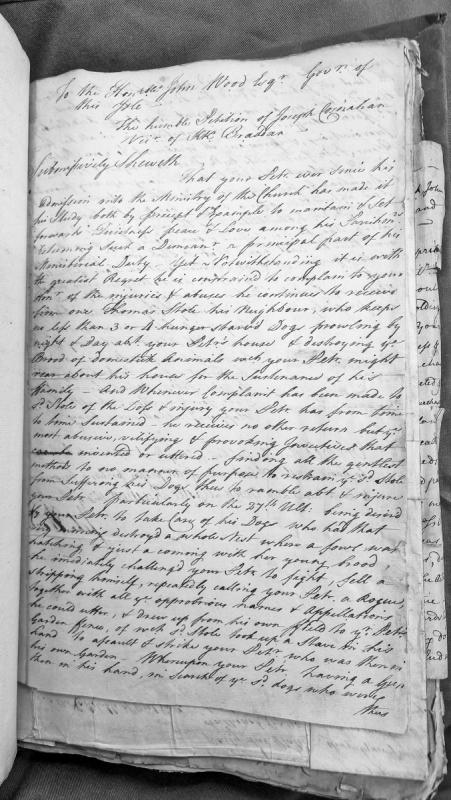
A petition from Joseph Corjeahan, Vicar of Kirk Braddan, to Governor John Wood complaining of injuries and abuses sustained from his neighbour Thomas Stole, whose dogs destroy domestic animals and fowl. Corjeahan describes an incident on the 27th of the previous month when Stole challenged him to fight after being asked to control his dogs.
A 1769 petition from Manx merchants and gentlemen to the British Treasury, requesting relief from post-Revestment trade restrictions. The petitioners describe economic distress following the 1765 purchase of sovereignty, highlighting loss of commerce, emigration, deteriorating harbors, and the burden of pre-Revestment restraining laws. The petition articulates the island's capacity to benefit Britain and requests specific trade indulgences.
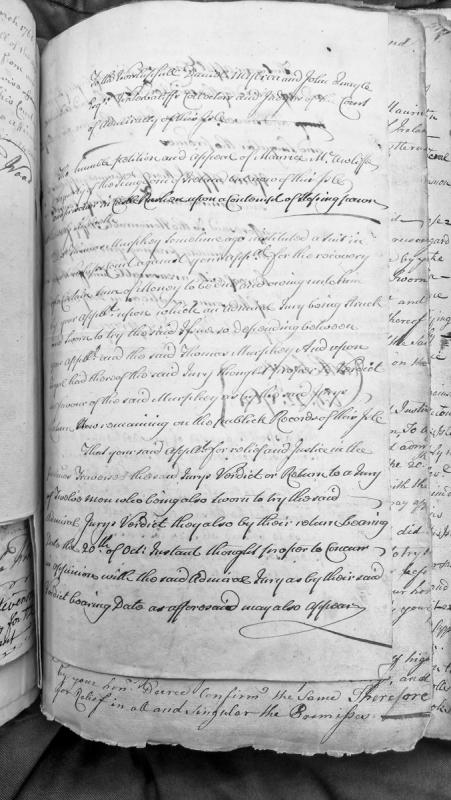
A petition and appeal to the Waterbailiffs and Judges of the Court of Admiralty by Maurice Mc Auliffe, a prisoner in Castle Rushen, challenging a jury verdict in a debt recovery suit brought by Thomas Murphey. The appellant references both an initial Admiral Jury verdict and a subsequent jury of twelve (dated 20 October) which concurred with the original verdict, seeking relief and justice from the court.
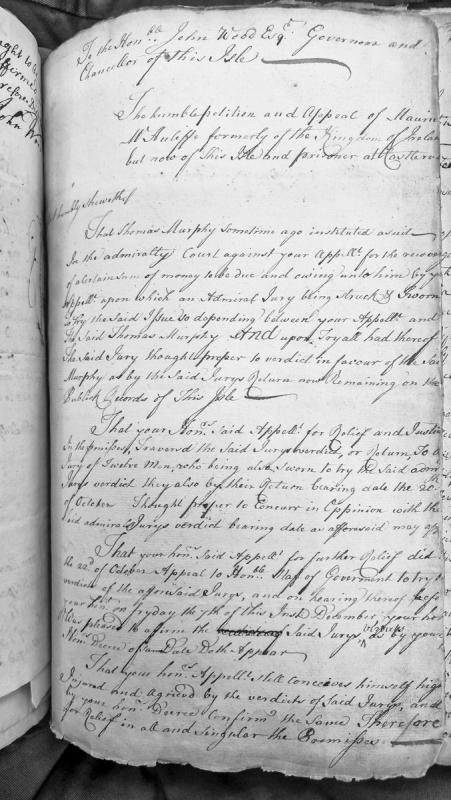
A petition submitted to Governor John Wood by Maurice McAuliffe, an Irish-born resident and prisoner at Castlerushin, appealing an admiralty court decision ordering him to pay a debt to Thomas Murphy. The petition details the progression of the case through an admiral jury, a jury of twelve men, and the Governor's confirmation of the verdicts.
A petition from George Moore on behalf of Peeltown inhabitants to James Duke of Atholl requesting intervention in harbour improvement works at Peel. The document details obstacles encountered in the Tynwald court regarding funding for harbour construction under existing legislation (acts of 1734, 1739, 1753), with 200+ signatures appended. Reflects local economic concerns, administrative processes under the Duke's sovereignty, and tensions between Tynwald and harbour supervisors.
A petition from George Moore on behalf of the inhabitants of Peeltown to James, Duke of Atholl, requesting ducal intervention in the improvement of Peel Harbour. The document includes a supporting memorial with 120+ signatures from townspeople, protesting the Court of Tynwald's denial of permission to borrow money for harbour repairs. Demonstrates local governance structures, economic interests in port infrastructure, and relations between the Manx community and the feudal lord before the 1765 Revestment.
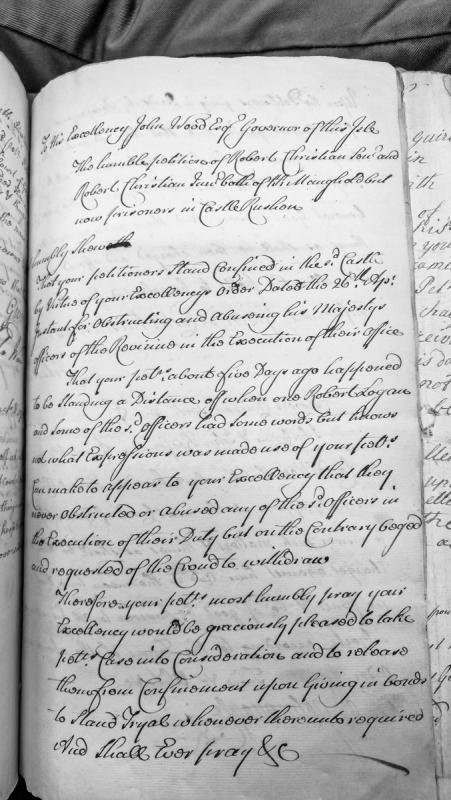
A petition from two men named Robert Christian, imprisoned in Castle Rushen by order of the Governor dated 26 April, claiming they were wrongly confined for allegedly obstructing revenue officers. They deny the charges and request release on bond to stand trial.
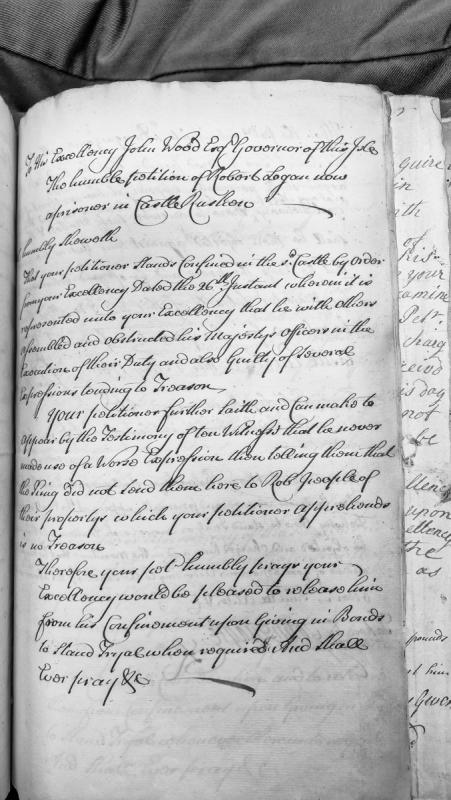
A petition from Robert Logan, imprisoned in Castle Rushen by order of Governor John Wood, requesting release on bond to stand trial. Logan denies charges of obstructing royal officers and treasonous speech, claiming his only statement was that the King did not send officers to rob people of property.
A petition from Roman Catholic merchants and residents of the Isle of Man to James, Duke of Atholl, protesting against a proposed legislative bill to disqualify Catholics from purchasing or inheriting land. The petitioners argue their economic contributions to the island (trade, building, revenue generation) and their civil obedience merit protection of their existing privileges.
A petition from Roman Catholic merchants residing in the Isle of Man to James, Duke of Atholl, requesting protection against proposed legislation that would disqualify Catholics from purchasing or inheriting land. The petitioners emphasize their economic contributions to the island, thirty years of residence, obedience to civil authority, and defense efforts. This document reveals religious discrimination concerns and tensions over property rights in pre-Revestment Man.
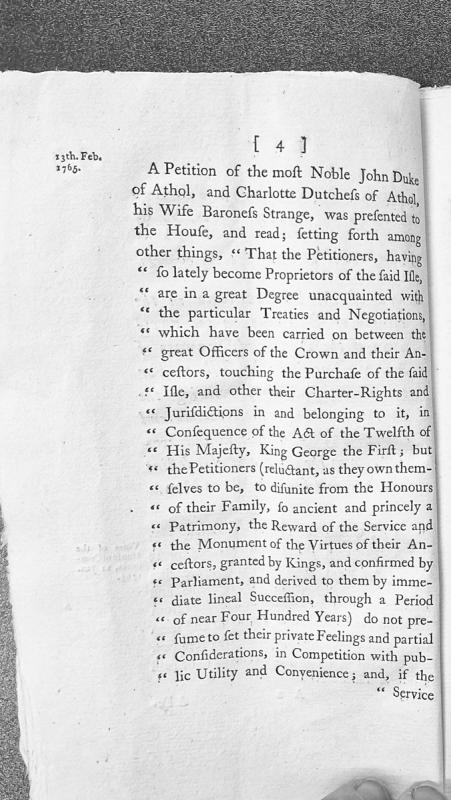
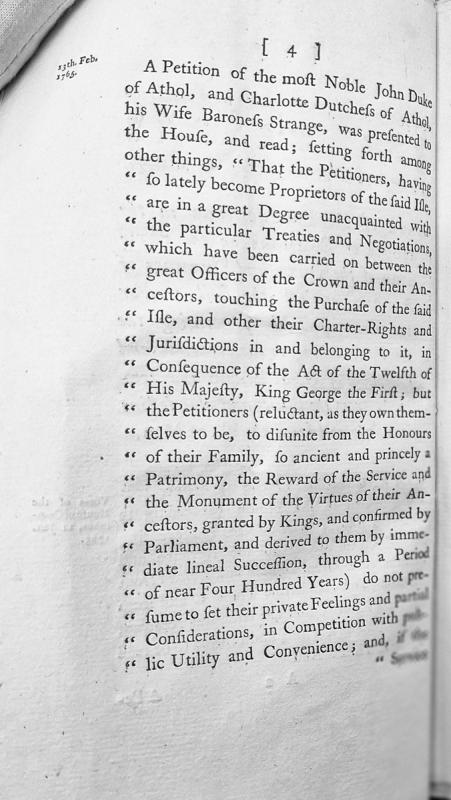
A petition presented to the House of Keys by John, Duke of Athol, and Charlotte, Duchess of Athol (Baroness Strange), stating their recent acquisition of the Isle of Man and requesting guidance on charter rights and jurisdictions. The petitioners express willingness to subordinate private interests to public utility.
A petition presented to the House of Keys by John, Duke of Athol, and Charlotte, Duchess of Athol (Baroness Strange), concerning their recent acquisition of the Isle of Man. The petitioners acknowledge their unfamiliarity with historical treaties and charter rights related to the island's purchase and governance, while expressing reluctance to relinquish their ancestral rights but willingness to subordinate private considerations to public utility.
A petition from the Keys (Manx parliament) and merchants to King George III, dated February 1769, requesting relief from restrictive post-Revestment trade laws. Accompanied by a letter from Governor John Wood presenting the petition to the Lords of the Treasury. The petition details economic distress caused by trade restrictions, emigration, declining fisheries, and reduced military presence, while emphasizing Manx loyalty and requesting commercial privileges equal to other British dominions.
A formal petition from the Keys (Manx Parliament) and merchants to King George III, requesting relief from post-Revestment trade restrictions that have severely damaged the island's economy. The petition details economic distress, population emigration, declining fisheries, harbour decay, and loss of military garrison, arguing that the 1765 restrictive legislation was designed for the proprietary smuggling trade which no longer exists. Accompanied by a covering letter from Governor John Wood and supporting memorial.
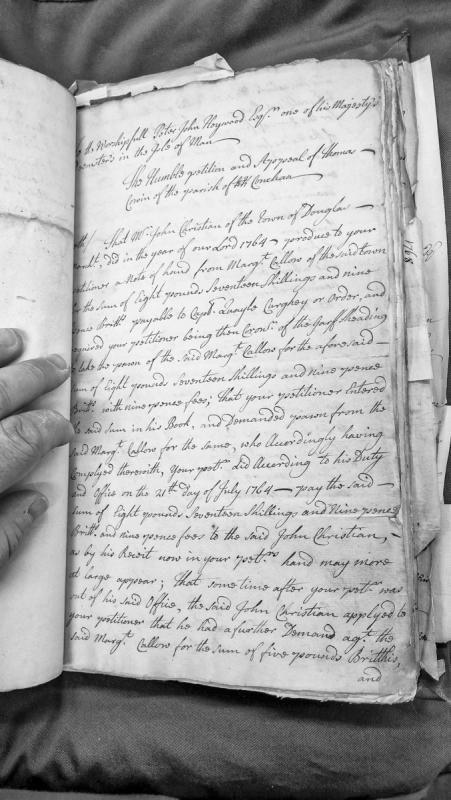
A humble petition and appeal to Peter John Heywood, a Deemster of the Isle of Man, from Thomas Corrin concerning a debt collection matter. Corrin describes collecting a sum of £8 17s 9d in 1764 from Margaret Callow at the instruction of John Christian, a merchant, and subsequently being approached for collection of a further £5 debt.
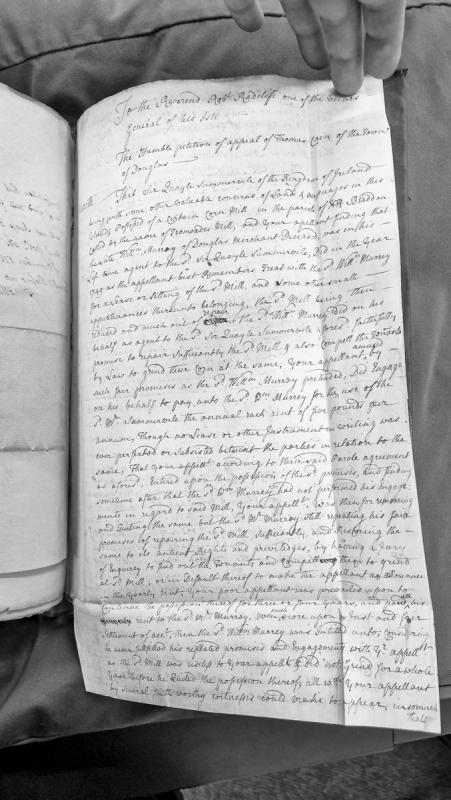
A humble petition of appeal by Thomas Crier of Douglas against Sir Quayle Summerville concerning a corn mill (Tromodde Mill) in the parish of Braddan. Crier claims he entered into a verbal agreement in 1749 to lease the mill at five pounds annual rent, with William Murray (Summerville's agent) promising repairs and enforcement of tenant grinding rights. Crier alleges Murray failed to fulfill these obligations and the mill became unusable.
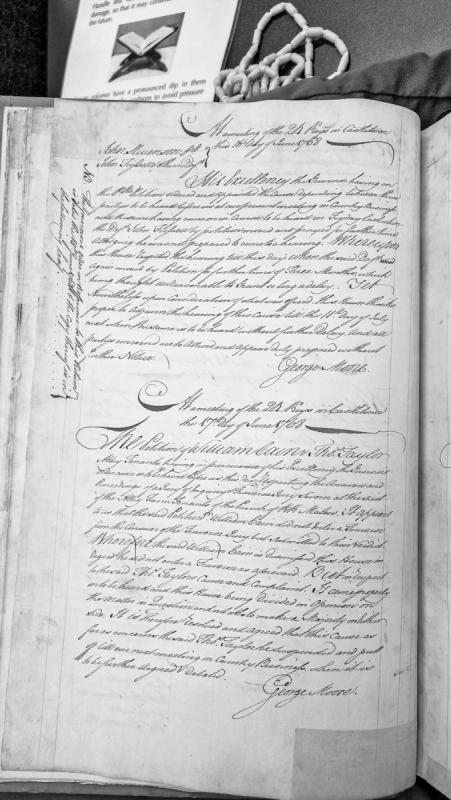
Record of a House of Keys meeting in Castletown where petitioners William Cain and Thomas Taylor sought review of jury proceedings related to May Farm Tenants of the Parish of Malew. The judgment dismissed Cain's petition as he failed to enter a traverse, but suspended Taylor's case for further debate at the next meeting.
A petition by William Christian to Charles II (dated 1660) protesting his imprisonment by the Earl of Derby on the Isle of Man and his trial for treason related to alleged 1651 opposition to the Countess Dowager of Derby. Christian claims the charges fall under the Act of Indemnity and requests trial under English law. The petition illustrates tensions between Manx and English legal jurisdiction and the precarious position of landowners with estates in both Lancashire and Man during the Restoration period.