A petition requesting relief and payment of outstanding debts owed to the petitioners from harbour funds on the Isle of Man. The petitioners allege that commissioners are withholding payment under provisions of a 1770 Act of Parliament, and seek intervention for discharge of prior debts and accrued interest.
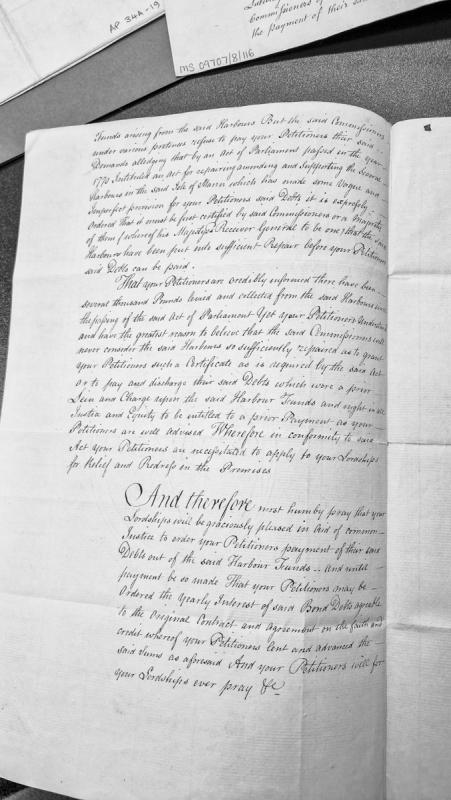
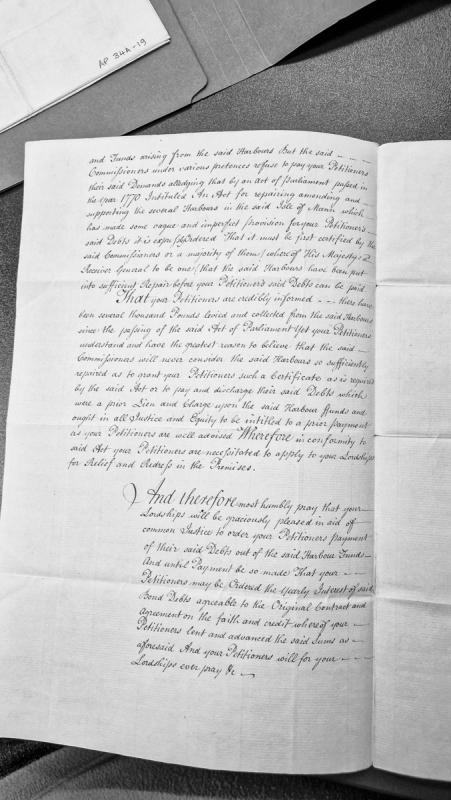
A petition to superior authority (likely House of Keys or similar) requesting payment of outstanding debts owed to the petitioners from harbour funds on the Isle of Man. The petitioners allege that commissioners are withholding payment under the pretence of requiring certification that harbours are in sufficient repair, despite substantial sums being collected since the 1770 Act. The petition argues the debts constituted a prior lien on harbour funds and requests both payment and accumulated interest.
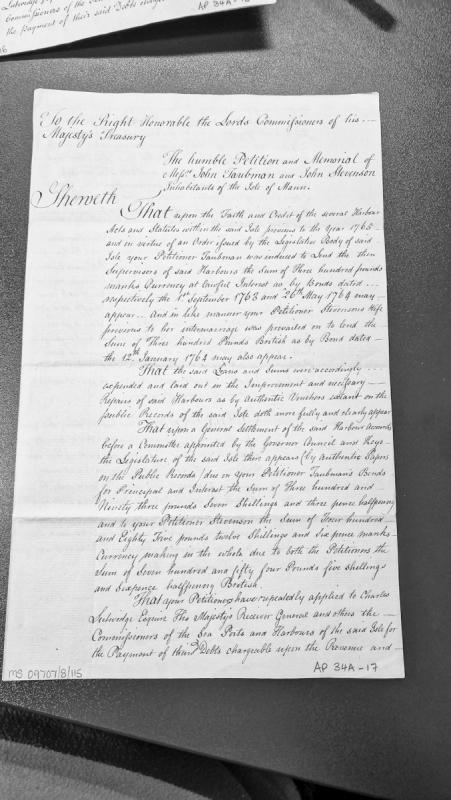
A petition to the Lords Commissioners of His Majesty's Treasury by John Taubman and John Stevenson requesting payment of loans totalling £754 5s 6½d made to the Isle of Man harbour supervisors in 1763-1764. The petitioners claim the funds were expended on harbour improvements and repairs, and seek recovery of principal and accrued interest from harbour revenues.
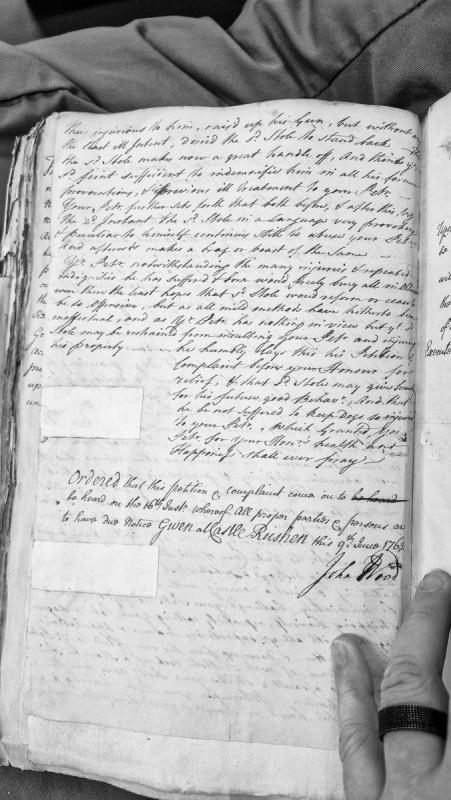
A petition complaining of repeated abuse, insults, and property damage caused by a person named Stole and his dogs. The petitioner seeks an order restraining Stole from further insults and requiring him to provide security for good behaviour, and asks that Stole be prohibited from keeping the injurious dogs.
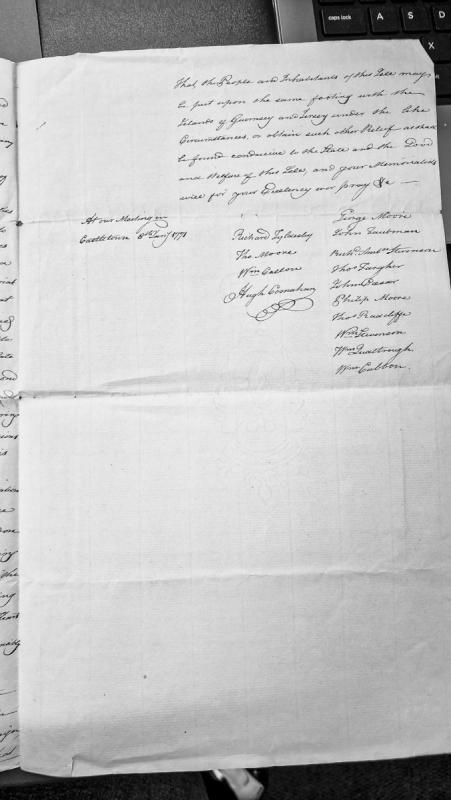
This is a petition to an authority (likely the Crown or Parliament) requesting that the people and inhabitants of the Isle of Man be placed on equal footing with the Islands of Guernsey and Jersey, or receive such other relief as deemed beneficial to the state and welfare of the Isle. The petition was signed at a meeting in Castletown on 8th January 1771.
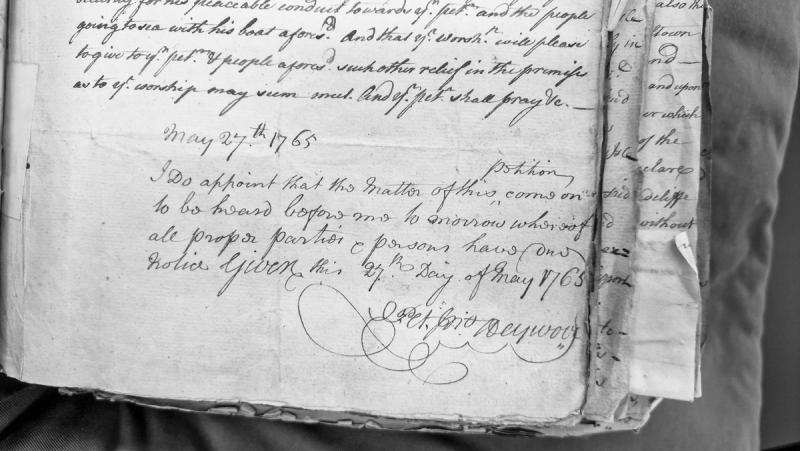
A petition requesting relief and favorable consideration from the addressee (likely a governor or magistrate) regarding the petitioner's peaceable conduct and maritime activities. The document concludes with an order dated May 27th, 1765, scheduling a hearing for the following day before Governor Heywood.
Two related petitions from J.F. Cosnahan to the Duke of Atholl seeking intercession with the Prince Regent for remission of transportation sentence imposed on Manxman John Bean Hannay, convicted under Slave Trade Abolition Acts. Provides biographical detail on Hannay's circumstances and family hardship, including the recent death of his brother Alexander, master of the Horatio. Post-Revestment document illustrating Manx social connections and the Duke's residual influence.
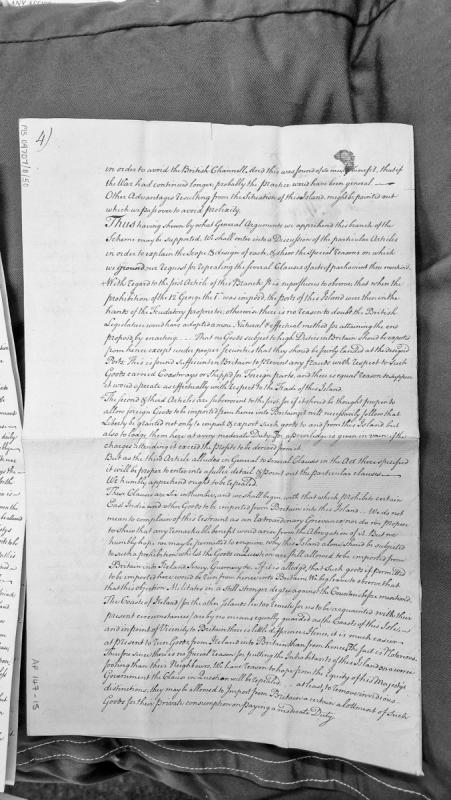
A formal petition arguing for the repeal of parliamentary acts restricting trade to the Isle of Man, particularly regarding the importation of foreign and East India goods. The petitioner compares the Isle of Man's restrictions unfavorably to those imposed on Ireland, Jersey, and Guernsey, advocating for equal trading privileges and citing geographical and strategic advantages that would justify relaxed duties.
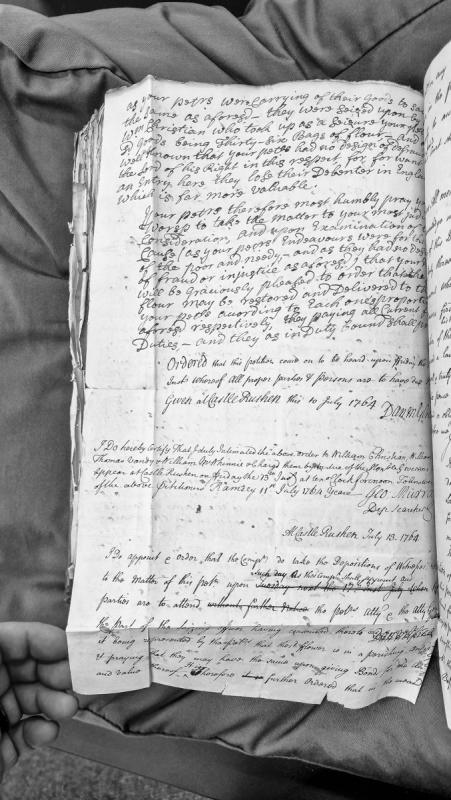
A petition requesting restoration of thirty-six bags of flour seized by William Christian. The petitioners claim they had no intent to defraud the Lord and were acting for the poor and needy. Includes court orders for hearing and taking of depositions, dated July 10-13, 1764.
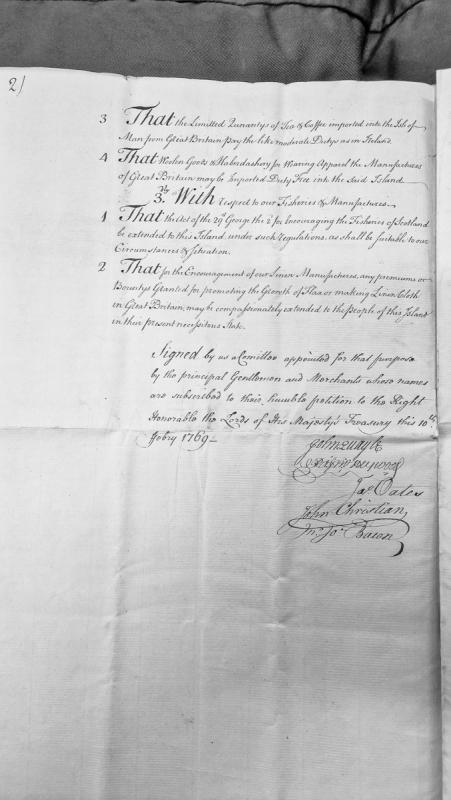
A petition submitted to the Lords of His Majesty's Treasury by principal gentlemen and merchants of the Isle of Man, requesting favorable trade terms for tea, coffee, and woolen goods imports, and extension of Scottish fishery encouragement acts and linen manufacture bounties to the island. The document represents efforts to secure economic privileges for the island's commerce and manufactures.
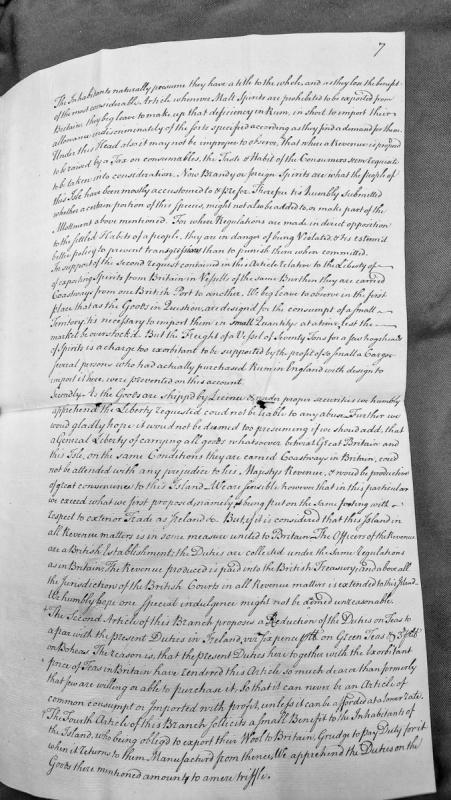
A petition addressing four commercial requests from the inhabitants of the Isle of Man regarding import/export regulations. It argues for liberty to import rum and foreign spirits, requests reduced duties on tea to match Irish rates, seeks permission to export spirits in small vessels from Britain, and proposes relief from duties on manufactured wool goods returned to the island.
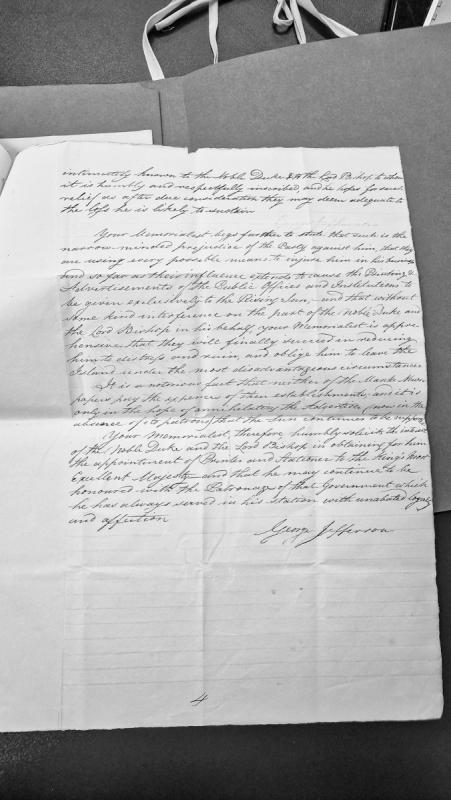
A petition from George Jefferson to the Duke and Lord Bishop of Man requesting intervention against business competitors and soliciting appointment as Printer and Stationer to the King. Jefferson alleges that competitors are using their influence to monopolize public printing and advertisements, threatening to reduce him to financial ruin.
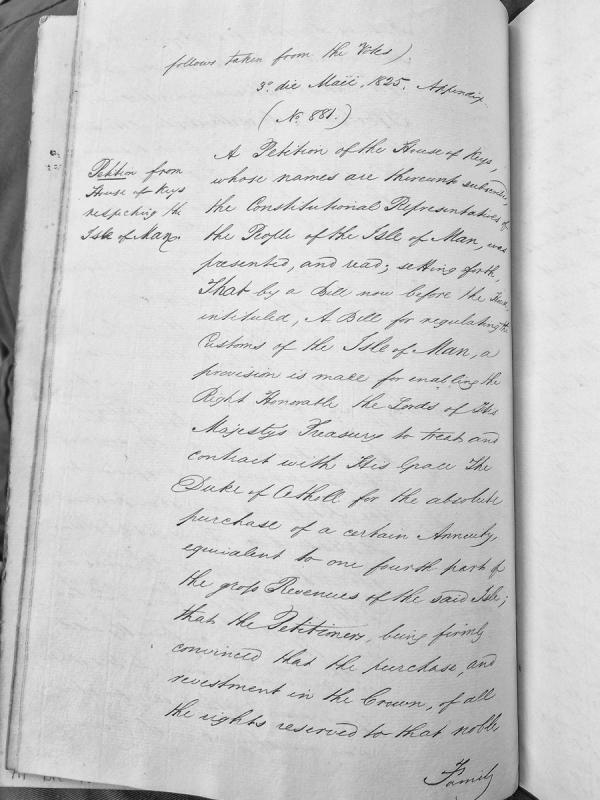
A petition presented to Parliament by the House of Keys, the constitutional representatives of the Isle of Man, regarding a Bill for regulating the Customs of the Isle of Man. The petition addresses provisions for the Lords of His Majesty's Treasury to negotiate the purchase of an annuity equivalent to one-fourth of the Isle's gross revenues from the Duke of Atholl.
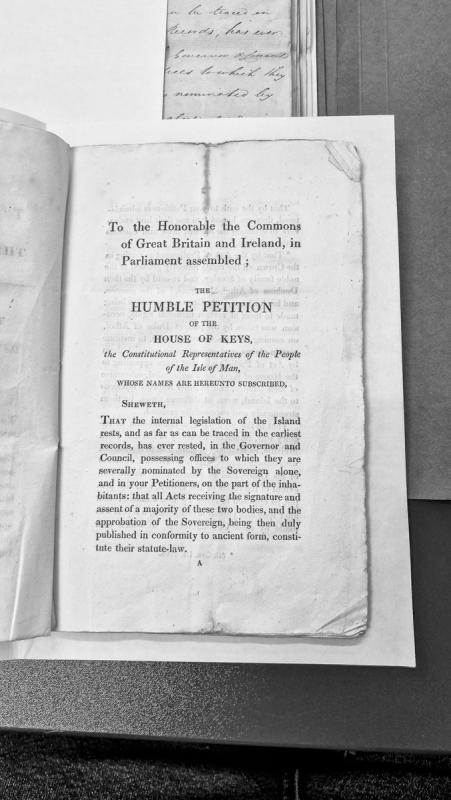
A formal petition from the House of Keys, the constitutional representatives of the Isle of Man, submitted to the Commons of Great Britain and Ireland in Parliament. The petition explains the constitutional structure of the Island's internal legislation, which rests with the Governor and Council (nominated by the Sovereign) and the House of Keys (representing the inhabitants), with statute-law created through Acts requiring signatures and assent from both bodies plus Sovereign approval.
A collective petition from Douglas merchants to the Duke of Atholl requesting trade concessions and relief from restrictive commercial regulations. The petitioners seek parity with Irish trade privileges, support for the herring fishery, repeal of the 1727 export restrictions, and permission to establish Douglas as a bonded warehouse for wines and currants. This document reflects post-Revestment economic anxieties and the island's continued commercial grievances.
A collective petition from Douglas merchants to the Duke of Atholl requesting trade concessions and relief from restrictive commercial regulations. The merchants seek parity with Irish trade privileges, particularly regarding colonial exports, herring fishery duties, and the removal of prohibitions on wine and coal exports. The petition reflects post-Revestment concerns about Manx economic disadvantage and lobbies for free port status.
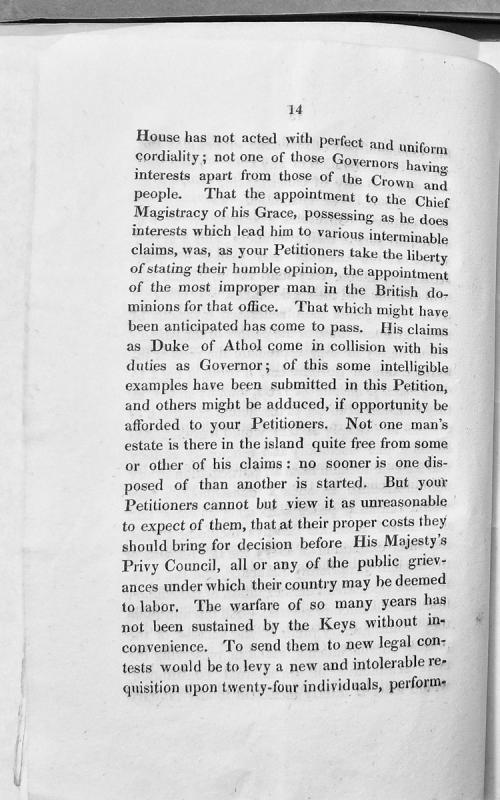
A petition from representatives of the Isle of Man (likely the House of Keys) objecting to the appointment of the Duke of Athol as Chief Magistrate/Governor. The document argues that his private interests as Duke conflict with his public duties, creating disputes over land claims across the island and imposing financial burdens on the petitioners to resolve grievances.
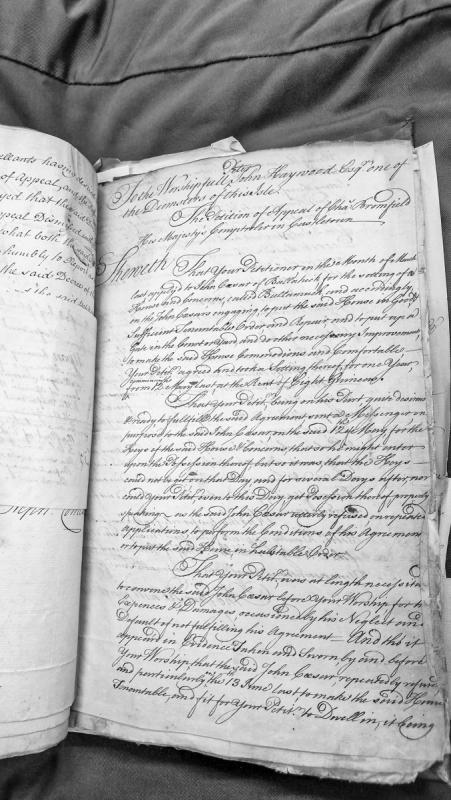
A petition of appeal addressed to John Haywood, Deemster, by Charles Bromfield, His Majesty's Comptroller in Castletown, concerning a dispute over the rental and condition of a property called Ballumurle. Bromfield claims John Cæsar of Ballahick failed to fulfill contractual obligations to prepare the house for occupancy despite agreeing to do so in March, with a tenancy beginning May 12th at eight guineas rent.
A 1610 petition from the Bishop of Sodor and Man (Phillips) to the Earl of Salisbury, complaining of his dispossession of turfbog rights (Turfebery) by the Lieutenant of the Isle of Man (Mr Ireland), and requesting permission to travel to England. The document illustrates early 17th-century ecclesiastical-administrative conflicts on the Isle and provides context for property rights and governance structures predating the 1765 Revestment.
A 14th-century petition from Duncan Mackoury, gentleman to Sir John de Ergeyl, to King Edward II requesting wardship and marriage rights of an Irish heir's lands in compensation for military service in Scotland and losses suffered. The document is presented in both English and Anglo-Norman French, with the royal council's response. Though pre-Revestment era, it provides context on Isle of Man's medieval governance and feudal structure.
A petition from Duncan Mackoury to King Edward II and his Council, submitted c. 1314, requesting wardship and marriage rights of the heir of Nicholas de Ledewicke in Ireland as compensation for service to the Crown in Scotland and residence in Man. The document includes the original Anglo-Norman French text from the Parliamentary Rolls and the Council's response directing the Irish Exchequer to certify land values and heir details. Relevant to early Manx political history and the island's strategic importance during the Scottish wars.
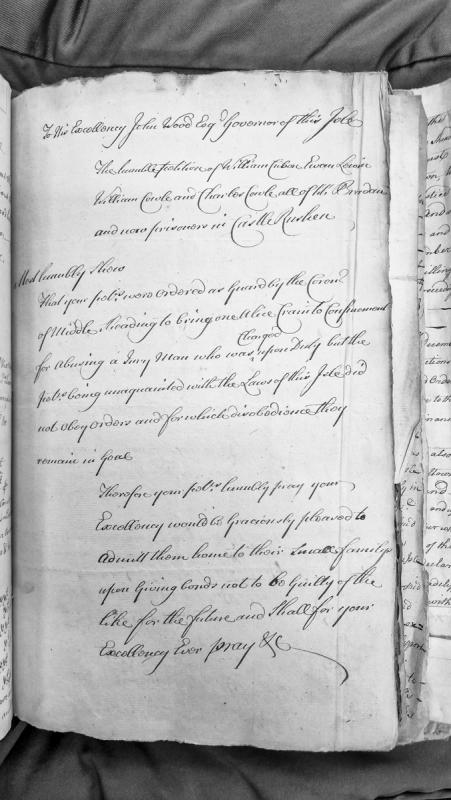
A petition to Governor John Wood from four men (William Cubon, Ewan Corrin, William Cowle, and Charles Cowle) imprisoned in Castle Rushen for disobeying orders to confine Alice Crain. They claim ignorance of Isle of Man law and request release on bond.
A petition from Manx merchants and gentlemen to the Lords of the Treasury, submitted in 1769, requesting relief from the economic hardships imposed by restrictive trade laws following the 1765 Revestment. The petitioners argue that post-Revestment regulations have devastated the island's economy, depopulated its trading towns, ruined its harbours, and driven skilled workers abroad. They request liberalisation of trade to restore prosperity.
A petition from Manx merchants and inhabitants to the Lords Commissioners of the Treasury, dated January 1772, complaining of severe trade restrictions imposed after suppression of smuggling. The petition describes hardship in herring fishery, linen/cotton manufacturing, and re-export trade, arguing that the original cause (illicit trade) no longer exists but restrictive statutes remain in force. Key grievances include prohibitions on salt shipments, exclusion from British and colonial markets, seizure of goods, and transshipment requirements.
A formal petition from Manx merchants and inhabitants to the Lords Commissioners of the Treasury, submitted on 20 January 1772, requesting relief from post-Revestment penal statutes restricting trade. The petitioners argue that smuggling has ceased but commercial restrictions remain, damaging herring fisheries, linen/cotton manufacturing, and general commerce. The document illustrates the economic hardship experienced by Manx inhabitants in the aftermath of the 1765 Revestment and the unintended consequences of anti-smuggling legislation.