A royal order from Charles II directing the Earl of Derby to bring William Christian before the King and Council to be heard on charges of treason. The document records a petition for clemency and the King's decision to review the case personally. This source is relevant to understanding governance structures on the Isle of Man and the Crown's judicial authority over the island during the feudal period under the Earls of Derby.
An order issued by the Earl of Derby directing that funds (£43 19s 10d) collected for repairs to the chancel of Peel Castle Cathedral be held in trust by the Bishop of Man until fuller church repairs or legislative provision can be arranged. The document illustrates the administrative interplay between the temporal and ecclesiastical authorities on the Isle of Man, and the infrastructure challenges faced by the island's governing structures in the late 17th century.
An administrative order issued by the Earl of Derby (Lord of Man) in 1686 regarding funds for repairs to the chancel of Peel Castle Cathedral. The order directs that £43 19s 10d be held in deposit pending either the raising of additional charitable funds for the whole church or the passage of a new law for demolishing the cathedral and enlarging St. Peter's Chapel in Peel town. This document illustrates ecclesiastical administration and property management on the Isle of Man in the late 17th century.
A detailed account of the ceremonial procession and formal appointment of John Wood as Governor of the Isle of Man on 11 July 1765, following the Crown's acquisition of sovereignty. The document records the order of procession, reading of royal proclamation, oath-taking ceremonies, transfer of regalia from the Duke of Atholl's deputies to the Crown, and Wood's inaugural address to the island's inhabitants and magistrates emphasizing loyal obedience and prosperity under royal protection.
A contemporary account of the ceremonial procession and appointment of John Wood as Governor of the Isle of Man on 11 July 1765, following the Parliamentary purchase of sovereignty from the Duke of Atholl. The document records the formal transfer of power, the reading of the Royal Proclamation and Order of Council, the surrender of regalia by the Duke's deputies, and the Governor's inaugural address to the inhabitants emphasizing royal protection, legitimate trade, and obedience to British law.
Administrative order from William, Earl of Salisbury and Lord of Man, to his Treasurer in London, authorizing annual fee payments to various officials and servants. The document establishes William's authority over Man and demonstrates early feudal administrative structures. Relevant to understanding pre-Revestment Manx governance and lordship.
An administrative order issued by William, Earl of Salisbury and Lord of Man and the Isle of Wight, to his Treasurer in London, commanding payment of annual fees to various officers and counsellors retained for his service. The document is presented in both English and Norman French and provides insight into the administrative structure and financial arrangements of the lordship of Man in the late 14th century.
An episcopal order from the Lord of Mann (Edward Stanley, Earl of Derby) dated 1691 regarding the deposit of £43 19s 10d allocated for repairs to Peel Cathedral. The document clarifies that no interest is to be charged on the sum held by the Bishop of Mann, and establishes procedures for future investment of the funds. Relevant to understanding ecclesiastical administration and property management within the Manx feudal structure prior to the 1765 Revestment.
A royal mandate from King Edward I commanding Robert de Joneby, bailiff of Dumfries, to bring Marc, Bishop of Sodor, to the King at Berwick to render allegiance. This document demonstrates early English royal authority over the Isle of Man and its ecclesiastical leadership, predating the 1765 Revestment by nearly 470 years but establishing the constitutional and feudal relationship between the Crown and the island.
A royal writ ordering Sir Thomas Stanley to convey Eleanor Cobham, Duchess of Gloucester, to the Isle of Man and ensure her custody there. Eleanor was convicted of witchcraft and sorcery (attempting to harm King Henry VI through wax image magic) and exiled to the Island. This document demonstrates the Isle of Man's use as a place of confinement for high-status prisoners in the medieval period.
A royal order from Henry VI directing Sir Thomas Stanley to convey Eleanor Cobham, Duchess of Gloucester, to the Isle of Man by land and water. The document is accompanied by historical context explaining that Eleanor was arrested for alleged involvement in necromancy and witchcraft — specifically the creation of a wax image of the king intended to harm him. This source illustrates the Isle of Man's historical use as a place of exile and imprisonment for high-status political prisoners.
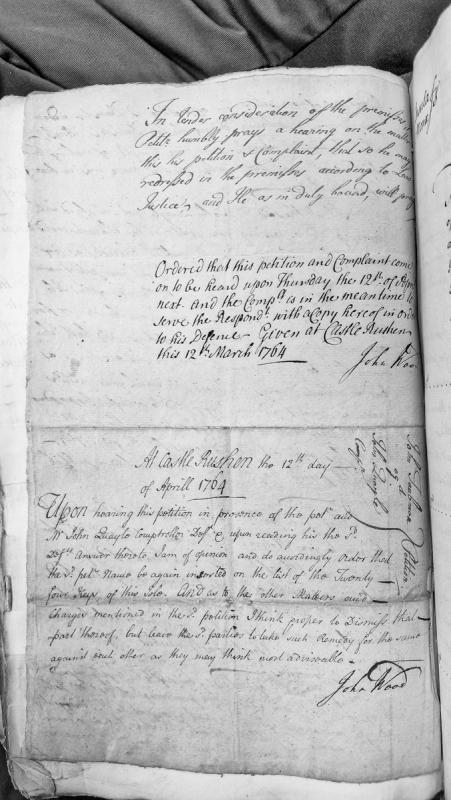
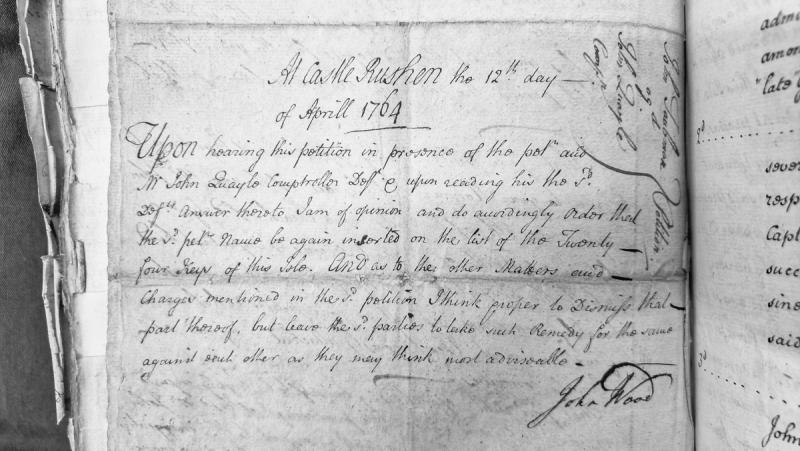
A judicial order from Castle Rushen granting a petition to restore the petitioner's name to the list of the Twenty-four Keys of the Isle of Man. The judgment dismisses other charges mentioned in the petition, leaving the parties to seek remedy against each other as they deem appropriate.
A judicial order issued at Castle Rushen reinstating a petitioner's name on the List of the Twenty-four Keys of the Isle of Man. The court dismisses other charges mentioned in the petition, leaving the parties to seek remedies independently.
Official correspondence from Dublin Castle dated 13 June 1765 detailing orders to embark two troops of Hales Dragoons and a Regiment of Foot under Major General Montagu to the Isle of Man. This document evidences the military deployment ordered by the Crown in response to the Revestment, likely to secure control following the purchase of sovereignty from the Duke of Atholl. It confirms embarkation from Dublin via Douglas.
Official correspondence from Dublin Castle to a senior official (addressed 'My Lord') reporting the implementation of orders to send two troops of Hale's Dragoons and a regiment of foot under Major General Montagu to the Isle of Man. The letter details embarkation arrangements from Dublin, routes for the march from Waterford, and timeline for completion by 24 June 1765. Directly relevant to the military occupation and securing of the island following the 1765 Revestment.
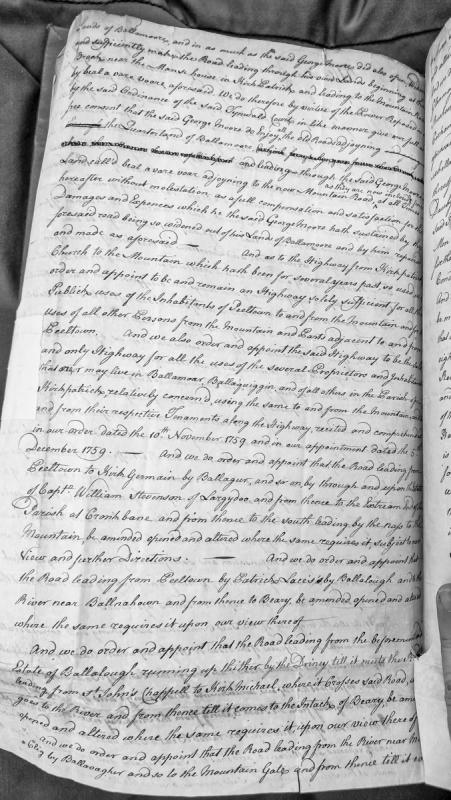
An administrative order concerning road maintenance and land rights in the Kirkpatrick area of the Isle of Man. The document grants George Moore compensation in the form of land rights for road improvements made on his property at Ballamoore, and specifies various highway routes and maintenance responsibilities for roads serving Peeltown and surrounding parishes.
Letter from Peter John Heywood, Steward to the Duke of Atholl, reporting on Isle of Man governance arrangements post-Revestment, including a controversial regency proposal to allow non-residence of governors, and disputes over drainage and land rights affecting the Duke's demesne. Written 18 years after the 1765 Revestment, it illustrates ongoing tensions between the Duke's interests and local administration under Lutwidge and other officials.
Letter from Peter John Heywood, Steward to the Duke of Atholl, reporting on the Bishop of Sodor and Man's declining health, Lt Governor succession plans, proposals for a Regency during the Governor's absence, and disputes over land drainage and local administration. Highlights institutional tensions between the Duke's interests and local officials including Lutwidge and Quayle.
Letter from P J Heywood in Douglas to the Duke of Atholl regarding imminent changes in the Isle of Man revenue department, including dismissals of corrupt officers and new appointments. Heywood expresses concern about Charles Lutwidge's continued influence over patronage and recommends the Duke secure control of appointments through Westminster ministers. Contains detailed salary information for revenue officers and commentary on governor Col Smith's expected arrival.
Letter from P J Heywood (Lieutenant Governor's representative) to William Adam seeking intelligence on the status of a Tynwald Act concerning the Duke of Atholl's manorial rights. The bill, originated by the House of Keys in 1781 and submitted to the Secretary of State, has been stalled by the Duke's caveat and is now under review by the Attorney General. Heywood expresses concern that the bill would undermine ducal property rights and fears it could obstruct the Duke's intended operations.
Letter from Peter John Heywood (Isle of Man official) to William Adam reporting on the status of a Tynwald Act regulating the Duke of Atholl's manorial rights, initiated in 1781. Heywood expresses concern that the Keys' Bill will undermine ducal property rights and requests Adam's assistance in blocking or delaying its progress through Westminster until the Duke's arrival in London.
Letter from P.J. Heywood in Douglas to the Duke of Atholl concerning proposed reforms in the Isle of Man Revenue Department, dismissals of corrupt officers, and the critical importance of securing patronage appointments to counter Lutwidge's opposition. Discusses specific officer salaries, Lutwidge's multiple sinecures, and the imminent arrival of Colonel Smith as Governor. Highly relevant to understanding post-Revestment administrative struggles and patronage politics.
A papal bull from Pope Honorius III to King Reginald of Man, dated 23 May 1223, confirming Reginald's donation of the Island of Man to the Roman Church and establishing an annual tribute of twelve marks sterling payable to the monastery of Furness. This document establishes the feudal relationship between Man and Rome, with the king holding the island as a fief from the Church.
A 1186 papal bull from Pope Urban III to Furness Abbey (located in Lancashire, northwest England) confirming the monastery's possessions, liberties, immunities, and grants from various donors including Kings Stephen and Henry II. The document is relevant to Isle of Man history as it mentions the Kings of the Islands (Olave and Godred), reflecting the ecclesiastical and feudal relationships between the English crown, the papacy, and the Isle of Man during the 12th century.
A 1224 papal letter in which Pope Honorius III authorises the Archbishop of York to permit Bishop Nicholas of Mann and the Isles to resign his bishopric, as he has been exiled from his church by the lord of the land and others. This document evidences early medieval ecclesiastical governance of the Isle of Man and internal conflicts affecting Church authority on the island.