A formal memorial from the Commissioners of Customs to the Lords Commissioners of the Treasury reporting on extensive smuggling operations from the Isle of Man, particularly involving brandy, tea, and East India goods destined for British and Irish ports. The document describes the Isle of Man as an increasingly significant smuggling hub and notes measures taken to improve port vigilance.
A memorial from the Commissioners for managing His Majesty's Customs to the Lords Commissioners of the Treasury, reporting extensive smuggling operations from the Isle of Man involving brandy, tea, and East India goods destined for Great Britain and Ireland. The document directs port officers to increase vigilance and prevent revenue fraud. This pre-dates the Revestment by seven years and demonstrates the Crown's growing concern with Manx smuggling.
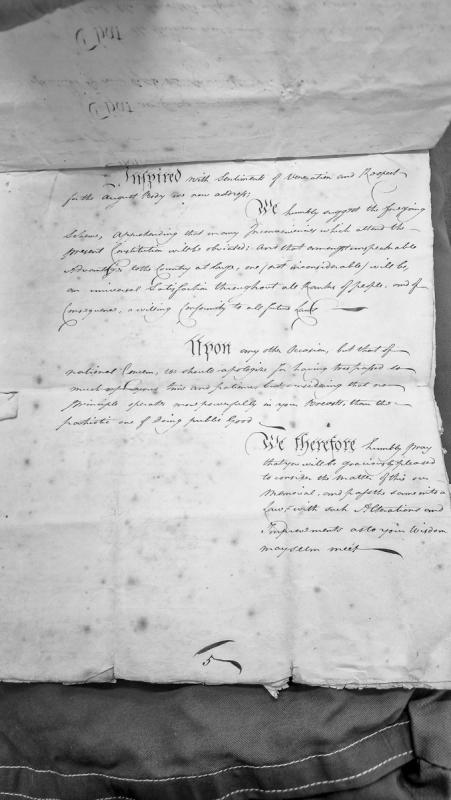
A formal petition or memorial addressed to a governing body, presenting a proposed scheme intended to remedy inconveniences in the current constitution. The petitioners appeal to patriotic principles and request consideration and passage of their proposal into law, with modifications as deemed appropriate.
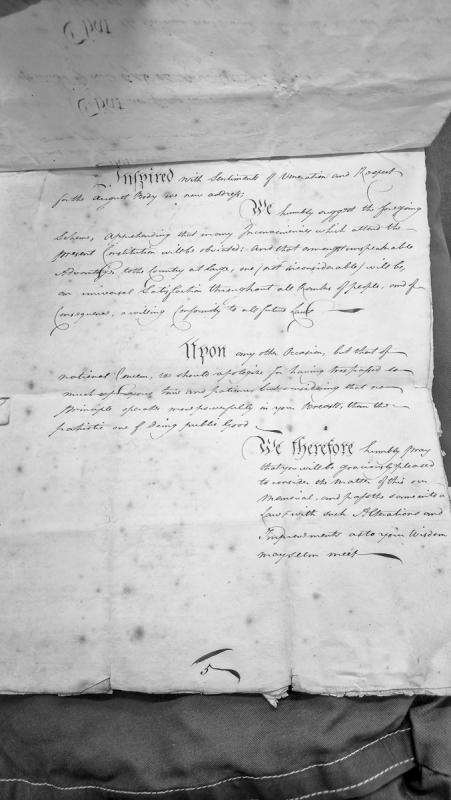
A formal petition or memorial addressed to a governing body (likely the House of Keys) requesting consideration of a proposed scheme to reform the island's constitution. The petitioners argue their proposal will eliminate current inconveniences and produce widespread satisfaction among all ranks of people, leading to willing compliance with future laws.
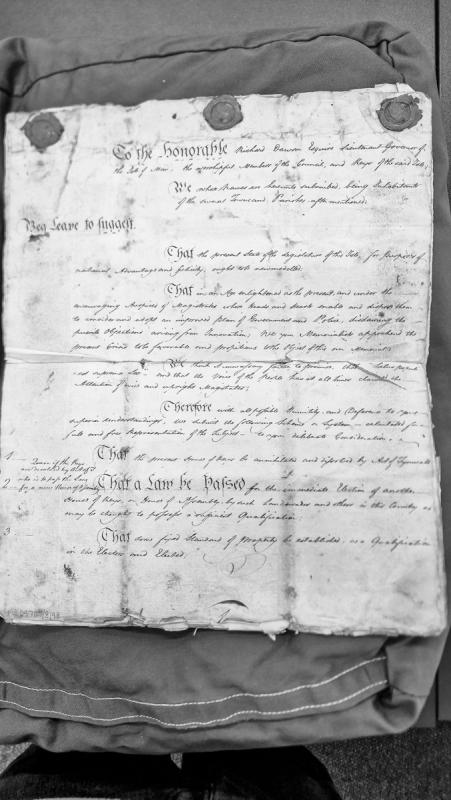
A petition from inhabitants of various towns and parishes of the Isle of Man addressed to the Lieutenant Governor Richard Dawson and members of the Council and House of Keys. The memorialists propose a comprehensive reform of the island's legislature, including dissolution of the current House of Keys and establishment of a new elected assembly based on property qualifications.
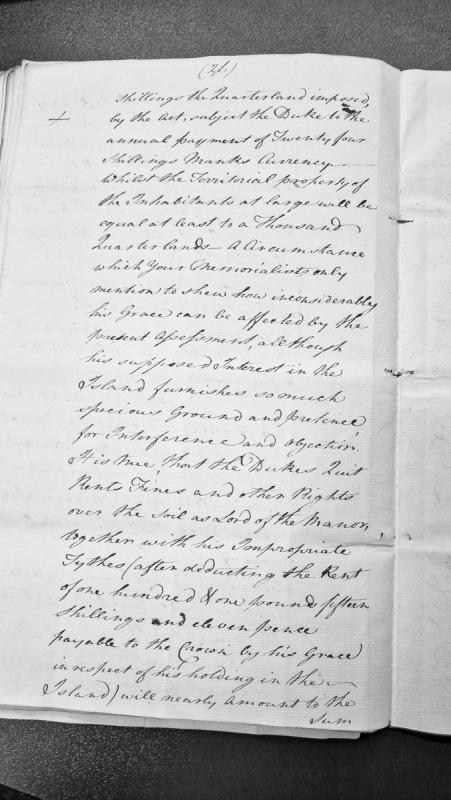
This is a fragment from a memorial or petition addressing the Duke's financial obligations and territorial interests on the Isle of Man. The document discusses quarterland assessments, annual payment obligations in Manks Currency, and the Duke's various property rights including quit rents, fines, impropriate tythes, and his position as Lord of the Manor.
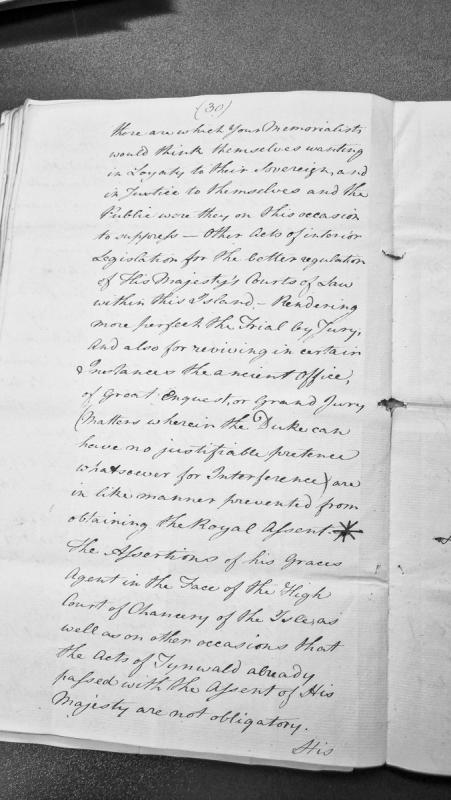
This is an excerpt from a memorial or petition addressing concerns about the suppression of legislative acts by what appears to be the Duke of Atholl. The document discusses acts relating to the regulation of courts of law, trial by jury, and revival of the Grand Jury office, asserting that the Duke has no legitimate grounds to prevent these acts from obtaining Royal Assent.
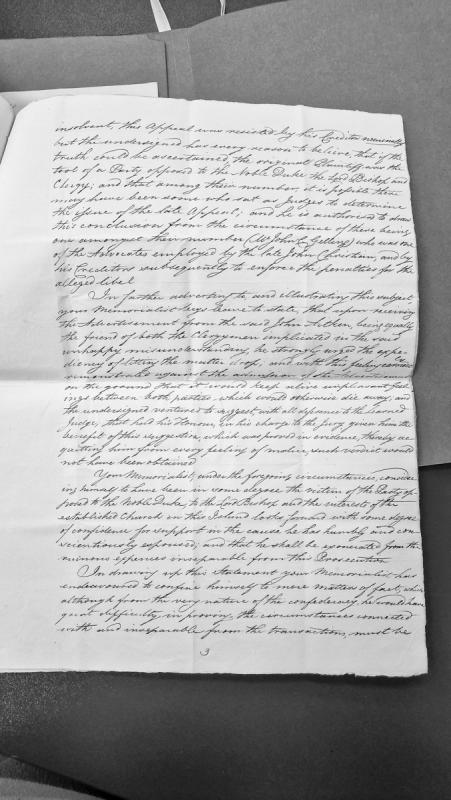
A petition or memorial addressing alleged procedural irregularities and bias in a libel case. The memorialist claims the original plaintiff was a tool of parties opposed to the Duke, Bishop, and Clergy, and alleges that one of the judges (John C Gelling) had prior involvement with the opposing party. The memorial requests exoneration and financial support regarding prosecution expenses.
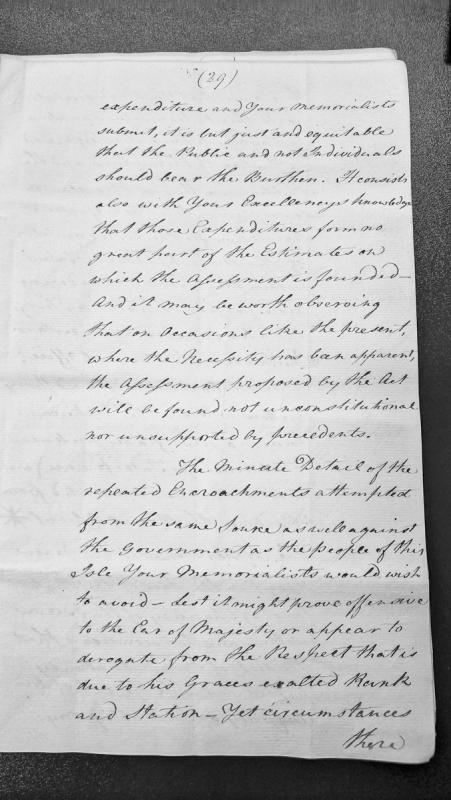
A petition or memorial addressed to a superior authority (likely the Governor or Crown representative) arguing that public expenditure should be borne by the public rather than individuals. The memorialists defend the constitutionality of proposed assessments and reference precedents, while diplomatically avoiding detailed criticism of encroachments.
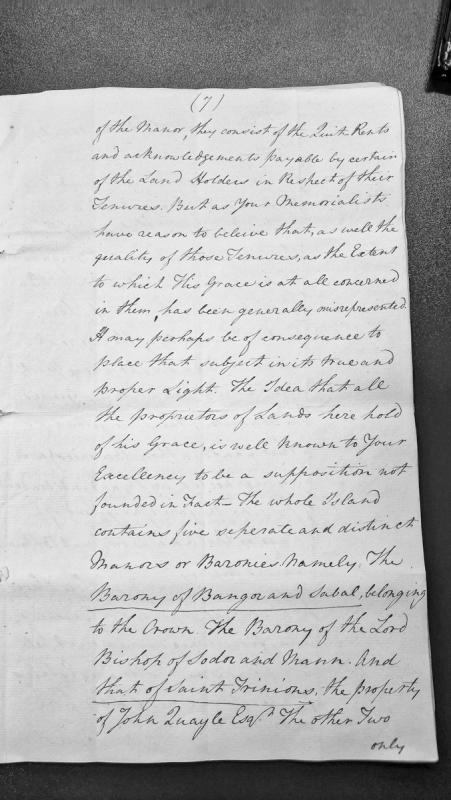
This is a petition or memorial (page 7) addressed to an authority (possibly the Lieutenant Governor or other official) discussing the nature of quit rents and land tenures in the Isle of Man. The memorialists argue that the extent of the Duke of Atholl's (His Grace's) involvement in land holdings has been misrepresented, and clarify that not all land proprietors hold directly of the Duke. The document outlines five separate manors or baronies on the island.
A fragment of a memorial or petition describing proposed legislation to levy revenue through assessment of landed property, houses, coaches, and goods from various traders over a seven-year period. The document appeals to the Crown for royal assent, emphasizing the equitable principles underlying the proposed tax provisions.
A petition or memorial detailing complaints about smuggling operations centred on the Isle of Man, describing the seizure and forcible recovery of smuggled boats, the practice of foreign-bound vessels taking on contraband goods at Man, and the involvement of British coastal populations in illicit trade.
A fragment of a memorial or petition concerning the preservation of estates, titles, tenures and interests of inhabitants in the Isle of Man under the Duke's authority. The document references historical attempts in 1643 to alter tenures within the Duke's manors and cites the 1703 Act of Settlement (Act of Tynwald) to resolve disputes between the Lord and landholders.
This is a fragment of a petition (memorial) addressing concerns about the Duke's recent instructions to his Steward, his authority over acts of Tynwald, and his appropriation of a public court room. The memorial expresses alarm about the Duke's conduct regarding Crown property and the removal of the King's Arms in favor of the Duke's insignia.
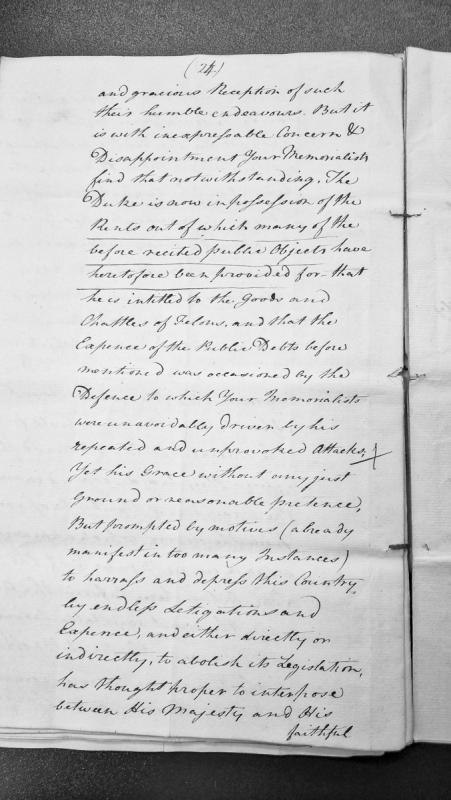
Fragment of a petition or memorial addressing grievances against the Duke, who has taken possession of public rents previously used for public objects and felons' goods. The memorialists express concern that the Duke is using litigation and expense to harass the country and undermine its legislation.
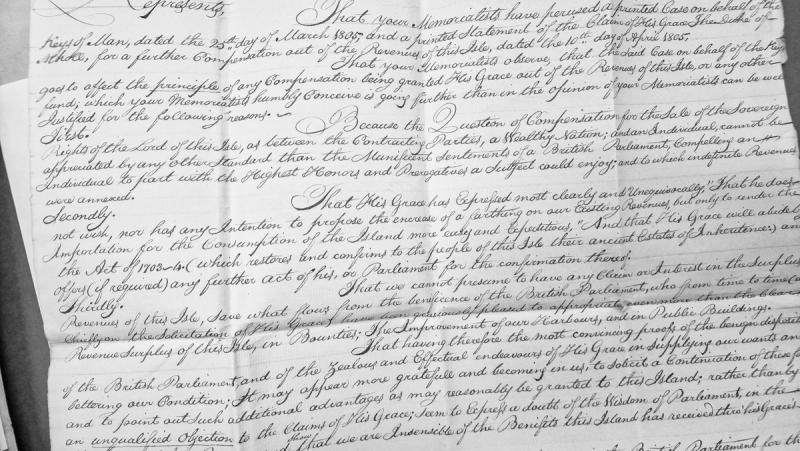
A memorial or petition responding to printed cases dated March and April 1805 concerning compensation for the Duke of Athole's sale of sovereign rights over the Isle of Man. The memorialists defend the Duke's claims against objections from the Keys of Man, arguing that compensation should be based on Parliamentary munificence and emphasizing the Duke's benevolent intentions and past support for the island.
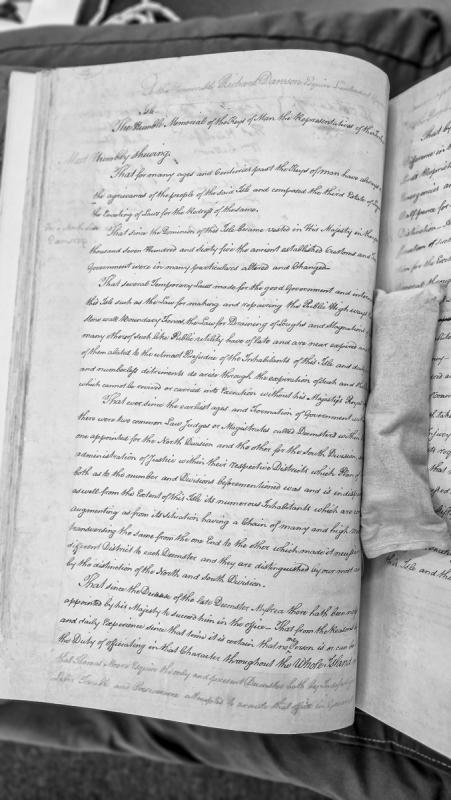
A petition from the House of Keys to the Lieutenant Governor requesting restoration of ancient governance practices and the appointment of a North Division Deemster. The memorial argues that temporary laws have expired, administrative districts require two separate Deemsters, and current arrangements are impractical.
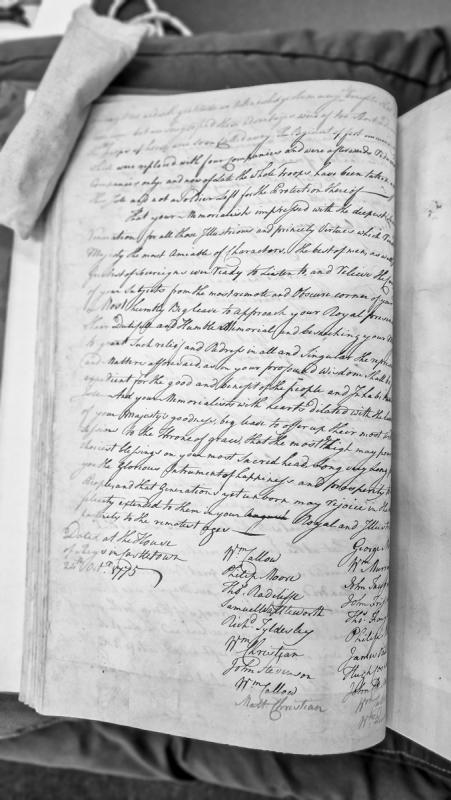
A petition from the House of Keys in Castletown addressed to the Crown, expressing concern about the withdrawal of military protection from the Isle of Man. The memorialists detail the removal of cavalry and infantry regiments, reduction of company numbers, and the complete departure of all soldiers, appealing to the King's benevolence for relief and redress.
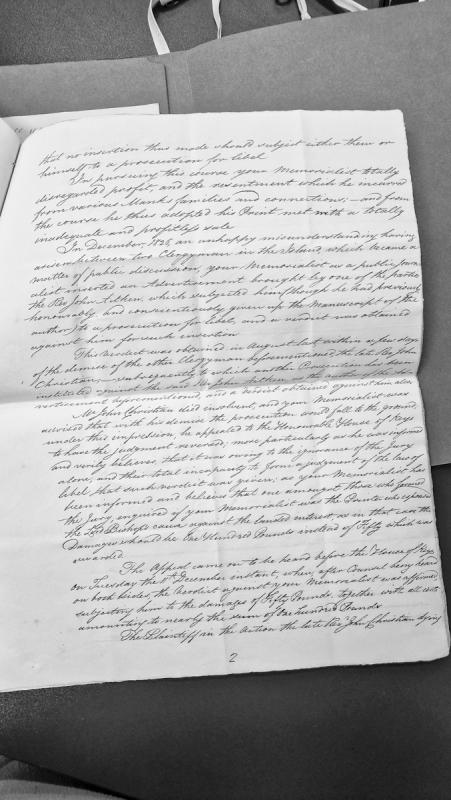
A petition submitted to the House of Keys by a printer/journalist regarding a libel prosecution arising from the publication of an advertisement in December 1826. The memorialist details his role as a public journalist, the circumstances of the disputed advertisement involving two clergymen (Rev John Tithen and the late Rev John Christian), and his unsuccessful appeal to reverse the verdict awarding damages of fifty pounds plus costs.
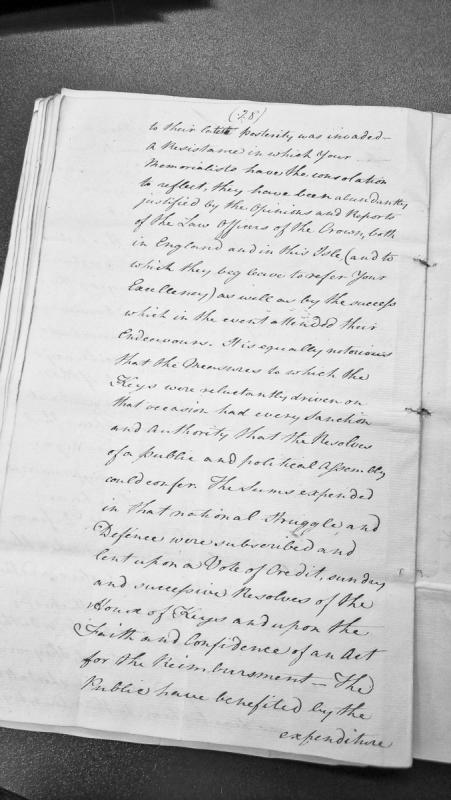
A petition excerpt (page 28) in which memorialists justify their resistance to invasion and defend expenditures incurred during a national defence effort. The document references sanction from Law Officers of the Crown and authorisation from House of Keys resolves, with funds subscribed via votes of credit.
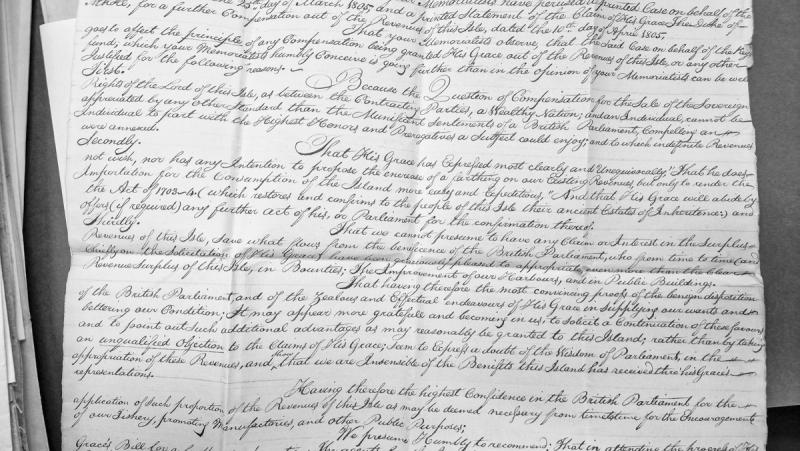
A petition from Memorialists addressing the House of Keys regarding a printed Case concerning compensation to the Duke of Atholl for the sale of sovereign rights over the Isle of Man. The document argues against objections to the Duke's claims and expresses confidence in Parliament's stewardship of Isle revenues, while advocating for continued improvements to fisheries, manufactures, and public infrastructure.
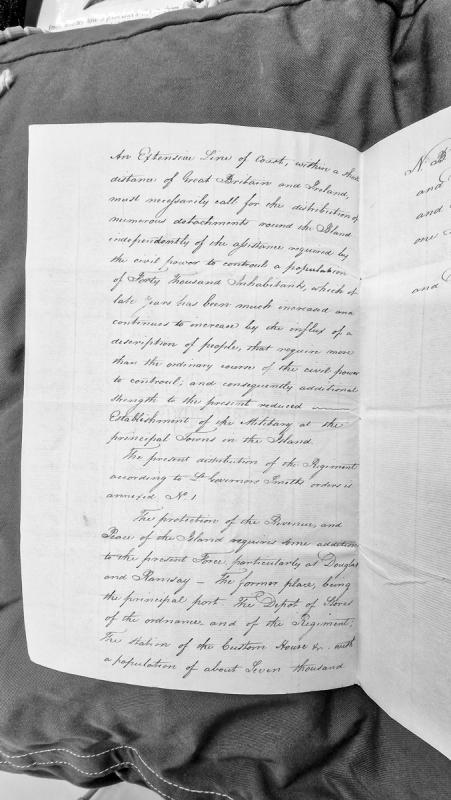
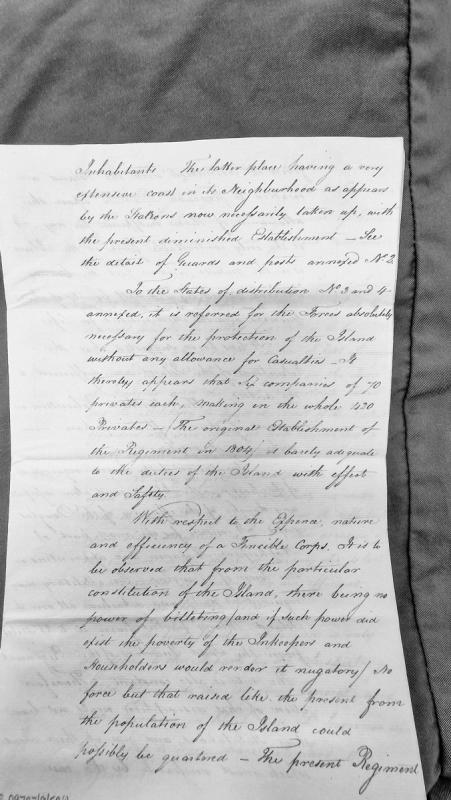
Administrative document discussing the distribution of military detachments around the Isle of Man, the need for additional military strength to control an increasing population, and specific garrison requirements at Douglas and Ramsay. References Lt Governor Smett's orders and notes Douglas as the principal port and regimental depot.
This document discusses the military garrison requirements for the Isle of Man, referencing the distribution of forces across coastal stations and the necessity of maintaining a regiment of six companies with 70 privates each (420 total). It examines the constitutional limitations of the island regarding billeting and the practical need for a Fencible Corps raised from the local population.
A comprehensive tabular and narrative history of the five military garrisons maintained by the Stanley lords on the Isle of Man from 1670 to 1765, based on examination of Disbursement Accounts. Provides details of garrison strengths, pay scales, organizational structure, and lists of soldiers and officers at Castle Rushen, Peel, Douglas Fort, Derby Fort, and Ramsey. Directly contextualizes the military and administrative infrastructure that the British Parliament acquired during the 1765 Revestment.
Comprehensive reference document extracting garrison organization, pay structures, and personnel records from Manx Disbursement Accounts (1670-1765, with gap 1674-1682). Details the composition, ranks, and salaries of military forces at Castle Rushen, Peel, Douglas, Derby Fort, and Ramsey, with indexed tables of soldiers' names, dates of service, and biographical notes. Essential context for understanding administrative structures and military personnel immediately preceding the 1765 Revestment.