A formal petition from the Bishop of Sodor and Man and the Vicar-General to the 1792 Royal Commissioners of Inquiry, protesting their exclusion from Tynwald Council since 1776–1777 and seeking restoration of their constitutional rights and church properties. The document includes extensive historical precedent from Statute Books (1422–1765) demonstrating ecclesiastical participation in the Legislature, transcripts of oaths of office, and complaints regarding the deterioration of the cathedral and St. John's Chapel.
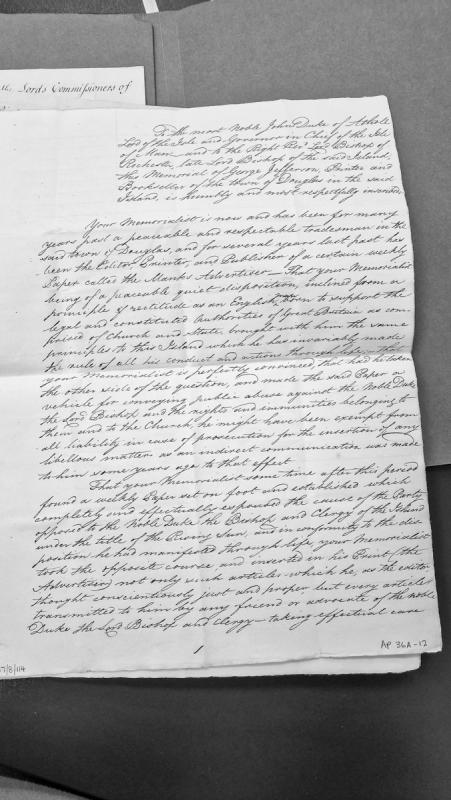
A petition from George Jefferson, printer and editor of the Manks Advertiser newspaper in Douglas, to John Duke of Atholl and the Bishop of Rochester. Jefferson defends his editorial conduct and principles of supporting constituted authority, contrasting his publication's stance with the opposing Rising Sun newspaper.
A formal petition to the Lords Commissioners of the Treasury from George Moore, representing the Keys of the Isle of Man, requesting relief from the restrictive trade regulations imposed following the 1765 Revestment. The memorial outlines the economic distress caused by the prohibition and restriction of commerce and requests exemptions or modifications to duties and trade regulations across fisheries, linen manufacture, agriculture, and general commerce.
A petition from George Moore, Deputy of the Keys of the Isle of Man, to the Treasury Lords seeking relief from the severe economic distress caused by post-Revestment trade restrictions. Moore presents a detailed list of 16 requested concessions covering fisheries, linen manufacture, agriculture, and general commerce, arguing that the prohibition and restriction of island trade has devastated inhabitants and property values. This document directly illustrates the economic consequences of the 1765 Act and the islanders' immediate attempts to negotiate exemptions.
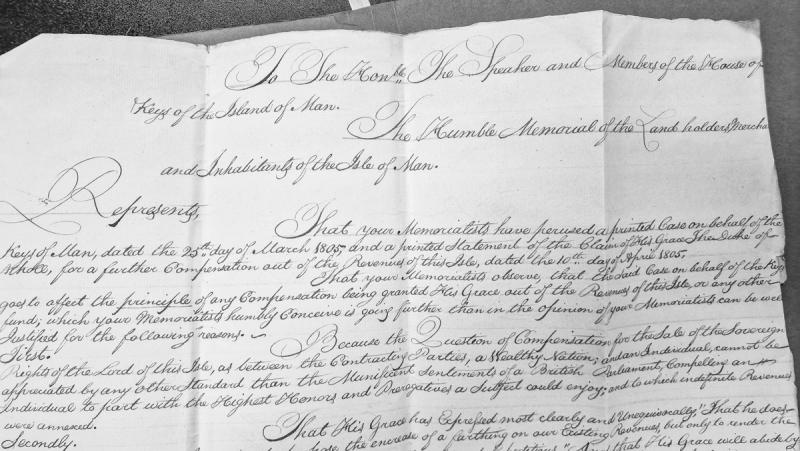
A petition to the House of Keys from landholders, merchants and inhabitants of the Isle of Man, responding to a printed case and statement regarding compensation to the Duke of Atholl for the sale of sovereign rights. The memorialists argue that compensation should be judged by Parliamentary principles rather than affecting existing revenues.
A personal memorial from Lieutenant Governor Alexander Shaw to John King (Home Office law officer) dated 3 July 1804, requesting acceptance of his resignation and a financial settlement. Shaw details 48 years of service, 14 as Lieutenant Governor, his financial straits, and his family circumstances (six motherless children following his wife's death in January 1804). The document provides context on personal and political tensions with the Duke of Atholl and Shaw's deteriorating circumstances in 1804.
A petition from Lieutenant Governor Alexander Shaw to the Home Office (via J. King) requesting acceptance of his resignation and financial provision for his family. Shaw cites 48 years of service (14 as Lt Governor) and personal hardships including his wife's death and loss of a son in 1804. The document reveals tensions with the Duke of Atholl over succession and provides insight into the governance and financial arrangements of the Isle of Man in the post-Revestment period.
A formal petition submitted by Bishop Claudius and Evan Christian (Vicar-General) to the 1792 Royal Commissioners of Inquiry, asserting the ecclesiastical officers' constitutional right to sit in the Island's Council and Legislature, which they claim was wrongfully denied from 1776–1777. The memorial also raises grievances regarding damage to the Bishop's cathedral in Peel Castle and St. John's Chapel in Kirk German. It includes transcriptions of various oaths administered to Island officials and historical evidence of ecclesiastical participation in Tynwald from 1422 onwards.
A petition from the Scottish Presbyterian Church congregation in Douglas to John, Duke of Atholl, seeking financial assistance for their minister and church establishment. Signed by church elders and members, it references a 23-year vacancy and recent ministerial appointment in 1788, and appeals to Atholl's patronage and public spirit. The document reflects post-Revestment religious and social conditions on the Isle of Man under Atholl's continued influence.
A petition from the Scottish Presbyterian Church congregation in Douglas to John, Duke of Atholl, seeking financial assistance for their minister and church establishment. The memorial references a 23-year vacancy and the 1788 calling of a new minister, and alludes to local opposition and the Duke's patronage. Relevant to understanding post-Revestment religious and community dynamics on the Isle of Man.
A petition to the Bishop of Sodor & Man and the 24 Keys protesting the immigration of Roman Catholics from Ireland to the Isle of Man and requesting suppression of Catholic religious practice. The memorial expresses concerns about Catholic naturalization, intermarriage with Protestants, and potential vulnerability to French invasion. It reflects pre-Revestment tensions over the island's religious governance and sovereignty.
A petition to the Bishop of Sodor & Man and the 24 Keys expressing concern about Catholic immigration from Ireland, the naturalization of Papists, and the potential threat to Protestant interests and British constitutional order. The memorialists question the legal authority for naturalization in the Isle of Man and request legislative action to suppress Popery.
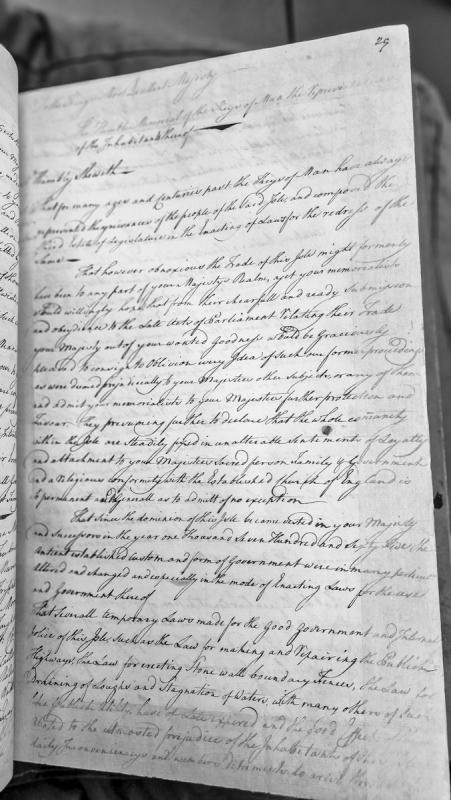
A petition from the House of Keys, the representative body of the Isle of Man, to the King seeking protection and favour regarding trade matters and requesting restoration of lapsed public utility laws. The memorial affirms loyalty to the Crown and conformity with the Church of England, and notes changes to the island's governmental procedures since 1765.
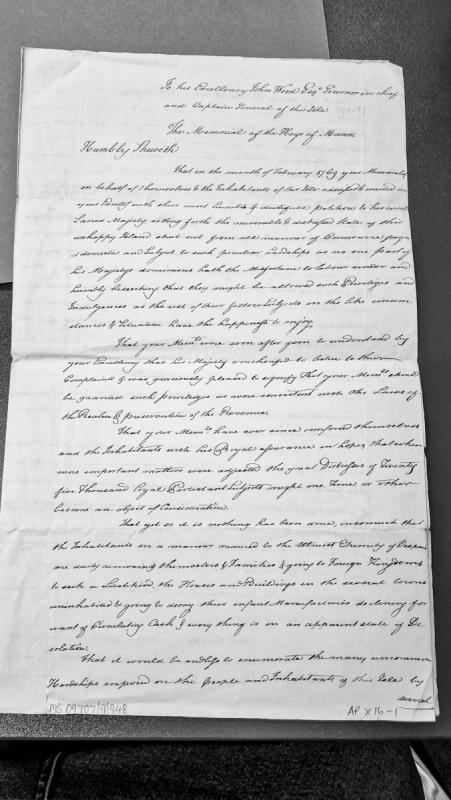
A memorial from the House of Keys of Man to Governor John Wood requesting relief from commercial restrictions and economic hardship. The document recounts a 1769 petition to the King and the royal promise of privileges consistent with law and revenue preservation, while lamenting that nothing has been implemented, resulting in emigration and economic decay affecting approximately 25,000 inhabitants.
A petition from the Keys of Mann (Manx legislature) to Governor John Wood, forwarding a memorial to the Crown regarding the economic distress of the Isle of Man. The Keys complain of restrictions on commerce, fishing, and export under recent Acts of Parliament, economic decline, emigration, and request relief comparable to that granted to Guernsey and Jersey. This document reflects post-Revestment grievances and demonstrates the impact of British commercial restrictions on the Manx economy.
A formal petition from the Keys (Manx parliament) to Governor John Wood, forwarded to the Lords Commissioners of the Treasury, detailing economic hardships and commercial restrictions imposed on Isle of Man since the 1765 Revestment. The memorial complains of prohibitions on trade, shipping, and export of provisions, and requests relief comparable to that granted to Guernsey and Jersey.
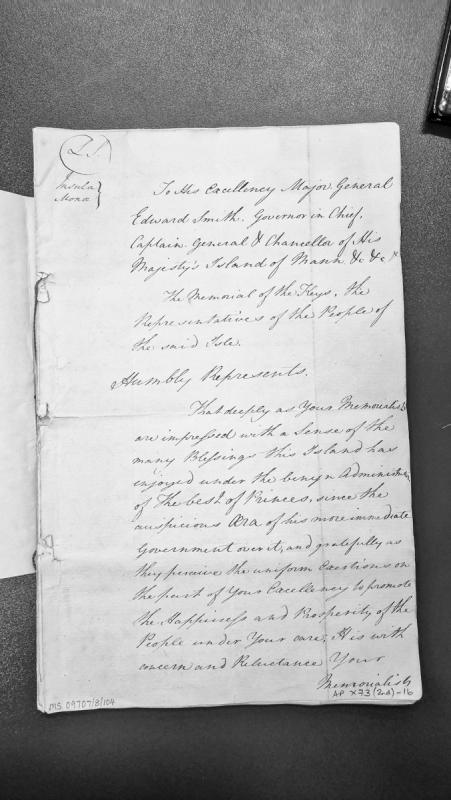
A formal petition from the House of Keys (representatives of the people of the Isle of Man) addressed to Governor Major General Edward Smith. The memorial expresses gratitude for the Prince's benevolent government and acknowledges the Governor's efforts to promote the happiness and prosperity of the island's people, though it introduces a matter of concern.
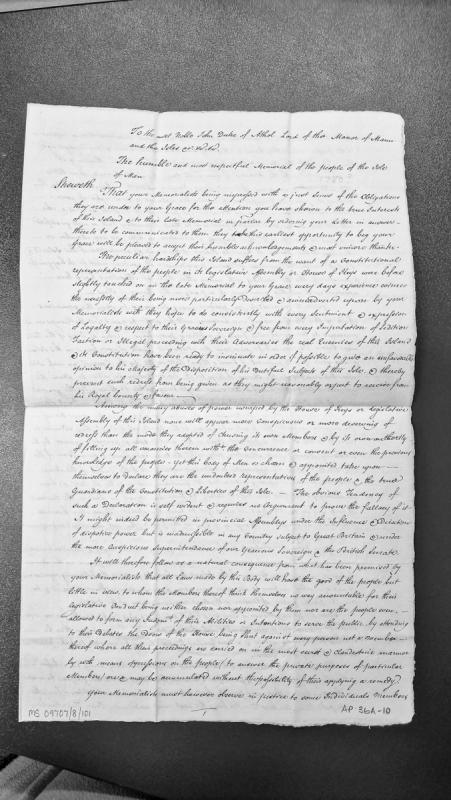
A formal petition from the people of the Isle of Man to John, Duke of Athol, Lord of the Manor, requesting constitutional representation in the House of Keys legislative assembly. The memorial critiques the self-appointing nature of the House of Keys and argues for democratic reform, claiming members lack accountability to the people and conduct business in secret.
A formal petition from Thomas Stowell, Clerk of the Rolls, to the Duke of Atholl (Governor) requesting improved accommodation and access for the Records Offices at Castle Rushen. The memorial describes cramped conditions, inadequate facilities, and poor communication between the Courts and Records Offices, and expresses concern about clerks' moral welfare due to passage through prison yards.
A petition from Thomas Stowell, Clerk of the Rolls, to the Duke of Atholl (Governor) requesting improved facilities and secure communication for the island's legal records offices at Castle Rushen. The memorial describes cramped conditions, inadequate security, problematic access through prison yards, and the need for better accommodation as records have increased in volume.
A petition from Whitehaven merchants and ship owners to the Lords Commissioners of the Treasury detailing substantial revenue losses (estimated £200,000 annually) from the clandestine trade conducted via the Isle of Man. The memorial argues for Crown purchase of the Island's sovereignty and proposes enhanced naval enforcement measures. It provides crucial contemporary evidence of smuggling's economic impact on legitimate trade and revenue collection.
A petition from merchants and ship owners of Whitehaven to the Lords Commissioners of the Treasury detailing the damage to legitimate trade caused by smuggling from the Isle of Man. The memorial quantifies annual customs losses at £200,000, describes the commodities smuggled (wine, brandy, coffee, tea, silks, tobacco), and proposes purchase of sovereignty or stronger enforcement measures. It addresses impacts on coal and tobacco trades with America and Ireland.
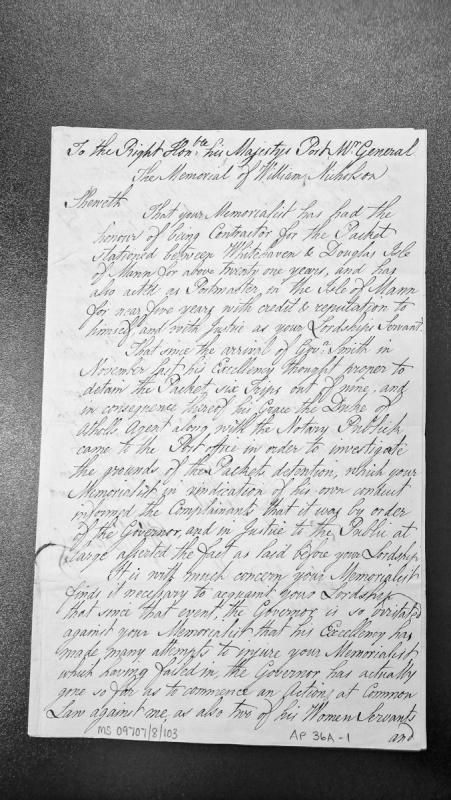
A petition by William Nicholson, contractor for the Whitehaven-Douglas packet service and Postmaster of the Isle of Mann, to the Postmaster General of Great Britain. Nicholson seeks redress for the Governor's detention of the packet and subsequent legal action against him, claiming the Governor has unjustly retaliated after Nicholson disclosed the detention orders to the Duke of Atholl's Agent.
Charles Lutwidge, Receiver General of the Isle of Man, petitions for the establishment of designated ports following the 1766 Act empowering the King to appoint legal ports for trade. Lutwidge recommends Douglas as the head port with Darby Haven, Ramsey, and Peel as member ports, covering the entire Manx coastline for revenue purposes.
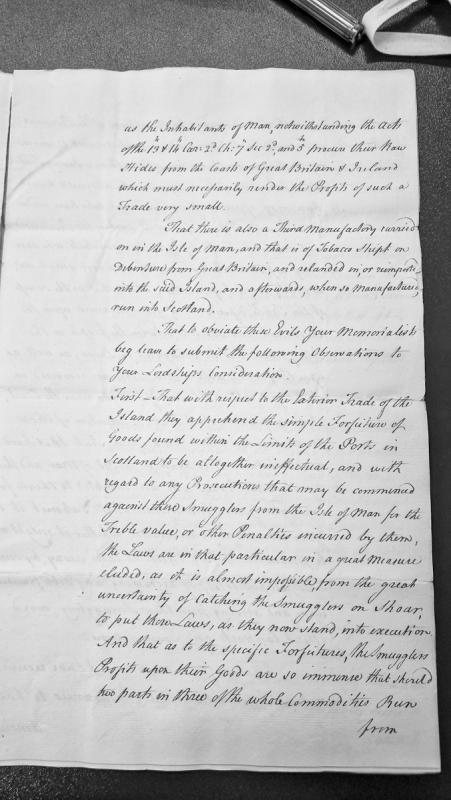
A petition or memorial submitted to a lordship detailing three illegal manufacturing activities in the Isle of Man: linen production using smuggled flax, hide tanning using materials from Great Britain and Ireland, and tobacco manufacturing. The document proposes remedies to address smuggling and enforce existing laws.