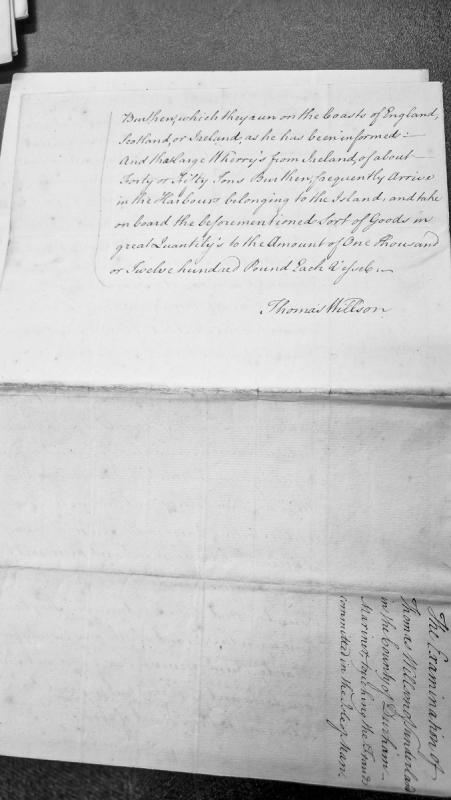
An endorsement recording the examination of Thomas Willson, a mariner from Sunderland in County Durham, concerning smuggling activities in the Isle of Man. This appears to be a formal legal document related to customs enforcement and illicit trade investigation.
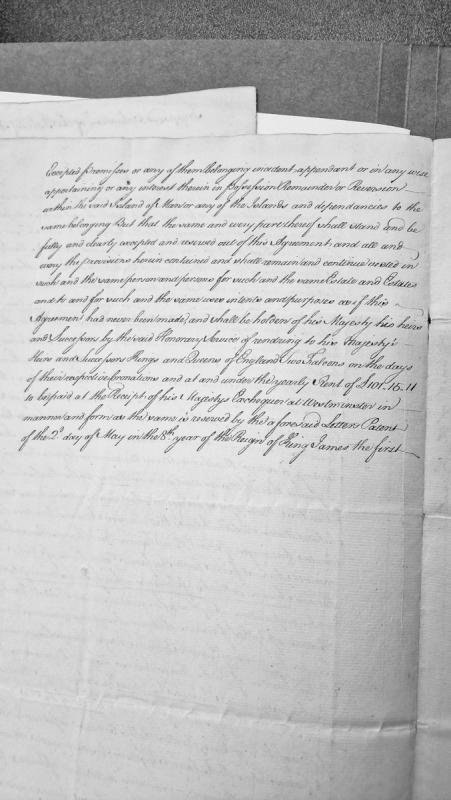
A legal document detailing excepted premises and reserved interests relating to the Isle of Man, referencing the annual rent of £107.15.11 payable to the Exchequer at Westminster and the honorary service of rendering falcons at royal coronations. The text references Letters Patent from 2 May in the 8th year of King James I's reign.
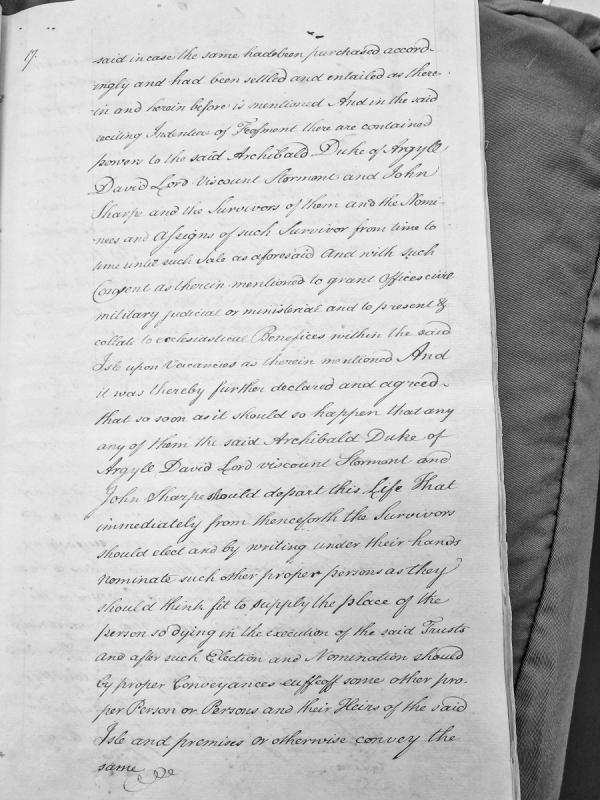
This is an excerpt from a legal document (indenture of feofment) detailing the powers granted to trustees—Archibald Duke of Argyle, David Lord Viscount Stormont, and John Sharpe—regarding the governance and disposition of the Isle of Man. It specifies their authority to grant civil, military, judicial and ministerial offices, present to ecclesiastical benefices, and provisions for succession of trustees upon death.
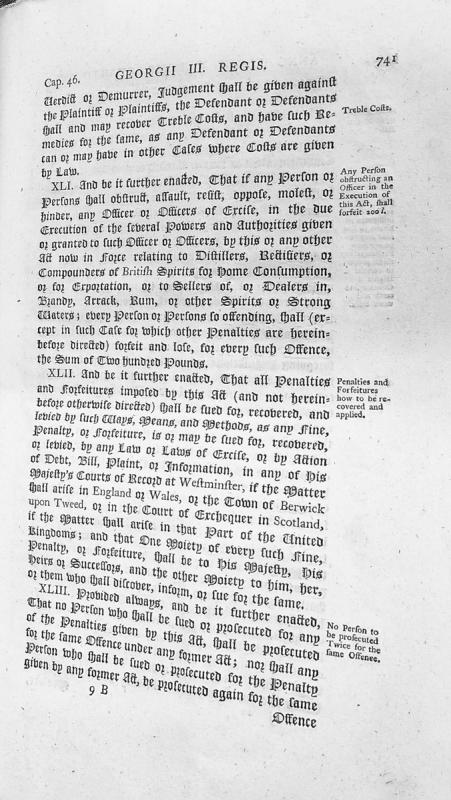
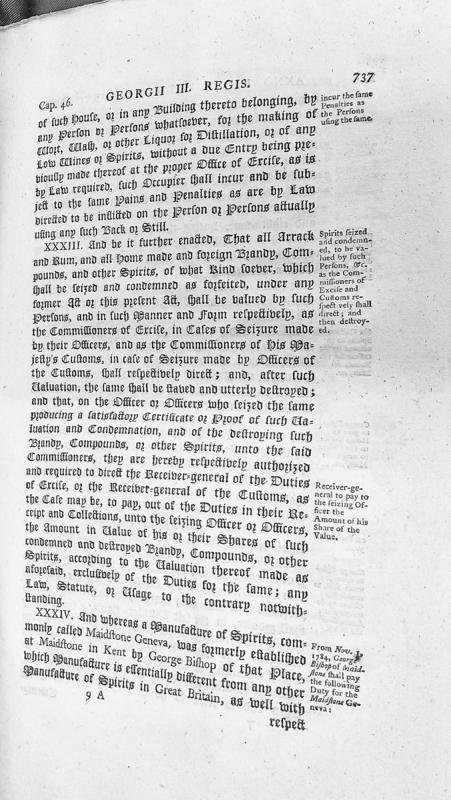
This is a printed excerpt from Chapter 46 of an Act of King George III relating to excise regulations, spirits, and distillation. It sets forth penalties for obstructing excise officers (£200), procedures for recovering penalties and forfeitures, and provisions against double prosecution for the same offence.
This is an excerpt from a printed Act of Parliament under King George III (Cap. 46, section 737) dealing with excise regulations. It covers provisions for seizing and destroying illicit spirits, valuation procedures for condemned spirits by Excise and Customs commissioners, and compensation procedures for seizing officers. The final section introduces regulations regarding Maidstone Geneva spirits manufactured at Maidstone in Kent.
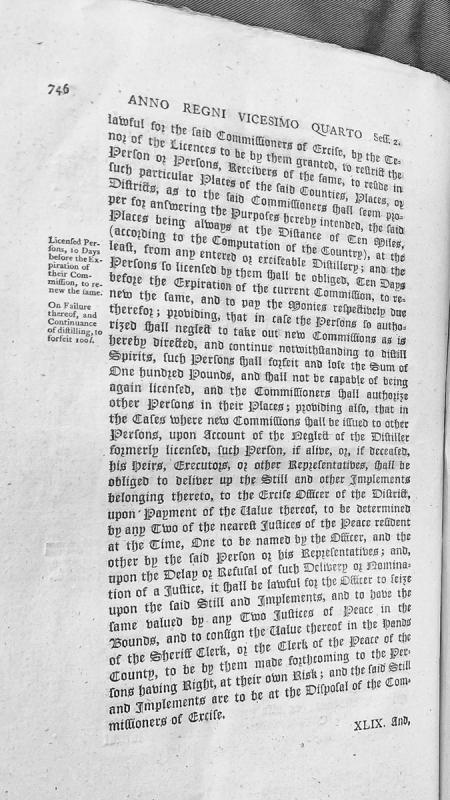
This is an excerpt from legislation (Anno Regni Vicesimo Quarto, Session 2) establishing regulations for Excise Commissioners granting licenses to distillers. It specifies requirements for licensed persons including residential restrictions (10 miles from distilleries), renewal of commissions, penalties for non-compliance (£100 forfeiture), and procedures for seizure and valuation of stills and implements.
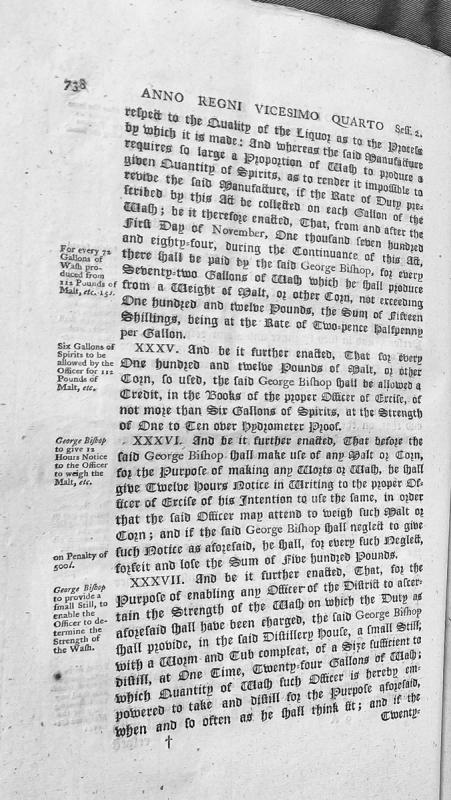
This is an excerpt from an Act of Parliament (regnal year 24) detailing excise duties and regulations for George Bishop's distillery operations on the Isle of Man. The text specifies duty rates on wash production from malt, credit allowances for spirits, notification requirements for excise officers, and equipment specifications for strength testing.
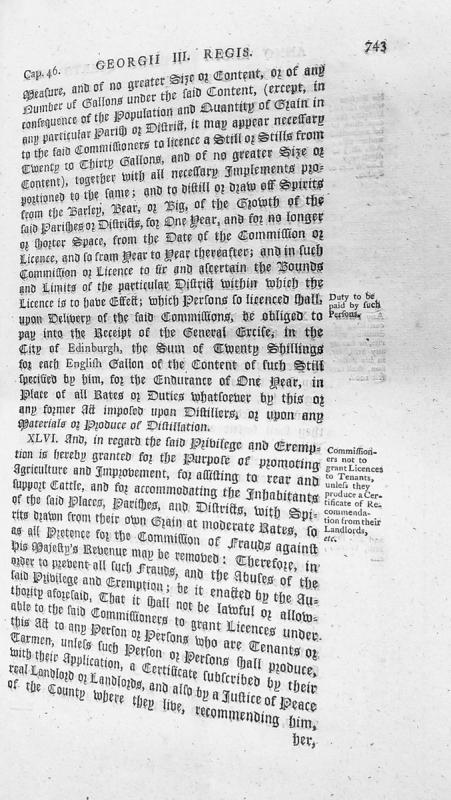
An excerpt from a statute (Cap. 46) under George III concerning licensing of small stills for grain distillation in parishes and districts. The text details regulations for still sizes, duty payments to Edinburgh Excise, and restrictions on tenant licensing requiring landlord certification.
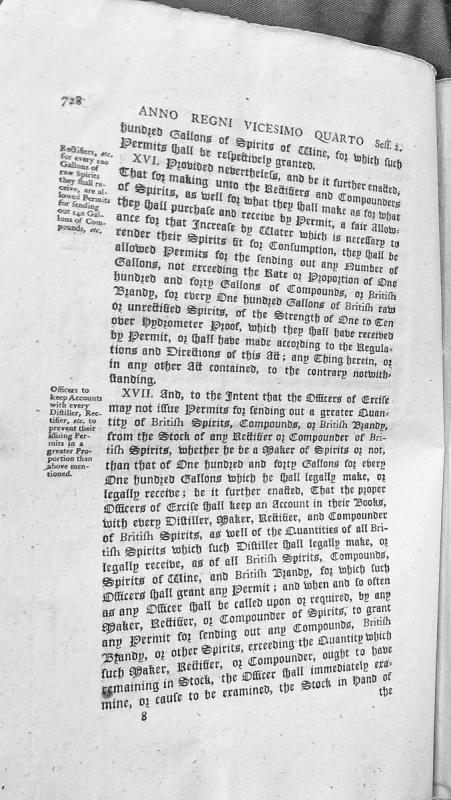
A fragment of legislation (sections XVI and XVII) regulating the excise duties and permit system for rectifiers and compounders of spirits in the 24th regnal year. The text establishes allowances for water dilution in spirit production (140 gallons output per 100 gallons input) and requires excise officers to maintain detailed accounts with spirit makers to prevent over-issuance of permits.
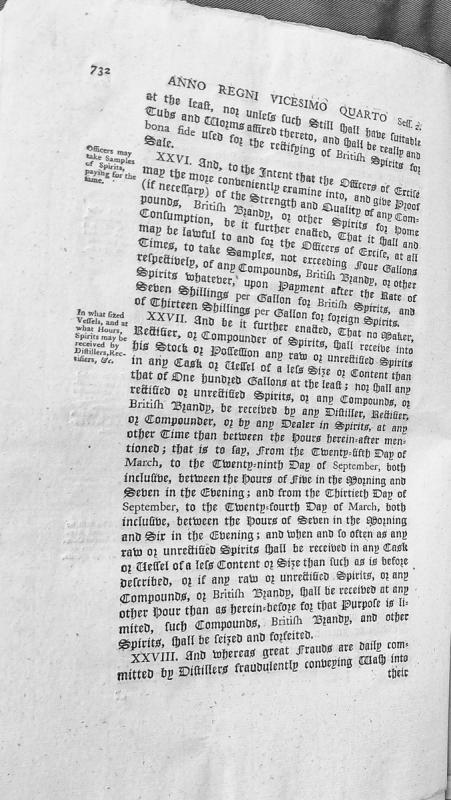
Extract from a printed statutory document outlining excise regulations for the manufacture and handling of spirits in Britain. Details provisions regarding still equipment, sampling procedures for excise officers, vessel sizes for receiving spirits, and hours of operation for distillers and rectifiers.
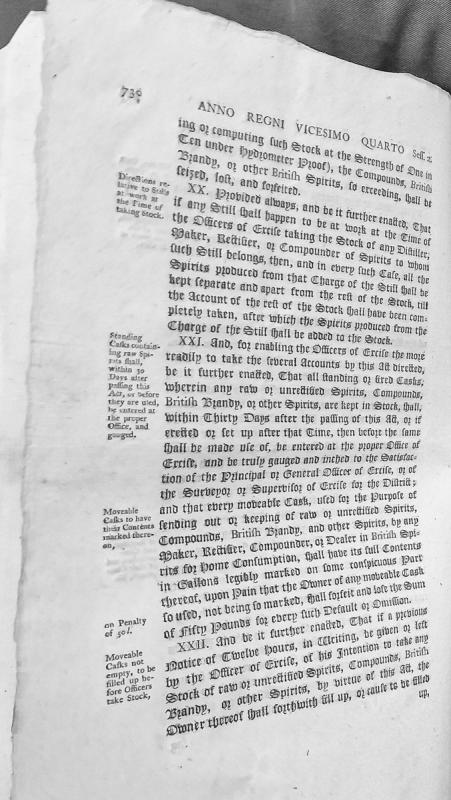
This is an excerpt from a legislative act regulating the excise duties on spirits in Britain. The document outlines provisions for officers to take stock of spirits, requirements for cask marking and registration, penalties for non-compliance, and procedures for handling spirits during stock-taking operations.
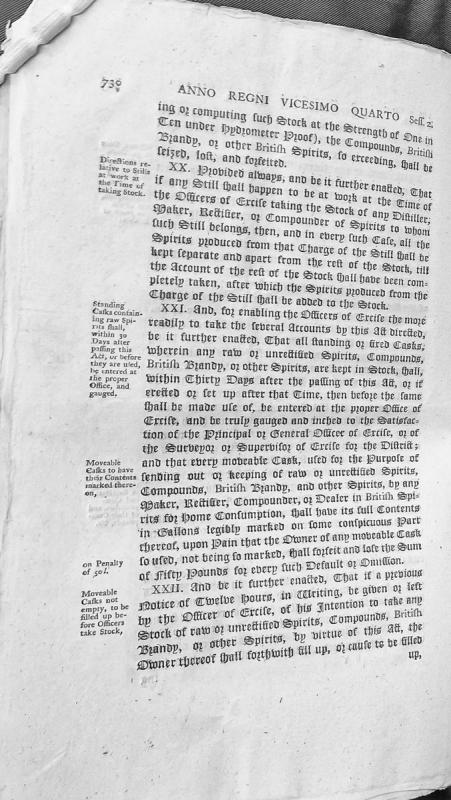
This is an excerpt from legislation (anno regni vicesimo quarto, sessio 2) containing sections XX-XXII detailing excise regulations. It covers procedures for handling spirits when stills are in operation during stock-taking, requirements for entering and gauging standing casks, marking moveable casks with contents, and procedures when officers provide notice before taking stock.
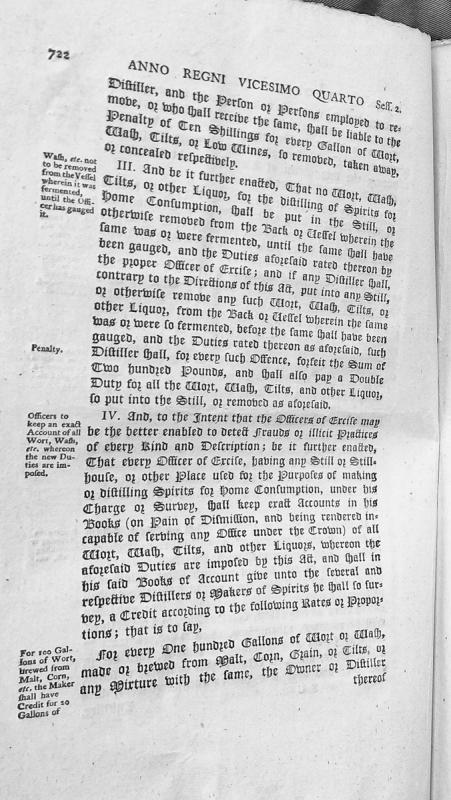
Legislative text (sections III-IV) regulating home spirit distillation on the Isle of Man. Establishes requirements for gauging wort, wash, tilts and low wines before distillation; imposes penalties for unauthorized removal or concealment; mandates record-keeping by excise officers with specified credit ratios for spirit makers.
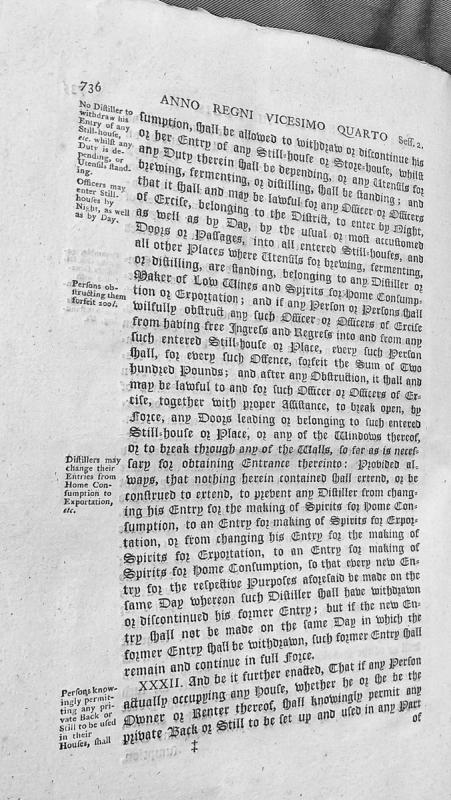
This is a legislative text from the 24th regnal year, second session, containing excise regulations. It details provisions preventing distillers from withdrawing entries while duties are pending, granting excise officers night and day access to still-houses, imposing £200 penalties for obstruction, and outlining procedures for changing entries between home consumption and exportation. The fragment also begins a clause regarding private stills in occupied houses.
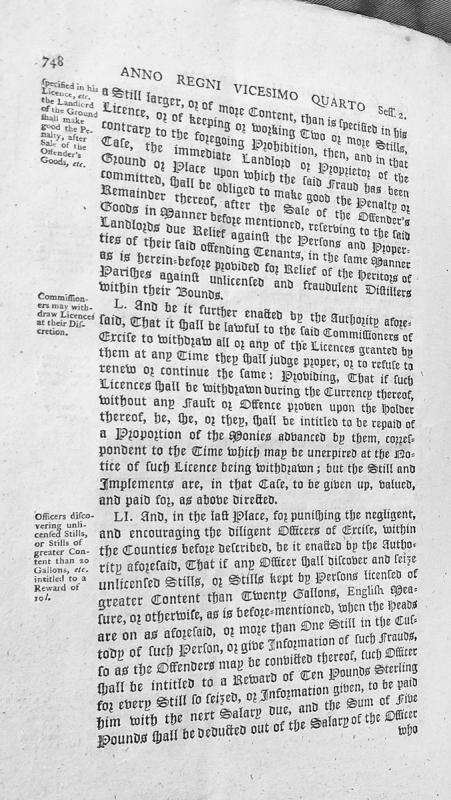
Fragment of legislative text regulating distillery operations, establishing penalties for unauthorized stills, landlord liability for tenant violations, and monetary rewards for excise officers who discover illegal stills. The document appears to be from Scottish or British excise legislation dealing with still licensing and fraud prevention.
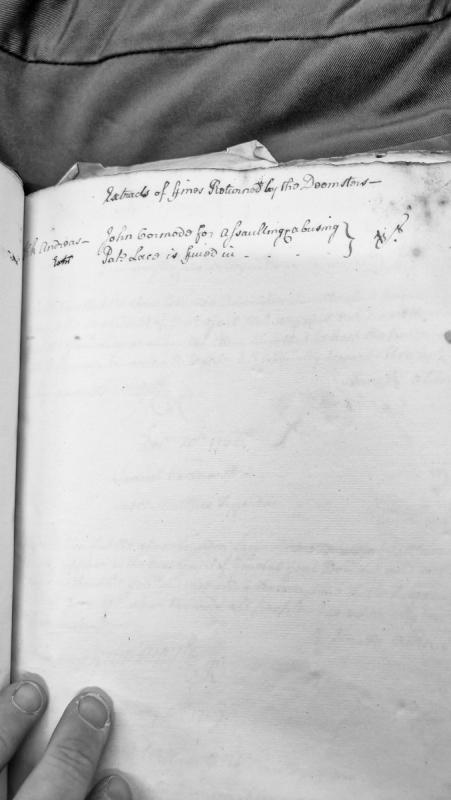
A fragmentary court record documenting fines imposed by Doomsters (judicial officers) for offences including faulting, abusing, and other infractions. The document appears incomplete with partial entries for John Cormode and Pat Lace.
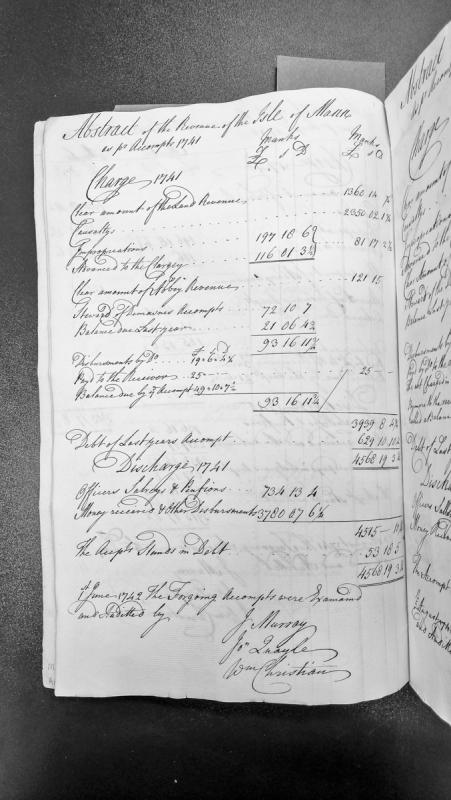
A financial accounting document detailing debts, discharges, officer salaries and disbursements for 1741, with a balance calculation. The account was examined and audited on 1 June 1742 by three auditors.
A resolution and address adopted by the freeholders of Fincastle County, Virginia on 20 January 1775, endorsing the Continental Congress association and expressing loyalty to King George III while asserting constitutional rights against Parliamentary overreach. The document reflects colonial grievances on the eve of the American Revolution and demonstrates the intersection of colonial constitutional thought with British sovereignty claims.
Bilingual (Latin/English) transcription of passages from the Chronicle of Florence of Worcester covering early medieval and Norman-era references to the Isle of Man (Mevania). Includes accounts of Welsh rebellion (1094), Norwegian King Magnus's expedition (1098), and the island's political status. Relevant as historical background on pre-Revestment Manx sovereignty and the transition from Norse to Norman influence.
A formal indenture establishing truces between English and Scottish forces, dated 8 May 1357 and made at London. The document lists territories under English and Scottish sovereignty, explicitly naming the Isle of Man as subject to English faith and fealty. Presented in both English and Anglo-Norman French. Relevant as early constitutional evidence of Manx status within English sphere during medieval period.
A formal indenture recording a truce agreement made in London between England and Scotland, dated 8 May 1357. The document explicitly names the Isle of Man among territories under English royal faith and allegiance, alongside England, Scotland, Ireland, Gascony, Brittany, and Wales. This is significant for establishing the Isle of Man's constitutional status within the English realm in the 14th century.
A published collection of official correspondence between the East India Company's Court of Directors in London and the Company's government in Fort William, Bengal, covering 1796-1800. Includes public letters, separate revenue letters on salt and opium monopolies, and law letters. Contains an introduction covering Company trade, monopolies (salt, opium), and administrative matters during the governorships of Sir John Shore and Lord Wellesley.
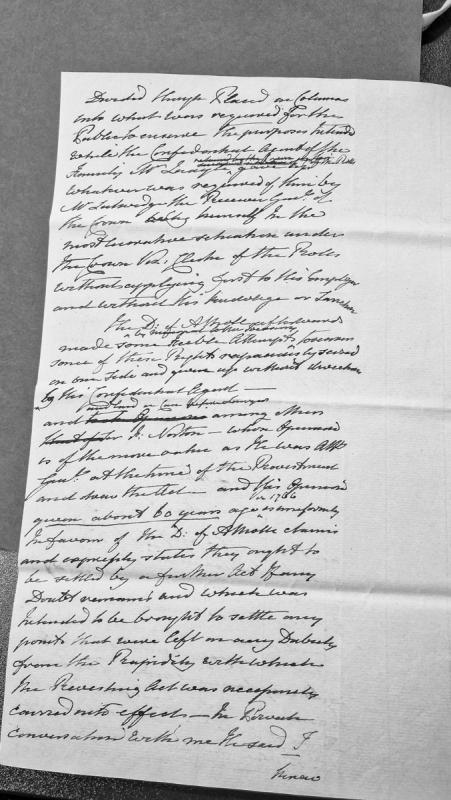
A fragmentary legal document discussing disputes over public revenue and the Duke of Atholl's rights following the Revestment Act. References opinions from R. Norton, the Attorney General at the time of Revestment who drafted the Act, regarding claims that should be settled by further legislation. Mentions various officials including the Receiver General and Clerk of the Rolls.
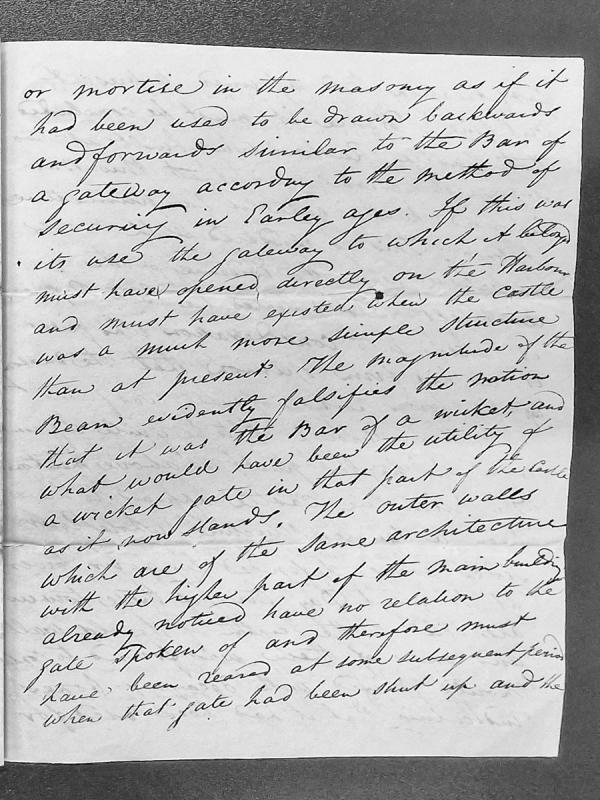
A fragmentary text discussing the architectural history of a castle structure, specifically analyzing the purpose and design of a large beam or bar that may have functioned as a gateway mechanism. The author considers whether it served as a sliding bar for security purposes in early construction phases.
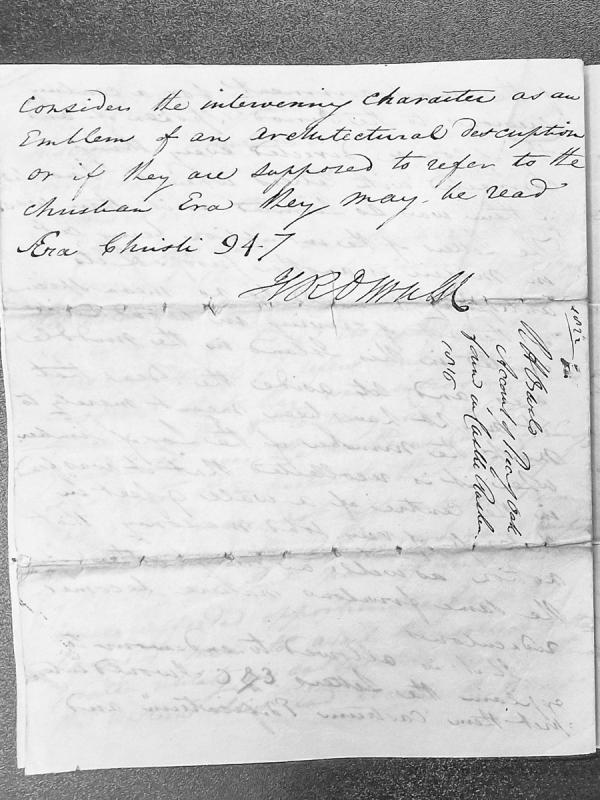
A fragmentary manuscript discussing the interpretation of intervening characters as architectural emblems or Christian Era references (94.7). The verso contains an endorsement referencing an account of a rock found in Castle Rushen, with dates 1012 and 1016 marked.