The second edition of the East India Company's official register and directory, containing comprehensive listings of Company servants (civil and military) at all presidencies (Bengal, Madras, Bombay), establishments in China, St. Helena, and other locations. Includes administrative structures, regulations on retirement and furlough, casualty records (births, marriages, deaths), and merchant vessel information. Compiled from official returns received at East India House and authorized by the Company.
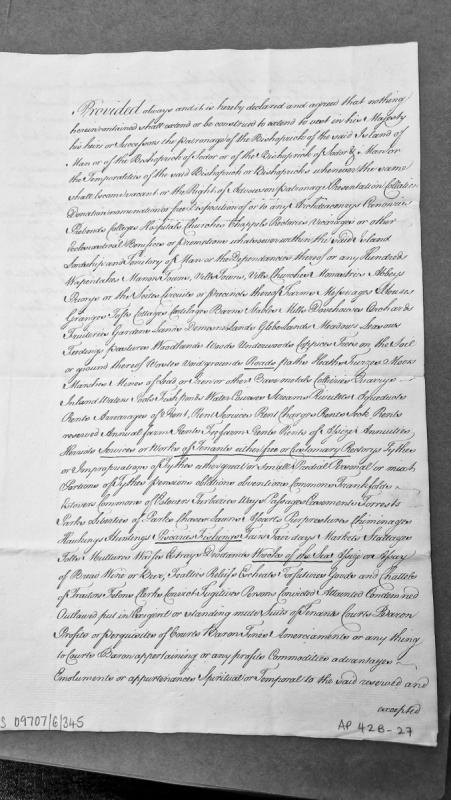
This is a legal proviso declaring that certain ecclesiastical and temporal rights and properties within the Isle of Man shall not vest in the Crown, specifically excluding royal patronage of bishoprics and various ecclesiastical benefices. The document provides an exhaustive enumeration of properties, revenues, rights, and appurtenances (both spiritual and temporal) that are expressly reserved and excepted from the Crown's authority.
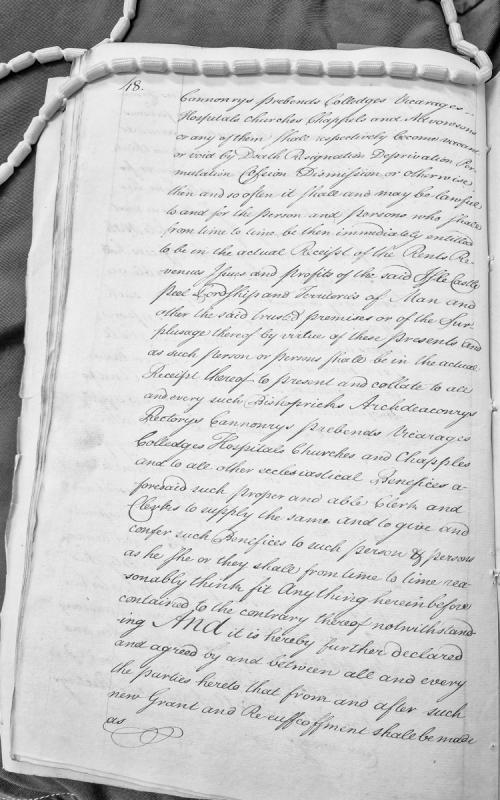
A legal document concerning the rights to present and collate clergy to vacant ecclesiastical benefices (bishoprics, archdeaconries, rectories, canonries, prebends, vicarages, colleges, hospitals, churches and chapels) in the Isle of Man. The document outlines the conditions under which such presentations may be made and the qualifications required of candidates.
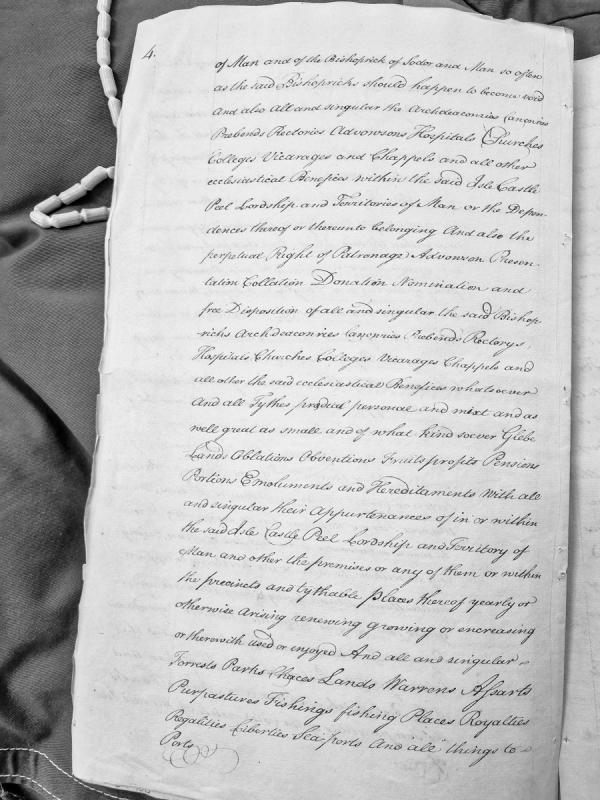
This document appears to be a legal instrument describing the rights, patronage, and ecclesiastical benefices within the Isle of Man, including bishoprics, archdeaconries, canonries, prebends, rectories, churches, and associated tithes and lands. The detailed enumeration of ecclesiastical properties and rights suggests this is part of a larger legal or administrative document, possibly a charter or grant.
Royal writ from Edward II to Henry de Bello Monte (or his lieutenant) commanding the resumption of the Isle of Man into the king's hands. The revocation follows ordinances made by prelates, earls and barons chosen on 16 March 1310 to regulate the royal household and kingdom, which invalidated all grants of castles, lands, and other properties made since that date. The Isle is to be delivered to Gilbert Makaskel and Robert de Leiburn, constable of Cokermouth Castle. This document illustrates medieval royal sovereignty over Man and the reversibility of feudal grants.
A royal letter from Edward II to Henry de Bello Monte (or his lieutenant) commanding the resumption of the Isle of Man into the king's hands. The letter revokes grants made since 16 March 1310 following ordinances issued by prelates, earls, and barons chosen to regulate the royal household and kingdom. It orders delivery of Man to Gilbert Makaskel and Robert de Leiburn, constable of Cokermouth Castle.
A biographical entry from Draper's 1864 'House of Stanley' covering Edward Smith-Stanley, 13th Earl of Derby (1775–1851). The text details his parliamentary career (Preston MP 1796–1812, Lancashire knight of the shire 1812–1834), family connections, marriage, children, peerage creation (1832), and major interests in natural history and ecclesiastical patronage. Relevant to understanding the Derby family's position during the Revestment era and the 13th Earl's contemporaneous role in public affairs.
A biographical account of Edward Smith Stanley, 12th Earl of Derby (1752–1834), extracted from Draper's 'The House of Stanley' (1864). Covers his political career, sporting interests (horse-racing, cock-fighting), patronage of charities, marriages, children, and role as lord-lieutenant of Lancashire. Provides context on the Stanley family's prominence and social standing in late-18th and early-19th-century England, relevant to understanding the political background of the 1765 Revestment negotiations.
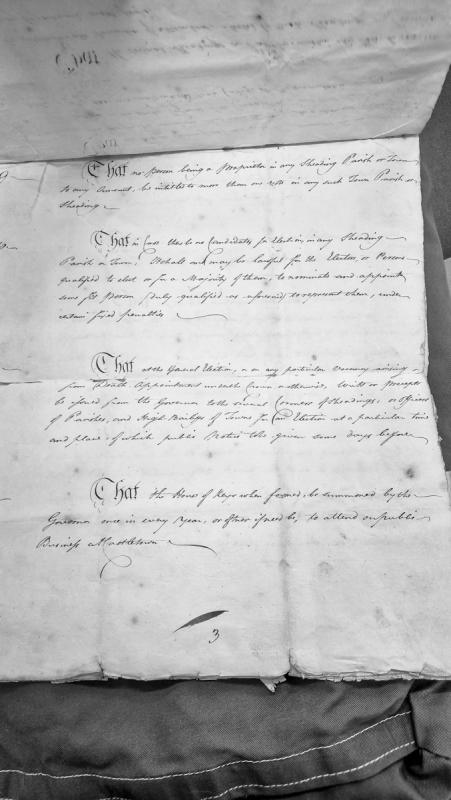
Fragment of electoral regulations establishing voting rights and procedures for House of Keys elections. Stipulates single votes per property owner, nomination procedures for vacancies, issuance of writs for elections, and annual summoning of the House of Keys. Appears to be part of broader electoral or constitutional reform document.
This transcription file appears to be empty or contains only metadata headers with no actual document content. No substantive text, dates, or identifying information could be extracted.
This transcription file contains no extractable document content. It appears to be either a corrupted file, a blank page, or a transcription error with only metadata headers present.
This transcription appears to contain only metadata headers and formatting but no substantive document content. Unable to extract meaningful information about the source document from the provided text.
This transcription file contains no document content, only metadata headers indicating it was processed through the Manx Museum's automated transcription system. The actual document text is absent.
This is a metadata-only transcription record with no actual document content. The source image reference is provided but the transcription itself contains no text or structured information from a historical manuscript.
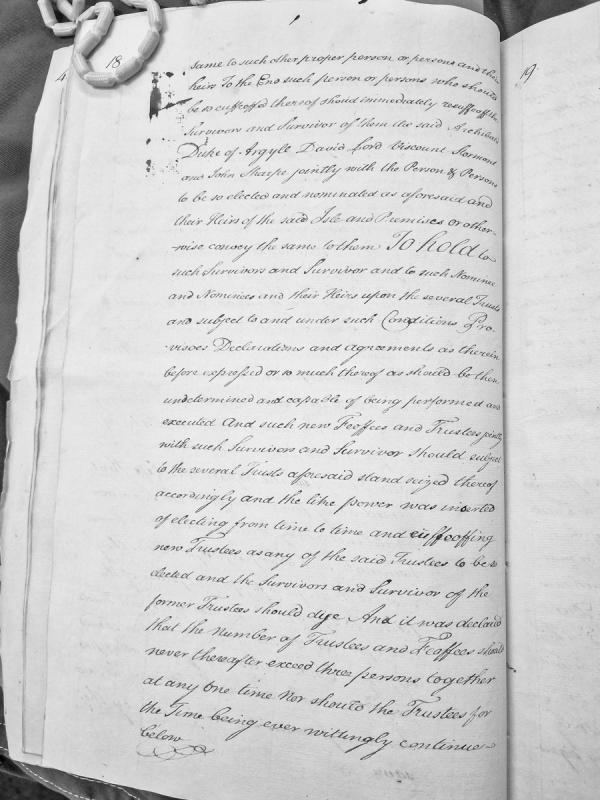
A legal document excerpt detailing provisions for enfeoffment and succession of trustees for Isle of Man property. The text outlines procedures for re-enfeoffment by survivors, nomination of new trustees, and constraints on the number of trustees (not to exceed three at any time).
A comprehensive doctoral thesis examining smuggling as commercial activity, social crime, and policing problem in eighteenth-century England. Covers regional variations (East Anglia, Kent, Sussex, Cornwall), the role of violence, involvement of revenue and military forces, and extends analysis to comparative contexts including the Isle of Man, Channel Islands, France, and Scandinavia. Highly relevant to understanding the smuggling trade that prompted the 1765 Revestment.
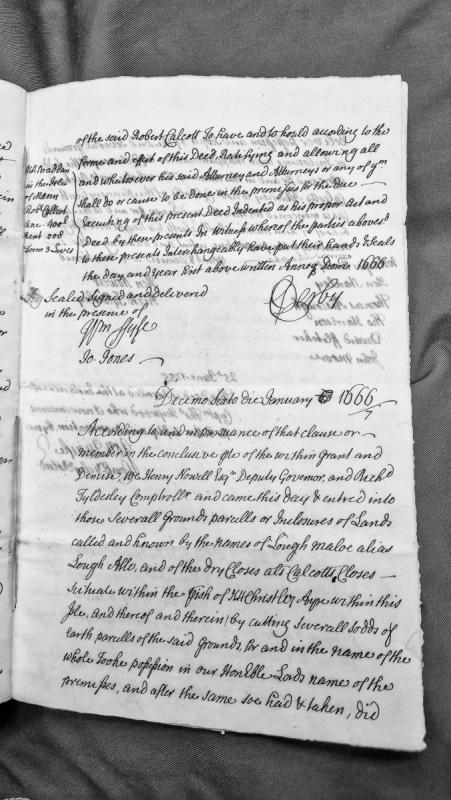
An official record of Henry Nowell (Deputy Governor) and Richard Tyldesley (Comptroller) taking possession of several parcels of land called Lough Maloe, Lough Allo, and the dry Closes/Calcotts Closes in the parish of Christ Ley Ayre. The action was performed by cutting sods of earth as a symbolic act of taking possession on behalf of their Honourable Lord.
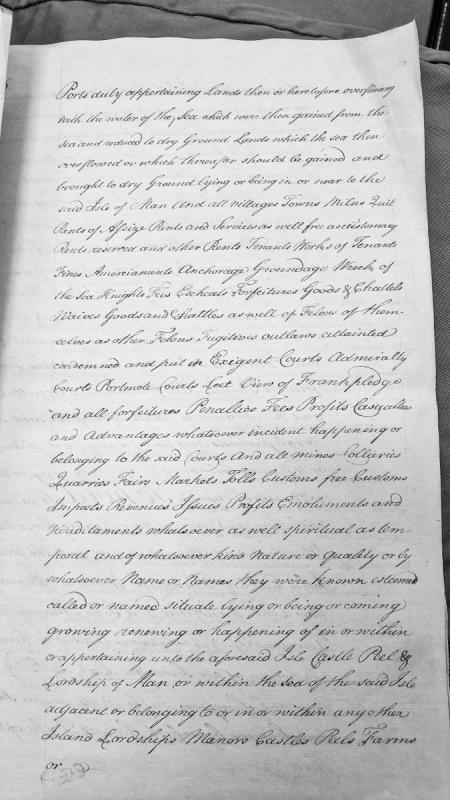
A legal document detailing the comprehensive list of rights, revenues, lands, and jurisdictional powers appertaining to the Isle of Man, including ports, lands reclaimed from the sea, rents, court jurisdictions, and various feudal rights and revenues. The document appears to be part of a larger legal instrument defining the extent of lordship powers and property rights.
An order issued by the Bishop of Man (Derby) in 1691 regarding the administration of funds (£43 19s 10d) deposited for repairs to Peel Cathedral. The order clarifies that no interest is due from the Lord Bishop while funds remain undeployed, and authorizes the Bishop and Governor jointly to invest the money if a secure opportunity arises. Relevant to understanding ecclesiastical governance and financial administration on the Isle of Man in the late 17th century, contextualizing pre-Revestment institutional structures.
Letter from Charles Lutwidge to Grey Cooper at the Treasury (15 June 1770) transmitting an estimate of £155 8s for repairs to Douglas Pier following storm damage in March 1770. Lutwidge requests Treasury approval and proposes a tonnage tax on ships using the harbour to fund repairs. The estimate details costs for mason work, materials, and reconstruction of the lighthouse.
Letter from Charles Lutwidge to Grey Cooper at the Treasury, enclosing an estimate of £155:8:0 for repairs to Douglas Pier damaged by storms in March 1770. Lutwidge requests Treasury approval and proposes a tonnage tax on vessels using the harbour to fund repairs. The document includes itemised repair costs and notes on subsequent harbour damage in 1786.
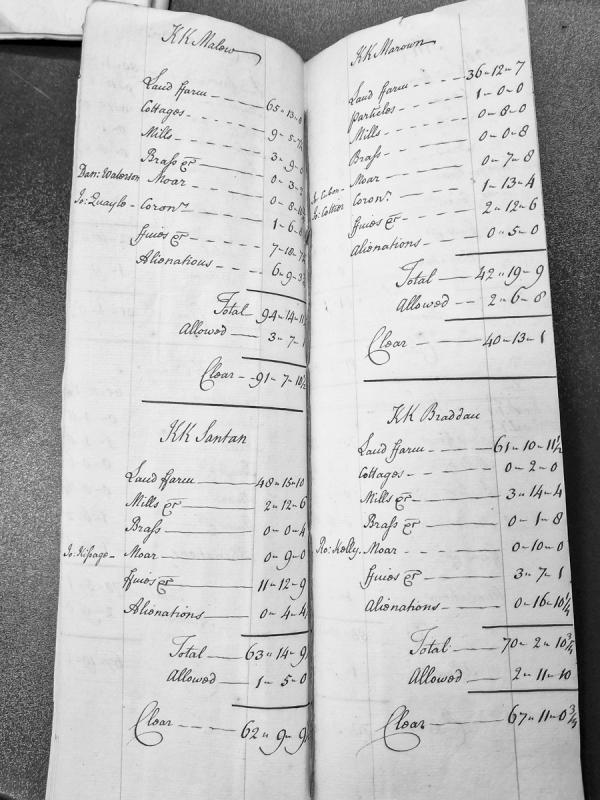
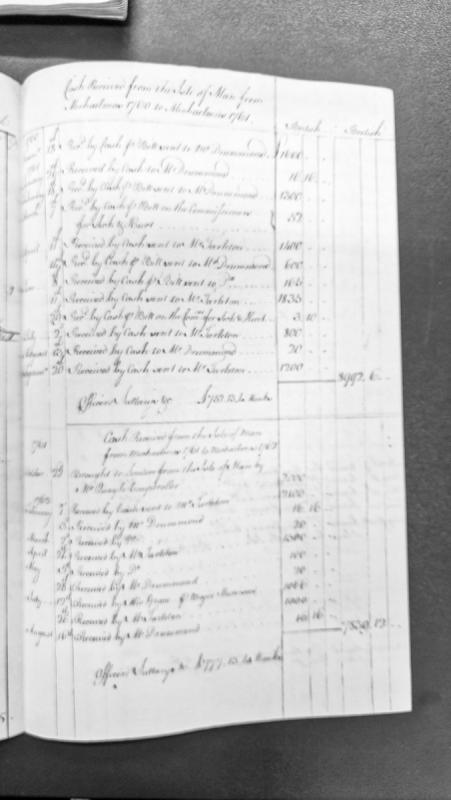
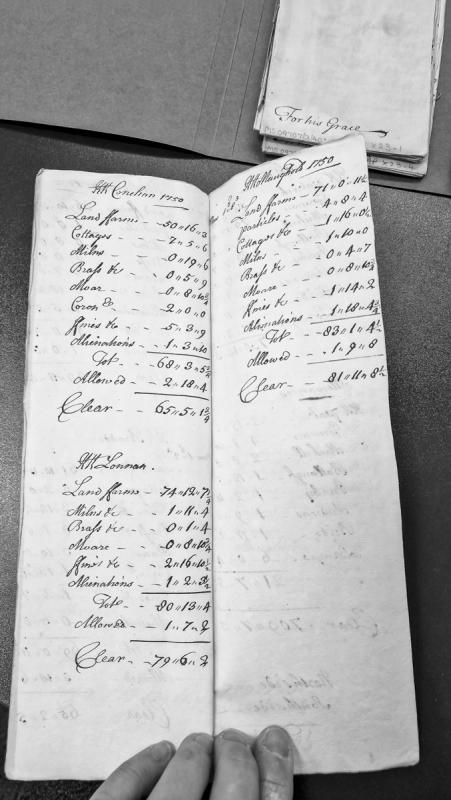
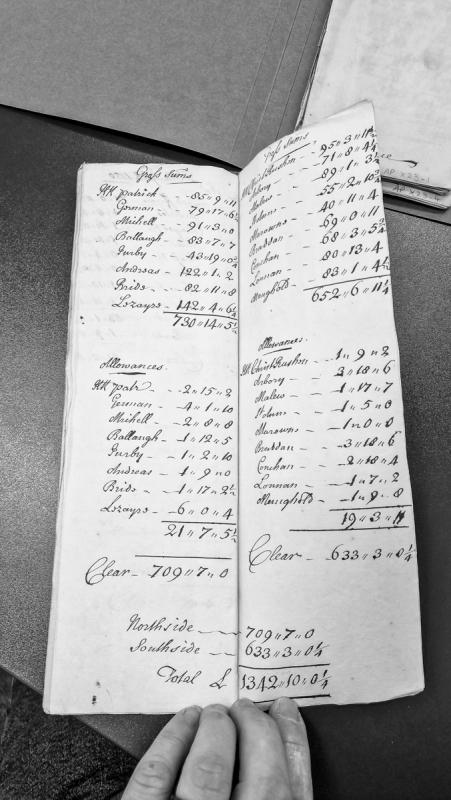
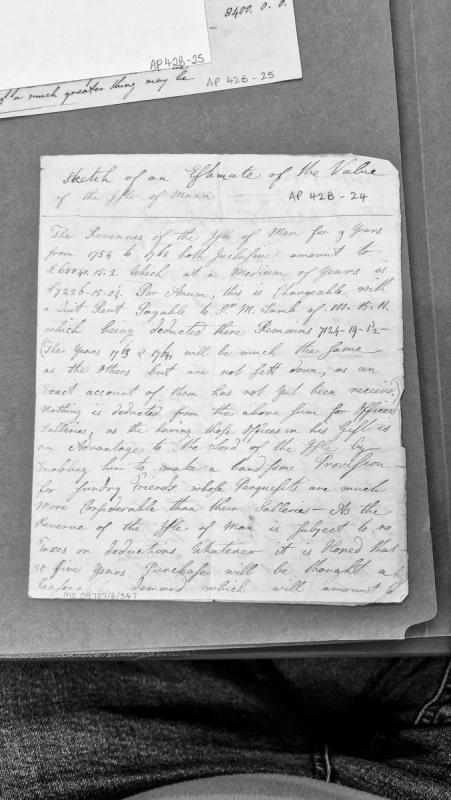
A financial estimate calculating the annual average revenue of the Isle of Man from 1754 to 1762, deducting quit rent payable to Sir M. Lamb, and proposing a valuation based on five years' purchase. The document notes that no deductions are made for officers' salaries as these positions are perquisites of the Lord of the Isle.
Testimony by John Quayle, Clerk of the Rolls for the Isle of Man, given before commissioners of inquiry in September 1791. Quayle describes the pre-1765 customs administration, the role of Paul Bridson as Deputy Searcher, the Duke of Atholl's denial in 1764 that he would sell the island, and the procedures for collecting duties on tea, tobacco, brandy, and other commodities. His account provides detailed insight into revenue collection, smuggling activity, and the administrative transition at the 1765 Revestment.
Sworn examination of John Quayle, Clerk of the Rolls in the Isle of Man, taken before a Commissioners of Inquiry in September 1791. Quayle provides detailed testimony on pre-1765 customs administration, the role of Paul Bridson as Deputy Searcher, revenue collection procedures, duties on tea and tobacco, smuggling seizures, and the transition of authority following the 1765 Revestment Act. This document is part of a post-Revestment inquiry into the island's governance and revenue management.
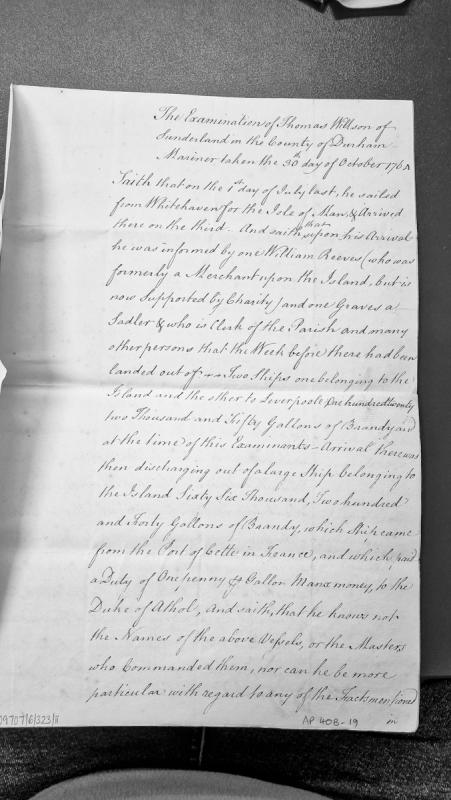
Examination of Thomas Willson, a mariner from Sunderland, concerning the landing of large quantities of brandy on the Isle of Man in July 1764. The document records his testimony about witnessing the discharge of over 188,000 gallons of brandy from multiple vessels, one of which paid duty to the Duke of Athol. This testimony relates to customs and revenue enforcement on the Island.