A biographical and genealogical account of Charles, 8th Earl of Derby (1627–1672), covering his childhood during the English Civil War, his residence in the Isle of Man, his marriage, his involvement in the 1659 Royalist rising, and his post-Restoration life. Includes detailed family genealogy, property details, and context on the Stanley family's role in Isle of Man governance.
A detailed historical narrative from Draper's 1864 work on the House of Stanley, covering the Earl of Derby's military campaign in support of Charles II in 1651, particularly the Battle of Wigan Lane (25 August 1651) and the Earl's subsequent capture. Highly relevant to understanding Derby's role in the Revestment period and his political/military standing, which shaped his later position during the 1765 negotiations.
Official report from Dublin Custom House to British Lords (Treasury) detailing smuggling operations between the Isle of Man and Ireland. Documents smuggling routes, vessels (wherries from Rush), contraband goods (tea, brandy, tobacco, East India goods), methods of concealment, and revenue impact. Provides evidence of the strategic importance of Isle of Man as a smuggling base and justifies the Crown's interest in acquiring sovereignty.
Official report from Dublin Custom House officials to the Lords of the Treasury detailing the smuggling trade between the Isle of Man and Ireland. Documents the methods, vessels (wherries from Rush), routes, goods smuggled (teas, brandy, tobacco, East India goods), value of seizures (~£10,000 annually), and countermeasures undertaken by Irish revenue authorities. Key evidence of the economic and security threat posed by Manx smuggling to Irish revenues.
Official report from Dublin Custom House to the Lords of the Treasury detailing the extent and methods of smuggling between the Isle of Man and Ireland. Describes smuggling vessels (wherries from Rush), routes, goods traded (tea, brandy, tobacco, East India goods), and measures attempted to suppress the trade. Estimates annual seizures at £10,000. Directly relevant to understanding the commercial and revenue pressures that prompted the 1765 Revestment.
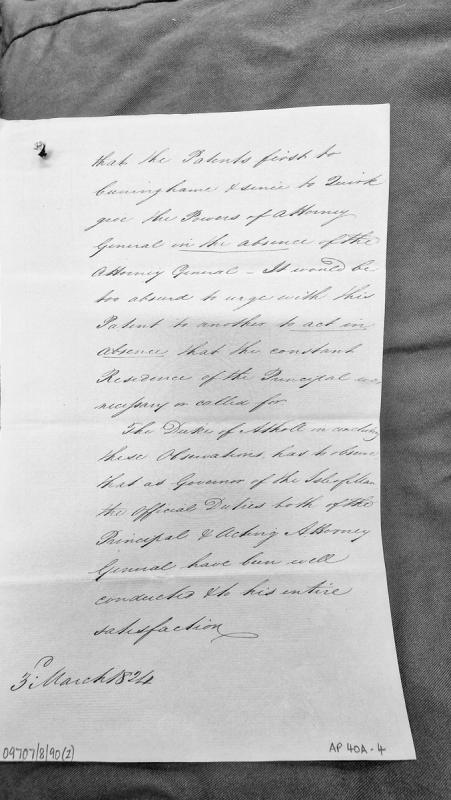
A legal opinion by the Duke of Athol, Governor of the Isle of Man, regarding the powers of attorney granted to successive Attorneys General (Cunninghame and Quick) in the absence of the principal Attorney General. The document affirms that the patents granted adequate powers and that both officials have discharged their duties to his satisfaction.
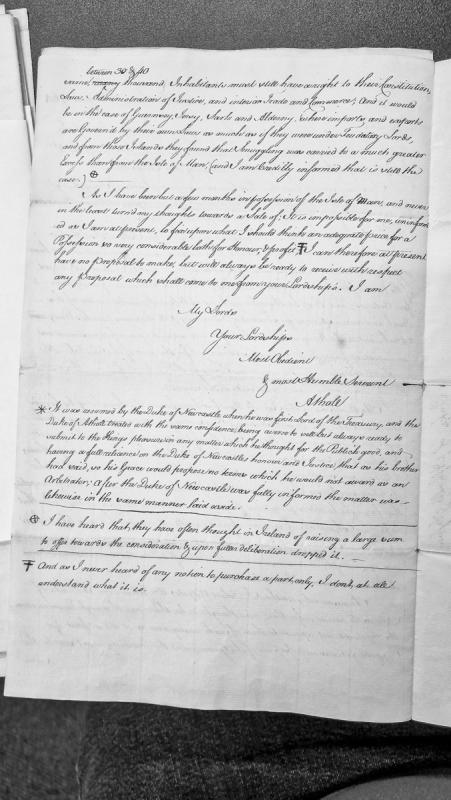
A letter from the Duke of Athole responding to a proposal regarding the sale or disposition of the Isle of Man. The Duke discusses his recent acquisition of the island, his reluctance to sell without adequate valuation, and compares the Isle of Man's governance and smuggling issues to other Channel Islands. The letter includes footnotes addressing prior negotiations with the Duke of Newcastle.
A letter from the Duke of Atholl to Lord Grenville (12 February 1791) requesting appointment as Governor of the Isle of Man with salary. Atholl emphasises his attachment to the island, his intention to reside there quarterly, and his ability to prevent smuggling and illicit practices that damage Crown revenues. This is highly relevant to post-Revestment governance and the Crown's continued concerns about smuggling on the island.
A letter from the Duke of Atholl to Lord Sydney (Home Secretary) dated 29 March 1784, asserting that he alone retains the right to appoint the Bishop of Mann, even after the 1765 Revestment. The letter concerns the appointment of Mr Crigan and clarifies that the Duke's patronage rights over the bishopric remain unaffected by the Parliament's purchase of sovereignty.
Letter from the Duke of Atholl to Lord Sydney (Home Secretary) dated 29 March 1784, asserting his retained right to appoint the Bishop of Mann. Written after the 1765 Revestment, this document demonstrates the Duke's claim to residual ecclesiastical patronage over the Isle of Man despite Parliament's purchase of sovereignty.
Personal letter from the Duke of Atholl to Lord Mansfield (Lord Chief Justice) seeking legal and strategic advice on the impending sale of the Isle of Man to the British Crown. The Duke outlines the island's economic value, recent revenue figures (£43,934 over six years), potential for customs duty increases, and manufactures development, while arguing for delay in the sale. References earlier correspondence from 1759 between the previous Duke and the Duke of Newcastle.
Two letters from the Duke of Atholl (2 April 1759) to Baron Maule and Lord Mansfield concerning the proposed sale of the Isle of Man to the Crown. Atholl reports receipt of a letter from the Treasury Lords' agents (Messrs West and Martin) empowering them to receive his sale proposals, and seeks advice from his trusted advisors on negotiation strategy and protocol.
A private memorandum from the Duke of Atholl to Lord Sidmouth (Home Secretary) defending his characterization of the Isle of Man's respectable inhabitants and attacking his political opponents in the House of Keys. It details the Taubman smuggling legacy, conflicts with Curwen and Christian, and criticisms of Lieutenant Governor Smelt, Attorney General Frankland, and others. Highly relevant to post-Revestment governance, smuggling profits retention, and factional politics.
A private memorandum from the Duke of Atholl to Lord Sidmouth (Home Secretary) concerning factional politics on the Isle of Man, specifically addressing Sidmouth's wish to consult 'respectable inhabitants.' Atholl defends his position against opponents including Major Taubman (whose father profited from smuggling), Curwen, Fitzsimmons, and others, while attacking Lieutenant Governor Smelt and Attorney General Frankland. Highly partisan and personal, reflecting post-Revestment tensions and the persistence of smuggling-era fortunes.
Two letters from the Duke of Atholl to Charles Yorke (Home Office, Northern Department) dated 7 December 1803. The formal letter requests resignation as Governor-in-Chief of the Isle of Man in favour of his brother Lord Henry Murray. The confidential letter details Atholl's frustrations after 25 years of conflict following the 1765 Revestment, citing constitutional tensions between his authority as Governor and the Lieutenant Governor's independent influence, particularly regarding internal taxation and military appointments.
Two letters from the Duke of Atholl to Charles Yorke (Home Office, Northern Department) dated 7 December 1803. The first is a formal petition requesting permission to resign as Governor-in-Chief of the Isle of Man in favour of his brother Lord Henry Murray. The second, marked confidential, provides detailed grievances regarding the independence of the Lieutenant Governor and internal political disorder on the island, citing party spirit, unauthorized taxation measures, and alleged interference by the government via Mr Tierney. This correspondence illuminates post-Revestment governance tensions and factional disputes on the island.
Letter from the Duke of Atholl announcing the successful conclusion of negotiations with George Grenville regarding the sale of Isle of Man sovereignty. The Duke reports terms: Crown gains sovereignty and customs revenue; Atholl retains landed estate and receives £70,000 plus £2,000 annual annuity for the Duchess. This is a direct contemporary record of the Revestment agreement and the Duke's personal perspective on the transaction.
Letter from the Duke of Atholl to Governor Cochrane dated 30 January 1753, discussing parliamentary business, ecclesiastical appointments, customs matters, and administrative affairs on the Isle of Man. The Duke explicitly notes that no parliamentary mention has been made of selling or leasing the Isle of Man's customs, contradicting rumours. Relevant to understanding pre-Revestment Atholl governance and early commercial pressures on the island.
Letter from the Duke of Atholl to Governor Cochrane discussing parliamentary matters, ecclesiastical appointments, customs and trade issues, and the settlement of disputes with the Keys (Manx parliament). The letter's explicit denial that Parliament has mentioned 'the sale of the Isle of Man or leasing the Customs' is of particular significance to the Revestment project, as it predates the 1765 purchase by 12 years and shows contemporary awareness of these potential transactions.
Letter from the Duke of Atholl to Lord Mansfield (Lord Chief Justice) seeking legal and political advice on the proposed sale of the Isle of Man to the Crown. The Duke outlines his valuation of the island based on actual revenues (£7,322 per annum average over six years), potential for customs duty increases, ecclesiastical and civil appointments, and development opportunities. He references previous correspondence from the late Duke (1759) and expresses reluctance to sell immediately.
Letter from the Duke of Atholl dated 26 February 1765 announcing the successful conclusion of negotiations with Mr Grenville regarding the sale of sovereignty and customs of the Isle of Man to the Crown. The Duke outlines the financial terms (£70,000 plus an annuity of £2,000 per annum to the Duchess) and confirms retention of landed estates. This is a crucial primary source documenting the moment of agreement that led directly to the Parliamentary Revestment Act of 1765.
Letter from John, Duke of Atholl, to Lord Grenville requesting appointment as Governor of the Isle of Man. Written 26 years after the 1765 Revestment, this document reflects post-acquisition political developments and Atholl's continued interest in the island, notably his concerns about smuggling and revenue loss. It provides insight into Atholl's personal grievances and the ongoing constitutional arrangements after Parliamentary purchase of sovereignty.
A proposed but unsent letter from the Duke of Atholl to the Treasury Lords, responding to their request for a detailed revenue valuation of the Isle of Man. Atholl pleads insufficient time in possession to provide accurate figures and requests a delay of several months before making a sale proposal. This document illuminates the early stages of negotiation leading to the 1765 Revestment and reveals tensions over valuation methodology and the Duke's incomplete knowledge of Manx revenues.
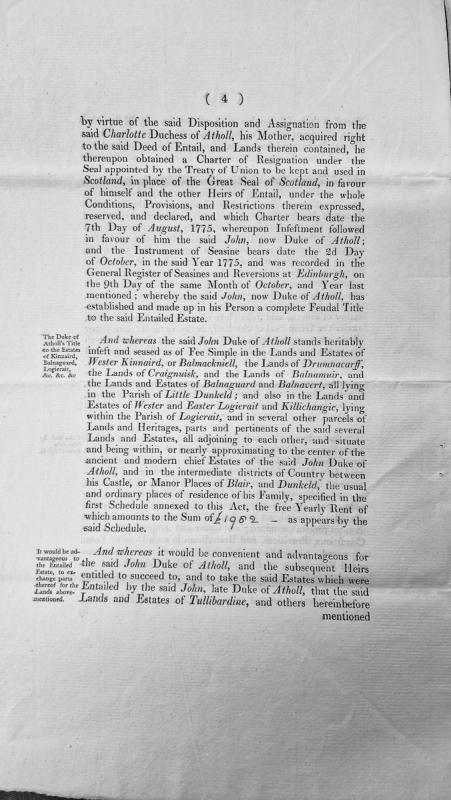
Legal document establishing John, Duke of Atholl's feudal title to entailed estates in Perthshire, Scotland (Kinnaird, Balnaguard, Logierait, etc.) acquired through charter and infeftment in 1775. The document outlines the advantageous exchange of entailed lands for other properties between Blair and Dunkeld worth £1982 annually.
A memorandum from the Duke of Atholl to Governor Cochran dated September 1758, recording administrative instructions covering accounts settlement, property conveyances, building regulations, church appointments, bridge construction funding, and customs/smuggling matters. Directly relevant to understanding Atholl's governance of the Isle of Man before the 1765 Revestment, including revenue administration and interaction with Treasury authorities.