The seat of the Parliament that purchased the Isle of Man. The Revestment debates, the 1792 Commission report, the 1805 decision to divert Manx surplus to the Consolidated Fund — all happened here. Moore's deputations came here and achieved nothing. The Keys' resolution was received here and ignored.
Later became Government House — the official residence of the Lieutenant Governor. The conversion of a Manx family home into the residence of the Crown's representative captures the transition from lordship to Crown administration.
Parish adjoining Douglas. The Onchan church passage in Chapter 6 is one of the personal-voice passages retained in the Bryson tightening — it works because it emerges from the historical material rather than arriving as memoir. Fletcher Christian was baptised here.
Parish church on the northern plain. Home of Thorwald's Cross, which carries Odin being devoured by the wolf Fenrir on one face and Christ triumphant on the other — two religions on the same slab, the accommodation made literal in stone. The church also contains the only zodiac rose window in a British church outside Balsham, Cambridgeshire — a pre-Christian arrangement permitted by the diocese. Built on a keeill site dedicated to Columba.
Parish church on the northeast coast, named for the saint said to have arrived from Ireland in a coracle. The churchyard holds one of the most remarkable collections of carved crosses anywhere in the British Isles — over a hundred fragments and complete stones spanning the full breadth of the Island's cultural life. Some purely Celtic, others unmistakably Norse, and some carrying both traditions on the same piece of rock.
The Island's only true mountain, clearing the qualifying 2,000 feet by a mere 36 feet. The Norse called it snjó-fall, snow mountain. From the summit, on a clear day, you can see England, Scotland, Ireland, and Wales simultaneously. The old saying adds three more kingdoms: Mann itself, Heaven, and the Kingdom of Manannán.
Hill in the south of the Island where folk climbed at midsummer carrying bundles of green rushes to pay rent to Manannán — the old god of the sea who protected the Island before the saints came. Site of an Iron Age hillfort.
George Moore's house and business headquarters in Castletown. The Letter Books written from Bridge House document a cosmopolitan trading world operating from this modest building — connections stretching from the Mediterranean to the Baltic. Bridge House was the nerve centre of the Island's commercial network.
The place where Illiam Dhone was executed on 2 January 1663. The site overlooks Castletown bay. The execution of William Christian remains one of the defining events in Manx collective memory.
Castle on St Patrick's Isle, connected to the mainland by a causeway. Site of the cathedral of the diocese of Sodor and Man. Waldron recorded the legend of the Moddey Dhoo — the phantom black dog that haunted the garrison — during his time on the Island in the 1720s.
Medieval fortress in Castletown, seat of the Lords of Mann. The transfer ceremony of 11 July 1765 took place here. Charlotte de la Trémouille held the castle against the Parliamentarians during the Civil War. After the Revestment, Crown officers administered from here.
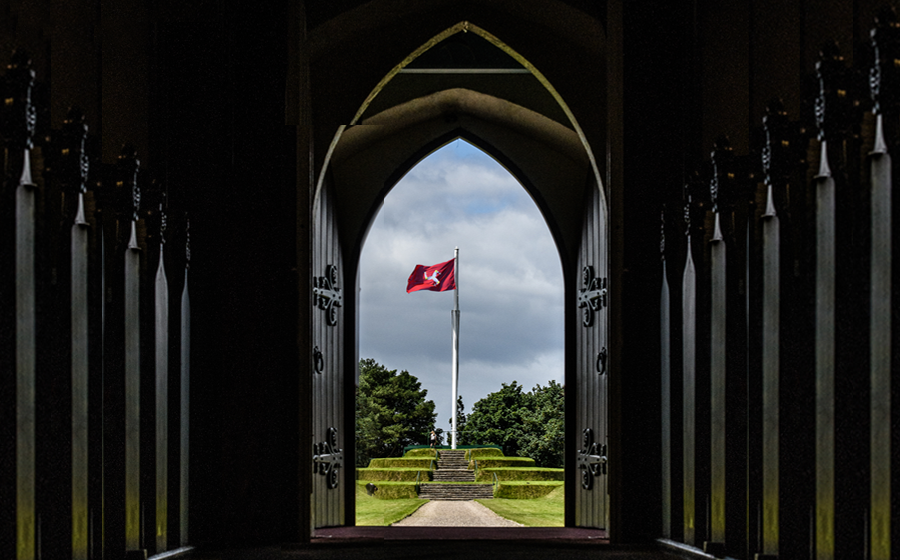
The heart of Manx governance. Four tiers rising in concentric circles, twelve feet high, eighty across at its base. The grass has never been replanted. According to tradition, soil was carried from every churchyard on the Island — earth from all seventeen parishes, mingled together so the hill embodies the unity of the Manx people. The Manx name Cronk-y-Keeillown uses 'keeill' not 'kirk,' proving the site predates the Norse. The Norse built their assembly at a site the Manx people already considered sacred. Tynwald still meets here every July.
Southern fishing port at the foot of the Meayll peninsula. The herring fishermen of Port St Mary, like those of Peel, had boats and skill but nowhere else to take them after the Revestment.
Northern port town. Part of the trading network connecting the Island to Britain, Ireland, and beyond. John Sayle the fisherman worked from Ramsey before the Revestment destroyed the fishing economy.
Fishing port on the west coast, dominated by Peel Castle on St Patrick's Isle. The herring fleet operated from here. After the Revestment, Peel's fishermen — who had no obvious alternative livelihood — stayed and endured. Captain Murray served as Crown searcher at Peel. Caesar Parr's single surviving smuggling boat was the last of a fleet of fifty.
The ancient capital of the Isle of Man, dominated by Castle Rushen. George Moore's Bridge House stood here — the centre of the Island's trading world. The transfer ceremony of 11 July 1765 took place at Castle Rushen. Castletown is where the lordship was administered and where it ended.
The Island's principal town and commercial centre on the east coast. Douglas harbour was critical to the trading networks and suffered devastating neglect under Crown administration. The 1787 storm destroyed harbour infrastructure. Impressment gangs operated here in 1811. In the manuscript, Douglas is where the commercial world and the consequences of the Revestment are most visible.