Sample Chapter: Prologue
The following is the complete Prologue of Revestment: The Crime of Crown Dependence. It introduces the Tynwald ceremony - the working heart of Manx self-governance - and the world that would be changed forever in 1765.
Prologue
On the eve of Midsummer, bonfires burned on the hilltops across the island.
They were lit to the windward side of every field so that the smoke might pass over the corn. Cattle were herded into enclosures and blazing furze was carried around them to purify the herd. Women wore chaplets of bollan bane, mugwort, pulled at midnight for maximum power, to ward off enchantment, and in the darkness folk climbed South Barrule carrying bundles of green rushes up to the summit to pay rent to Manannan - the old god of the sea who had protected the island before the saints came. Manannan, who wrapped his cloak of mist around the island to hide it from invaders and asked nothing from his people in return but this offering of rushes at midsummer. Across the island were dotted Christian keeills and chapels, Sunday services filled each week, the church interwoven in society. The rent was paid regardless.
Many of those climbing the hills or laying the fires were likely to have been humming a melody the Manx people said had been learned from the fairies themselves. A farmer wearing mugwort for protection had gone into the hills and heard the fair folk playing music. He went back three times to memorise the tune they played, each time returning home later until finally arriving at sunrise to be met by an angry wife who couldn’t understand what had kept him out all night. But he had the tune, and it passed into the tradition of the island - fairy music made safe by the protective herb, captured and carried back to the world of men. A tune they call Bollan Bane, named after the natural protection he wore.
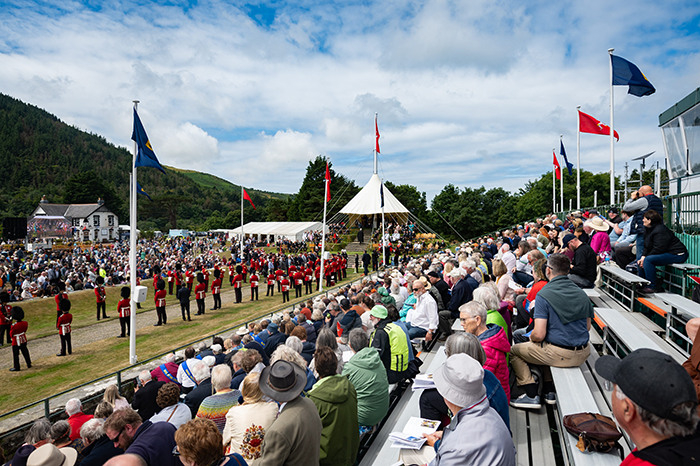
Then on Midsummer morning the people of the island would gather at its centre, sprigs of bollan bane pinned to their clothes, standing in groups on the meeting field at St John’s, where Tynwald Hill - Cronk-y-Keeillown, the hill of the church of John - rose from the ground at the west side, a pathway of rushes connecting the hill to the nearby chapel. Adjoining the Tynwald grounds was a farm held tithe-free on condition of providing one service - cutting and gathering the green meadow rushes to be laid along the procession way on this day. Those rushes had been gathered for this particular purpose year after year, for longer than anyone could say. The farmer’s obligation was older than the Christian calendar that now governed the ceremony. It was his rent to Manannan, paid in the service of Tynwald.
Tynwald Hill itself, standing at the western edge of the meeting field, is not a hill in the geographic sense, no chance feature of the Earth’s creation. It had been deliberately crafted into four tiers, rising in concentric circles from a broad base to a narrow summit - twelve feet high, perhaps eighty across at its base. The grass that covers it has never been replanted. It has grown where it grows for a thousand years and more, renewed each spring, cut back each autumn, so that the mound seems almost part of the natural landscape - something that belongs in the field rather than something placed there. According to tradition, the soil was carried from every churchyard in the island - earth from all seventeen parishes, mingled together so that the hill embodies the unity of the Manx people. When the officers of state take their seats at the summit, they sit upon the whole of the land they serve.
Tynwald Day was the one moment each year when the entire apparatus of government assembled together in one place, surrounded by the people without barrier or defence. The whole system was out in the open, visible, exposed. It was not a pageant. It was not a performance preserved for the sake of tradition. It was a working parliament, and it met this way because this was how it had always met, and because the people who gathered there believed it was how a parliament should meet. The hill was not a temporary platform erected to elevate those in Government above the people. There were no boundaries or barriers separating those on the mound from those around them. This is the very island itself lifting those in Government so they sat in plain sight, to be seen, to be held accountable.
The laws that had been passed since the last Tynwald Day were read aloud, first in English and then in Manx. The language of the record and the language of the people. Every person who had come to St John’s that morning could hear what new laws now bound them, in words they understood. A statute that had not been proclaimed at Tynwald Hill was not, by Manx understanding, fully law. The public promulgation was what made it binding. The hill was where a bureaucratic Act became the law of the land. After the laws came the petitions, when any person present could approach the hill and present their petition of doleance - a petition of grievance against those in authority, a personal demand for redress. Any of the Manx people could stand at the base of Tynwald Hill and speak, and crucially, expect to be heard. And then, at the end of the ceremony, those officials who had walked through the people to reach their seats on the hill would walk back through the people to leave. The entire ceremony designed to remind everyone present, people and Government alike, that they were all equally of the Island, that what they did was for the benefit of the Island, the people, the many.
This then, is the story of that nation’s history, and of eight fateful days which saw it bartered, sold and abandoned amongst the corridors of Westminster. An action that the Lord Chief Justice of England would later describe as “one of the most corrupt jobs ever witnessed in Parliament.”
This, is Revestment.
The story continues across eighteen chapters and three Parts. To learn more about the book, see About the Book.
For press enquiries, review copies, or interview requests, see Media & Press.